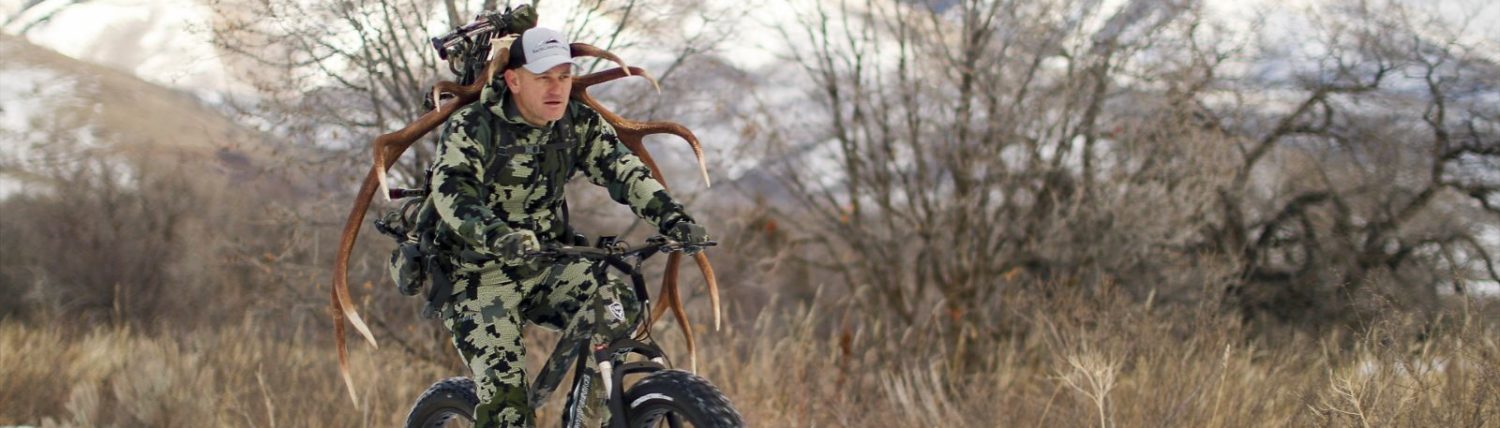
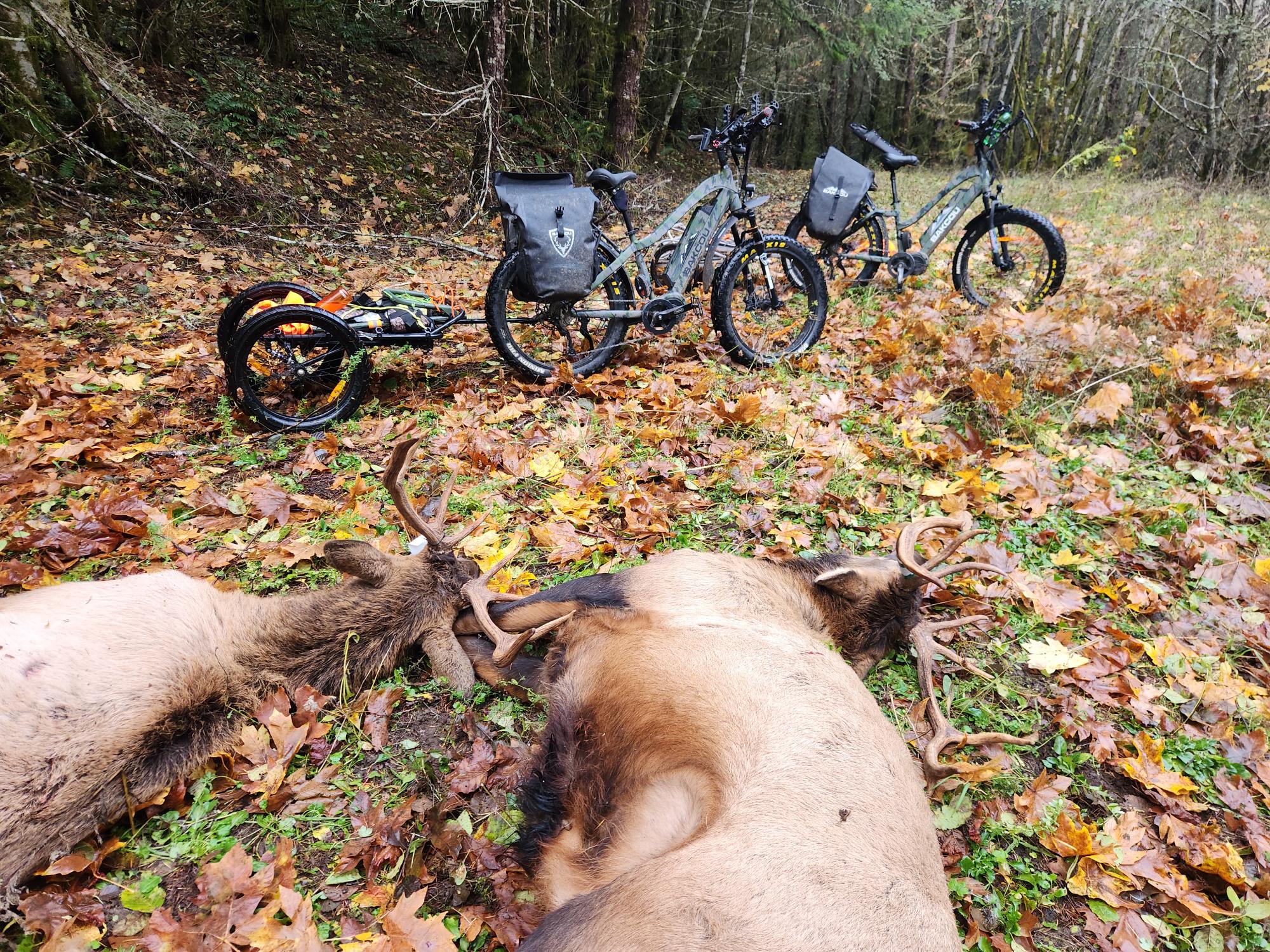
We just finished a massive project: our team of writers. Brett, Kurt, Grady, and Richie, fanned out across the country (well, across their keyboards) to research and update e-bike hunting regulations for every single state. All 50. From Alaska to Florida, from the BLM desert to the Adirondack hardwoods.
Why? Because the rules are a mess, they change constantly, and we keep hearing stories about hunters who assumed they were legal, and found out the hard way that they weren’t.
The $509 Smile-and-Wave
Here’s one that should make you double-check your local regs before your next ride.
A rider in California’s Bay Area had been riding his ebike on trails above his house for eight years without incident. He’d passed park rangers who waved and smiled. Then one day, a ranger pulled him over and wrote him a $509 citation for operating a “motorized vehicle” on park land. He tried explaining that California law classifies ebikes as bicycles, the ranger didn’t care. Turns out the local park district had its own rules specifically prohibiting ebikes on unpaved trails, regardless of what state law said.
Eight years of friendly waves. Then five hundred bucks.
The lesson? State law and local land rules are not the same thing. Your ebike might be perfectly legal on the road and completely illegal the second you roll onto a specific trail or management area.
The DuPont State Forest Misdemeanor Special
In North Carolina’s DuPont State Recreational Forest, one of the most popular riding destinations in the Southeast, rangers aren’t just writing tickets. They’re handing out misdemeanor charges that go on your permanent record. The fine itself is modest (around $25-35), but tack on $180+ in court costs and a criminal record, and suddenly that shortcut through the forest doesn’t seem so clever.
The NC Forest Service has been clear: ebikes are not allowed on any trails at DuPont. Period. Doesn’t matter what class. Doesn’t matter that regular mountain bikes are welcome. An ebike has a motor, and motors aren’t allowed. End of discussion.
Pennsylvania’s Game Warden Is Watching
Up in Pennsylvania’s northcentral region, Game Warden Mark Gritzer went public with something a lot of hunters didn’t want to hear: he’s seeing a sharp increase in ebike use on state game lands where they’re explicitly prohibited.
The Pennsylvania Board of Game Commissioners actually considered allowing Class 1 and Class 2 ebikes back in 2020. They gave it preliminary approval in January, then rejected it 5-3 in July. The ban stands.
Gritzer’s argument is worth hearing even if you disagree with it: ebikes let hunters reach remote areas without breaking a sweat, which means less scent, which means an advantage over hunters who hiked in the old-fashioned way. His exact words: ebikes create “an unfair advantage for the person out there trying to do it the right way.”
Whether you agree with that or not, the fact remains, if you’re riding an ebike on Pennsylvania state game lands, you’re breaking the law.
Idaho Fish and Game: “No Matter How You Slice It”
Idaho Fish and Game Conservation Officers issued a direct warning to hunters: e-bikes are motorized vehicles in Idaho, full stop. Regional Conservation Officer Matt O’Connell put it simply, “it’s generally a safe assumption that the use of e-bikes is limited to motorized roads and trails” regardless of where you’re hunting.
Officers reported a growing trend of hunters assuming that motorized vehicle restrictions didn’t apply to their quiet, pedal-assist ebikes. They do. On Forest Service land, BLM land, Idaho Department of Lands, and Idaho Fish and Game WMAs, if a road or trail is closed to motorized vehicles, your ebike isn’t welcome.
Idaho also has a motorized hunting rule that applies to big game (moose, bighorn sheep, mountain goat) in designated units from August 30 through December 31. Your ebike counts.
The MeatEater Moment
Even the crew at MeatEater weighed in. Their Director of Conservation, Ryan Callaghan, made a point that goes beyond legality: “E-bikes don’t pay into the system…they do not require an OHV sticker, which funds trails and campgrounds.”
He’s right. In Colorado, OHV revenue funded $6.7 million in trail improvements in a single year. Oregon generates about $645,000 annually from ATV permits. Ebike riders aren’t contributing to that pot, and that’s a real issue as more trails see ebike traffic.
The debate isn’t just about whether ebikes should be allowed. It’s about whether remoteness should remain, as Callaghan put it, “a reward for those willing to work harder”, or whether access should expand regardless.
Good people can disagree on that. But nobody disagrees that you should know the rules before you ride.
What We Built for You
That’s exactly why we put this project together. Every state guide on this site now includes:
- Current e-bike regulations for public lands, WMAs, national forests, and BLM land
- Links to official agency websites so you can verify the rules yourself
- Phone numbers and contacts for every relevant land management office
- MVUM (Motor Vehicle Use Map) links where available, these are the maps that tell you exactly which roads and trails allow motorized vehicles
- Practical tips from our writers who actually hunt these states
Here’s the full list, click your state:
Western States (by Brett):
Alaska | Arizona | California | Colorado | Hawaii | Idaho | Kansas | Montana | Nebraska | Nevada | New Mexico | North Dakota | Oklahoma | Oregon | South Dakota | Utah | Washington | Wyoming
Midwest States (by Kurt):
Illinois | Indiana | Iowa | Kentucky | Michigan | Minnesota | Missouri | North Carolina | Ohio | Tennessee | Virginia | West Virginia | Wisconsin
Southeast States (by Grady):
Alabama | Arkansas | Florida | Georgia | Louisiana | Mississippi | South Carolina | Texas
Northeast States (by Richie):
Connecticut | Delaware | Maine | Maryland | Massachusetts | New Hampshire | New Jersey | New York | Pennsylvania | Rhode Island | Vermont
The Bottom Line
An ebike is one of the best tools a hunter can own. It gets you deeper, quieter, and fresher than hiking. But it comes with a responsibility to know where you can and can’t ride one. The regulations are a patchwork, what’s legal in one state might land you a misdemeanor in another, and what’s allowed on a national forest road might be banned 50 yards away on a non-motorized trail.
Do your homework. Check the links in our state guides. Call the ranger district. Read up on whether hunting ebikes are allowed on federal land before you head out. And if you want to understand how these regulations have evolved over the years, we also maintain a broader overview of hunting ebike laws by state. If you’re looking for a solid hunting ebike to ride on all that land where it is legal, check out our guide to the top features to look for in an electric hunting bike or browse the options at ebikegeneration.com.
Ride legal. Hunt smart. Don’t be the $509 guy.
Sources
- Endless Sphere Forum, “Got Busted for Riding My eBike”. The $509 citation story from California
- Singletracks, “This Popular State Forest Is Handing Out $218 Fines and Misdemeanor Charges to E-Bikers”. DuPont State Forest enforcement in North Carolina
- The Progress News, “Game Warden Reports Increased Use of Prohibited E-Bikes on State Game Lands”. Pennsylvania Game Warden Mark Gritzer’s report
- Idaho Fish and Game, “Hunters Using E-Bikes Are Reminded to Be Aware of Motor Vehicle Use Restrictions”. Idaho’s official warning to hunters
- MeatEater, “Should E-Bikes Be Allowed In Your Hunting Spot?”. Ryan Callaghan on OHV funding and access
- USDA Forest Service, Electric Bicycle Use. Federal e-bike policy on national forests
