The single most common question I get at the boat ramp, the gun club, and pretty much anywhere I’m parked next to the truck with a bike in the back: “Yeah but how much do you really have to spend on one of these things?”
I answered that question for the entry tier in the under-$2,000 roundup. The honest floor for a hunting ebike that holds up is around two grand. Below that you’re getting commuter bikes in camo. The interesting question is what happens between two and three thousand dollars, where the bikes stop feeling cheap but aren’t yet Bakcou money.
This is the mid-range sweet spot, and a lot of hunters land here and stay. You’re getting bigger batteries, hydraulic brakes, AWD options on some models, and frames that don’t make you nervous on a Wyoming two-track. You’re not getting Bakcou-grade components or full-blown trail suspension. But the bikes in this tier will haul a quartered mule deer out of a drainage and last more than one season doing it.
Three I’d actually buy in this band.
What Changes from the Under-$2k Tier
The cheap-end bikes mostly run small hub motors on 480 to 720Wh batteries with cable-pull brakes and basic forks. Fine for a half-day on flat ground. They start to struggle when you load them up and the terrain gets steep.
In the $2,000 to $3,000 zone you start seeing:
- Batteries in the 800 to 1,000Wh range. Real all-day capacity. The Cobra D7 ships with 960Wh, which is bigger than what comes on some bikes twice its price.
- Hydraulic disc brakes instead of mechanical. Better stopping with a loaded bike and a wet rotor.
- Heavier frames rated for 400-pound payloads. You can run a rifle scabbard, panniers, and a game cart hitch without the bike feeling sketchy.
- One genuine mid-drive option (Rambo Roamer 2.0) and one AWD option (Rambo Krusader 3.0). Both unusual at this price.
What you’re still not getting at this price:
- High-torque mid-drives like the Bafang Ultra (those start showing up around $3,700)
- Full-suspension trail platforms (Bakcou Scout, Rambo Pursuit FS 3.0, etc.)
- Premium drivetrains (you’ll see Shimano Acera or Altus at this tier, not Deore or SLX)
- Lifetime-grade hubs and bearings
Worth knowing what’s not in the box before you spend.
Rambo Krusader 3.0 AWD, $2,969
Rambo Krusader 3.0 AWD
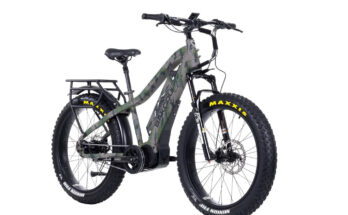
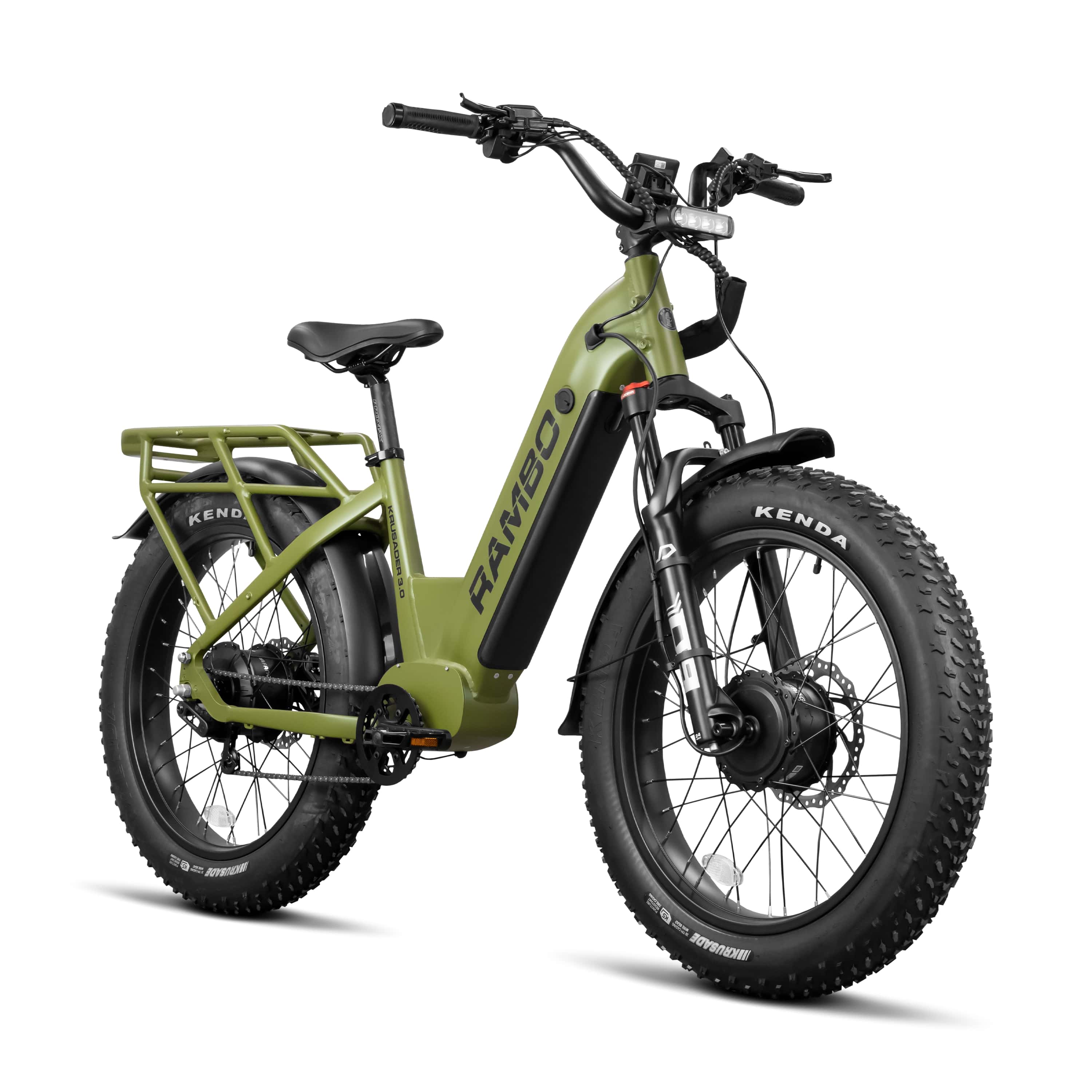
This is my top pick if you’re hunting anywhere the terrain gets honest. Dual 500W motors, one front and one rear, with an AWD-specific display that shows battery, speed, wheel engagement, and RPM per motor. Translation: you can tell whether the front motor is pulling its weight or just along for the ride.
I rode a Krusader 3.0 across a slope last spring where a single-motor bike would have washed out sideways. The AWD wakes up when you need traction and you don’t have to think about it. Mud, snow, loose gravel, side-hilling for a stand: this is the bike that handles it under three grand.
The trade-offs are real. It’s heavy (the dual-motor setup adds weight you’ll feel pushing it up a steep section if the battery dies), and the dual-motor draw means range is around 30 to 40 miles in mixed terrain. You can switch to rear-wheel-only mode to extend that.
If your hunting involves any meaningful elevation, mud, or shoulder-season snow, this is the one. The fact that you can get AWD for under $3,000 at all is something that wasn’t true two years ago.
Check current pricing: Rambo Krusader 3.0 AWD on ebikegeneration.com →
Rambo Roamer 2.0, $2,749
Rambo Roamer 2.0
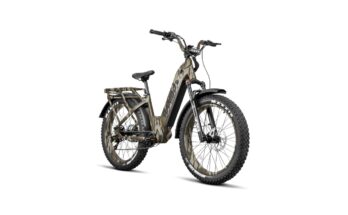
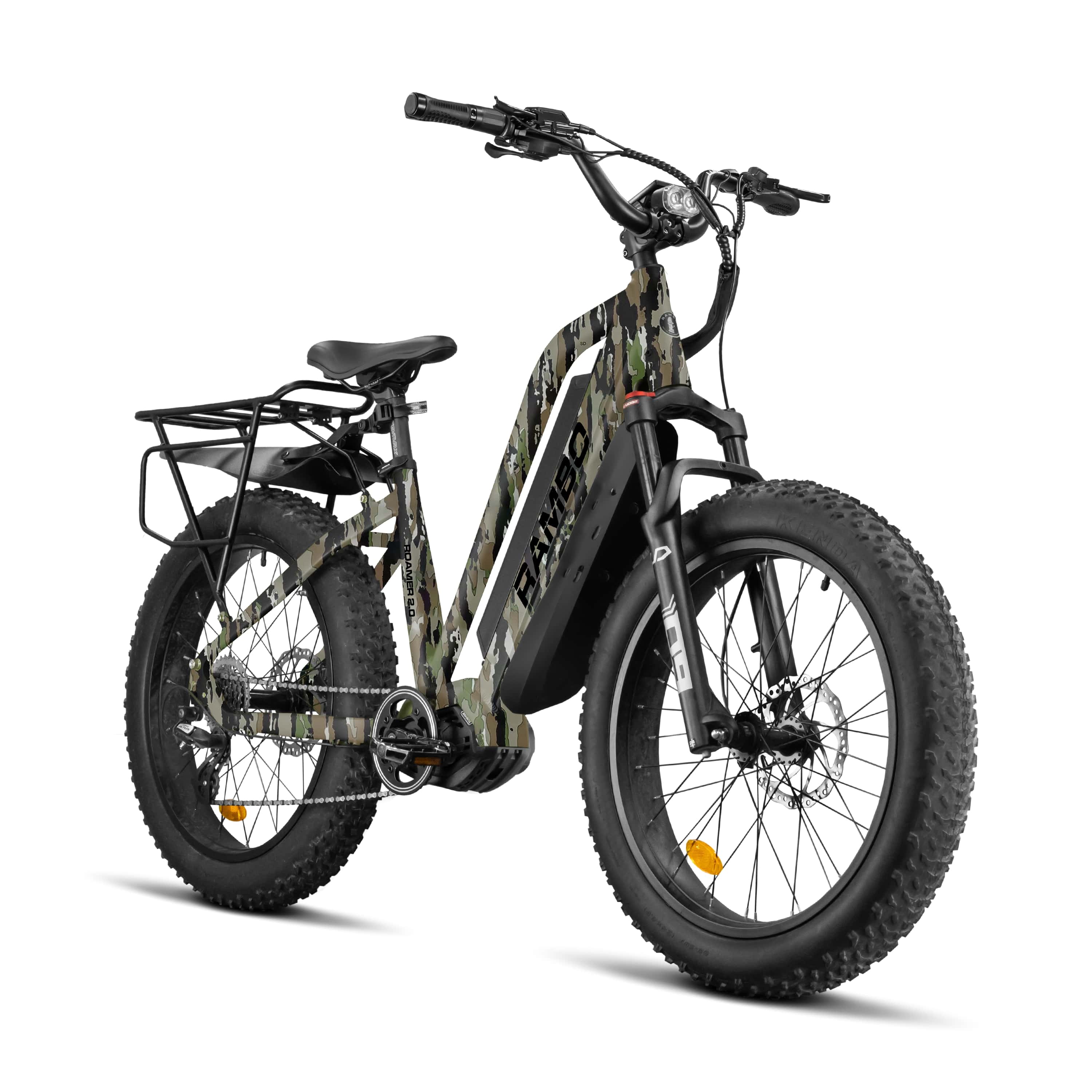
The only true mid-drive in the tier. 750W Bafang mid-drive motor, Shimano 8-speed, 24-inch aggressive Kenda tires, integrated rear rack.
Mid-drive matters for climbers. When you drop into a low gear and start grinding up a hill, the motor pulls through the chain instead of the rear hub, which means the motor gets mechanical advantage from the gear ratio. The Roamer climbs harder than its 750W spec sheet suggests because it’s using the gears, not fighting them.
The 24-inch wheels are not a downside. They drop the standover height (easier to mount with a loaded vest), and the aggressive tread on 24×4 still floats over mud and loose dirt. For a shorter-statured hunter or anyone tired of swinging a leg over a high top tube, the Roamer’s geometry is friendlier than most.
I’d buy this one if I were a Midwest deer or turkey hunter on rolling terrain who wanted the mid-drive climbing characteristic and didn’t need AWD. For the Rocky Mountain access work I do most weekends, the Krusader still wins because of the AWD bump. For everyone else, the Roamer is the genuine value pick.
Check current pricing: Rambo Roamer 2.0 on ebikegeneration.com →
Himiway Cobra D7, $2,499
Himiway Cobra D7
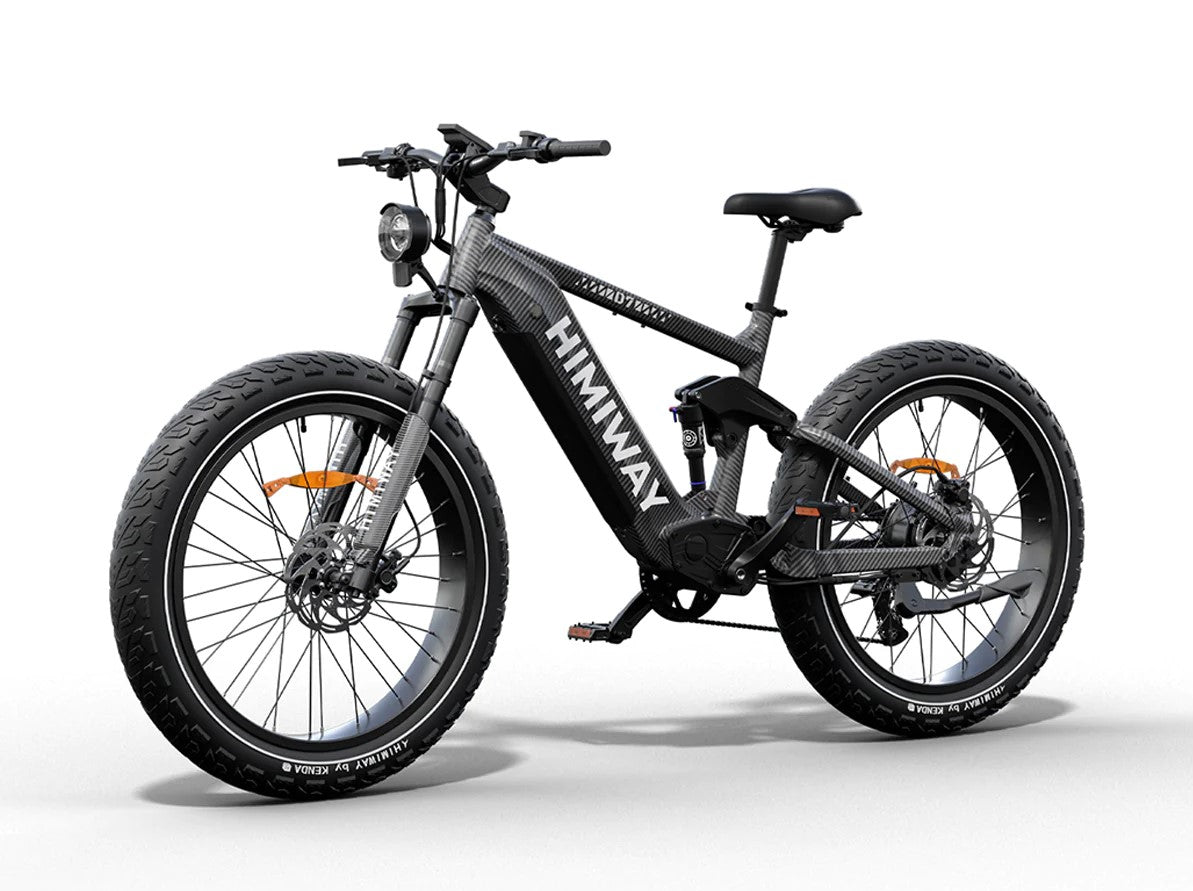
The cheapest of the three and the one with the biggest battery. 1,000W rear hub motor, 960Wh battery, full suspension, 400-pound payload, 80-mile claimed range. Discount that range to about 50 real-world miles with assist and a loaded rack, which is still more than I cover in a typical hunting day.
Where the Cobra D7 surprises is the suspension. At this price you mostly see hardtails. The Cobra D7 has a front fork plus a rear shock, which is a real comfort upgrade on washboard forest roads and rocky two-tracks. Combine that with the big battery and you have a bike that’ll absorb a five-mile road-to-trailhead pre-dawn ride better than the Rambos.
The catch is the motor type. It’s a 1,000W hub motor, not a mid-drive. Steep grades will pull current and the bike won’t climb as efficiently as the Roamer on the same hill. If your hunting is rolling terrain, flat-to-moderate access roads, or you cover most of your distance on dirt roads before you walk in, the Cobra D7 is the best value here. If your access is a steep climb out of a drainage, the Roamer or Krusader will serve you better.
Check current pricing: Himiway Cobra D7 on ebikegeneration.com →
How to Choose Between Them
Quick decision tree:
- Climbing matters most: Roamer 2.0. The mid-drive uses the gears, which is what you want when grades get over 8 percent.
- Traction matters most: Krusader 3.0 AWD. The only way to get true all-wheel drive under $3,000 right now.
- Comfort and range matter most: Cobra D7. Full suspension and the biggest battery in the tier.
- You don’t know yet: Pick based on terrain. Rolling and gravel: Cobra D7. Mixed and hilly: Roamer 2.0. Steep, muddy, or shoulder season: Krusader 3.0.
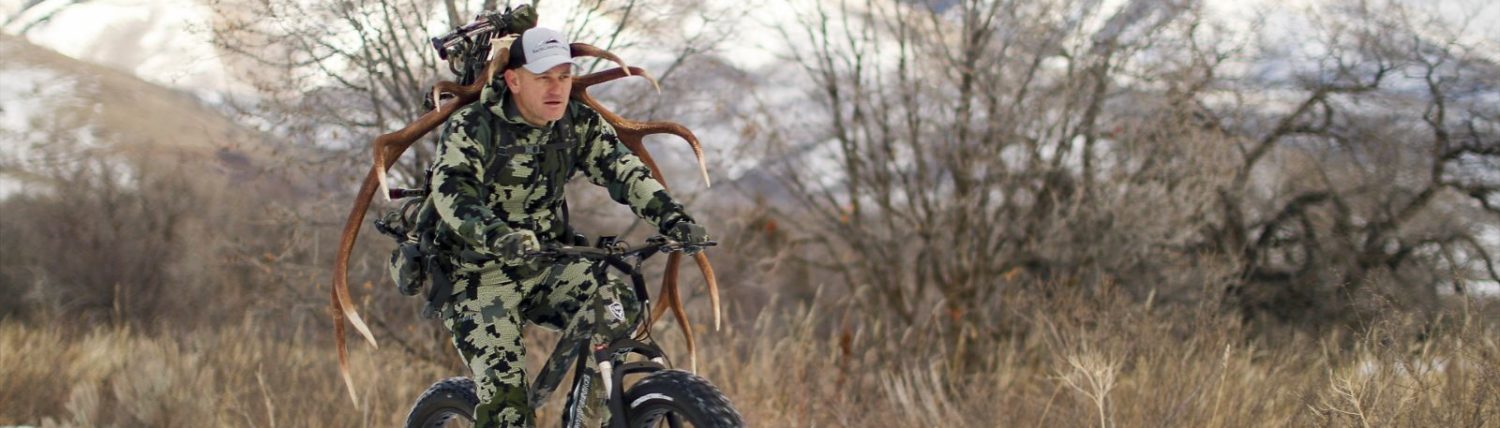
I’ve ridden all three with a rifle in a scabbard, panniers loaded with gear or quarters, and the bikes feel solid. None of them will let you down at this price. The decision is which trade-offs match your hunting.
What About Bakcou and QuietKat?
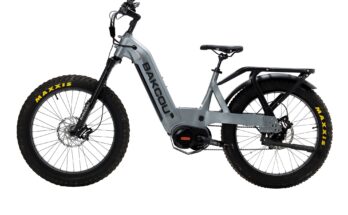
Worth saying out loud: the Bakcou Flatlander SD starts at $3,699 and the entry QuietKat Apex models live in similar territory. Both are above this tier by enough that I won’t tell you they’re $3,000 bikes when they’re not.
If you can stretch to $3,700, the Flatlander SD’s drop-frame mid-drive is a meaningful step up over anything in this article. The QuietKat vs Bakcou comparison covers what the premium tier looks like in more detail. If you can’t stretch the budget, the three bikes above will hunt hard and not embarrass themselves.
Final Word
The under-$3,000 tier didn’t really exist five years ago in a usable form. Hunting ebikes either cost $1,500 and felt like it, or cost $4,000 and felt right. The bikes I’ve named here are what the market looks like after the manufacturers got serious about this category.
I’d hunt all three. The one I’d reach for depends on where I’m hunting that morning. That’s a good problem to have.