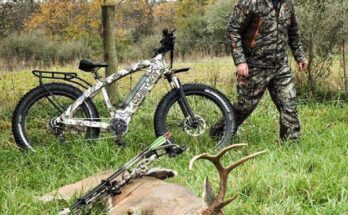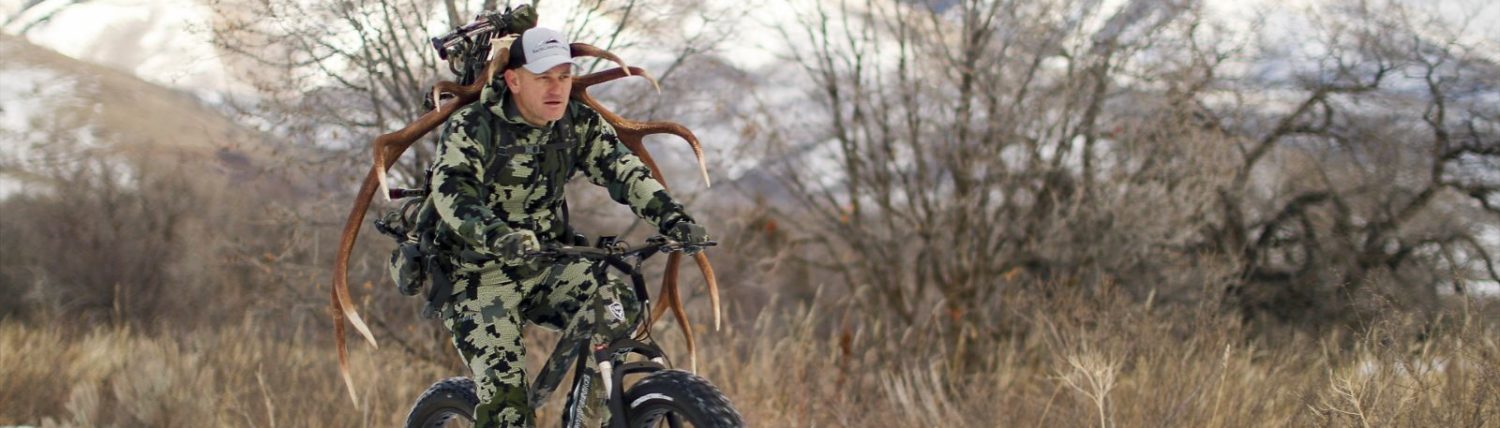
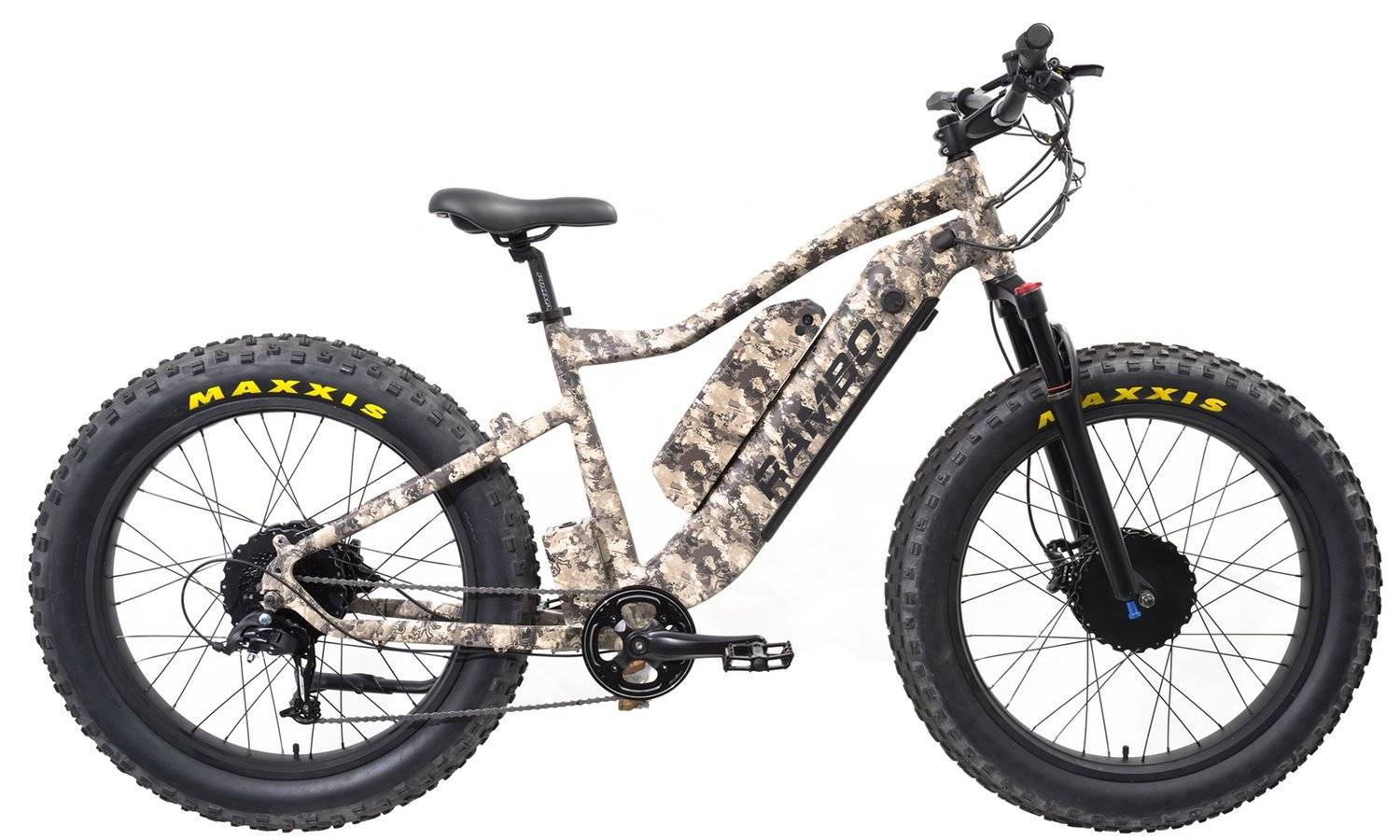
If you spend any time hauling gear through backcountry mud, packed snow, or loose sand, you already know that skinny tires are worthless out there. Fat tire electric bikes were practically made for hunters. The wide, high-volume tires float over soft ground, grip loose surfaces, and absorb the kind of punishment that would leave a regular bike (and your spine) wrecked. I have spent the last few seasons testing fat tire e-bikes on real hunts, and these are the ones worth your money in 2026.
Why Fat Tires Matter for Hunting
Standard mountain bike tires top out around 2.4 inches wide. Fat tires start at 4 inches and go up to 5 inches. That extra width does a few critical things for hunters.
First, flotation. In mud, snow, and sand, a fat tire spreads your weight (and your gear’s weight) across a much larger contact patch. Instead of cutting ruts and getting stuck, you roll on top. Second, traction. The large surface area grabs roots, rocks, and loose gravel that would send a narrow tire sliding. Third, comfort. Fat tires run at low pressures (sometimes as low as 5 PSI), which turns them into natural suspension, smoothing out rocks and stumps without a complex linkage system.
For hunters specifically, fat tires also run quieter on soft ground. You are not buzzing and rattling over every stone. And when you are hauling 50 to 80 pounds of gear on a rear rack, that extra stability is the difference between a confident ride and a sketchy one.
Best Fat Tire Electric Bikes for Hunting in 2026
1. Bakcou Scout
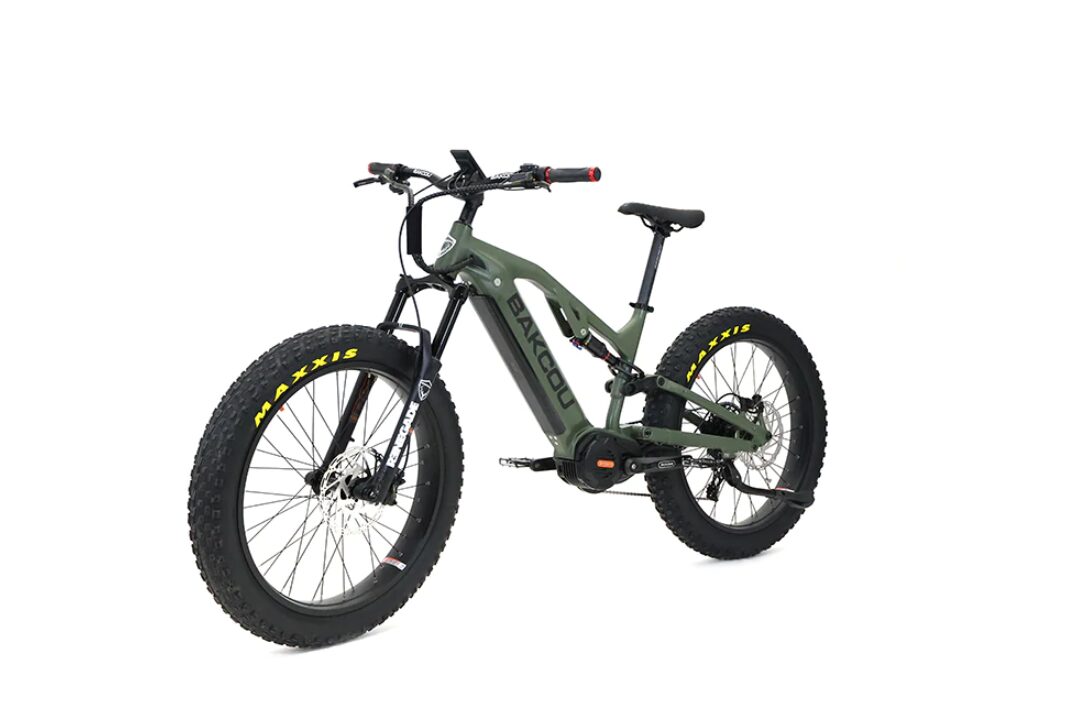
Bakcou Scout
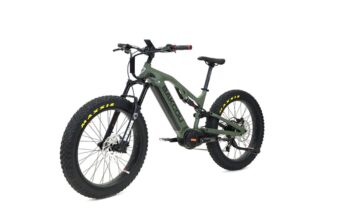
The Bakcou Scout is one of the most capable hunting e-bikes on the market. It runs a 750W or 1000W Bafang Ultra mid-drive motor, paired with a 17.5Ah or 21Ah battery that delivers 40 to 60 miles of range depending on terrain and assist level. Full suspension keeps things composed on rough descents, and the frame is built to accept rear racks rated for serious loads. If you want one bike that does everything, this is the top pick. Starting at $4,799 (17.5Ah) or $4,999 (21Ah). Available at ebikegeneration.com.
2. Bakcou Flatlander SD
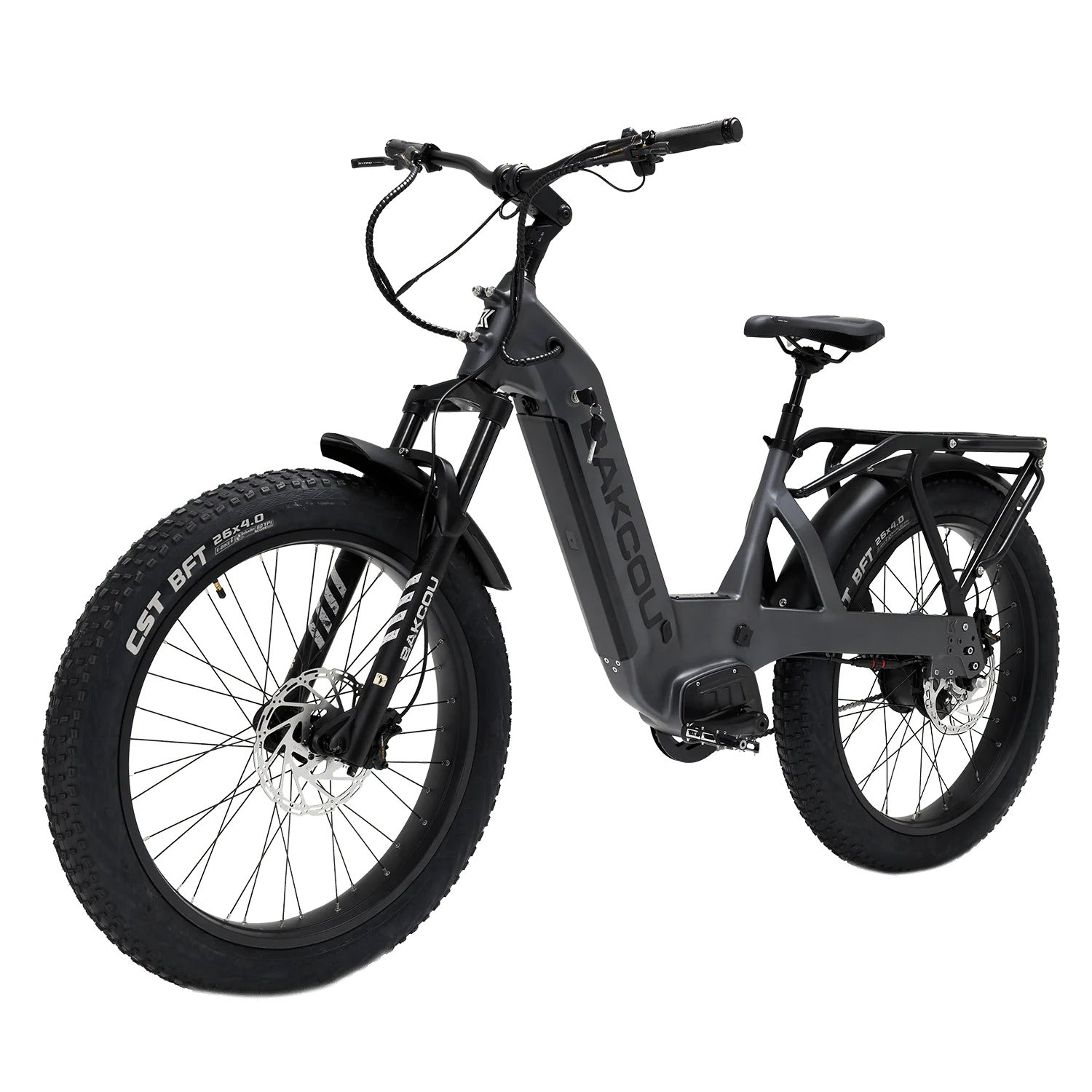
Bakcou Flatlander SD
Not every hunt takes you into the mountains. The Flatlander SD is built for exactly what the name suggests: prairie, farmland, marsh edges, and flat timber. It uses a 750W rear hub motor, 26×4-inch fat tires, and a rigid fork that keeps weight down and maintenance simple. The step-through frame option makes it easy to mount and dismount while wearing bulky hunting gear or waders. Battery range hits 40+ miles on flat terrain. Priced at $3,699, it is a practical, no-nonsense machine for hunters who do not need full suspension but still want fat tire capability. Find it at ebikegeneration.com.
3. Rambo Rebel 2.0
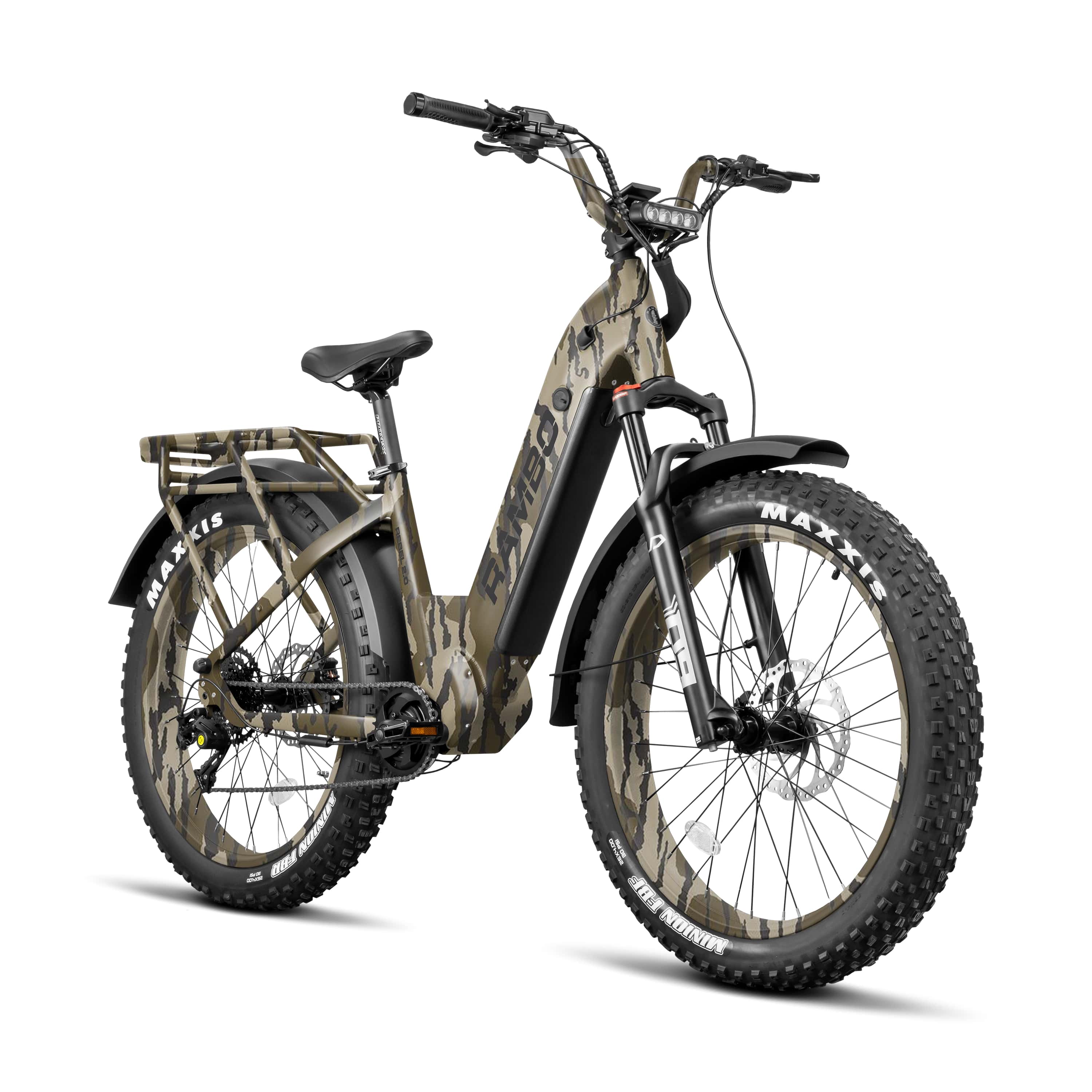
Rambo Rebel 2.0
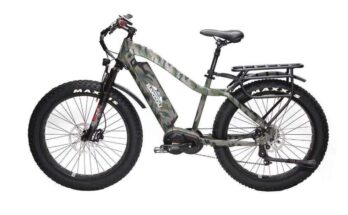
Rambo has been in the hunting e-bike game longer than most, and the Rebel 2.0 is one of their most popular models. It comes with 26×4-inch fat tires, a 750W Bafang motor, and solid battery capacity for full-day hunts. The frame is available in Mossy Oak Bottomland camo patterns, which matters if you are leaving the bike near a stand or blind. Rambo also sells purpose-built trailers and cargo accessories that integrate directly with their bike frames. The Rebel 2.0 is priced at $3,299.99 (15Ah) and handles moderate trails with confidence. Available at ebikegeneration.com.
4. Himiway Cobra D7 PRO
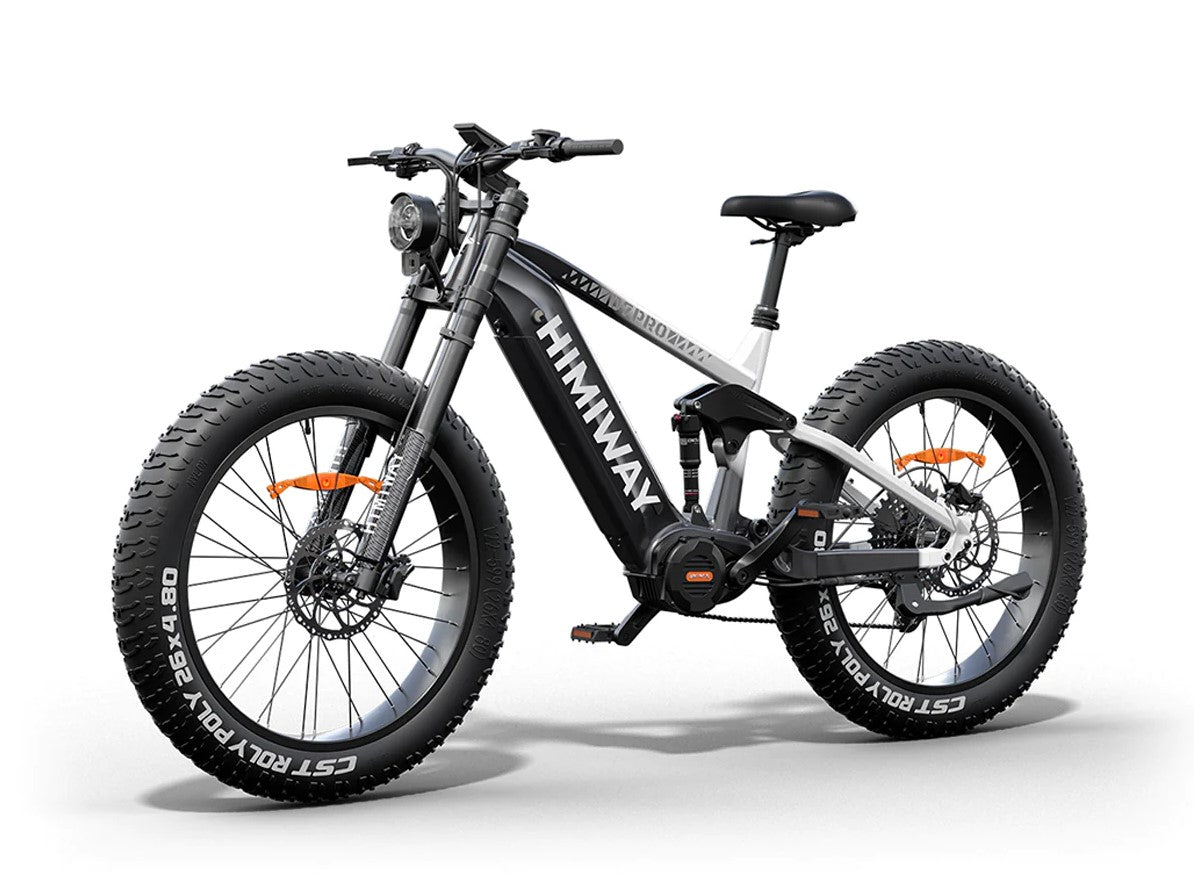
Himiway Cobra D7 PRO
The Cobra D7 PRO is one of the best values in the fat tire hunting segment. It packs a 1000W mid-drive motor, full suspension with 150mm travel, and 26×4.8-inch CST tires on a bike that costs significantly less than comparable Bakcou models at $3,999. The 48V 20Ah battery provides excellent range (up to 80 miles in low assist on flat ground, 35 to 45 miles in realistic hunting conditions). Build quality has improved substantially in recent years, and Himiway’s warranty and parts availability are solid. A strong pick for hunters who want full-suspension fat tire performance without breaking the bank. Check it out at ebikegeneration.com.
5. QuietKat Apex Pro
QuietKat has leaned hard into the hunting market, and the Apex Pro reflects that. It features a 1000W mid-drive motor, 26×4.5-inch tires, full suspension, and a frame designed to carry heavy loads on integrated racks. The standout feature is how quiet the drivetrain runs. QuietKat uses a belt drive instead of a chain on some models, eliminating chain slap and reducing noise on the trail. The bike ships in several camo patterns and plays well with QuietKat’s line of panniers, trailers, and bow/gun racks.
6. Rungu Dualie Steep
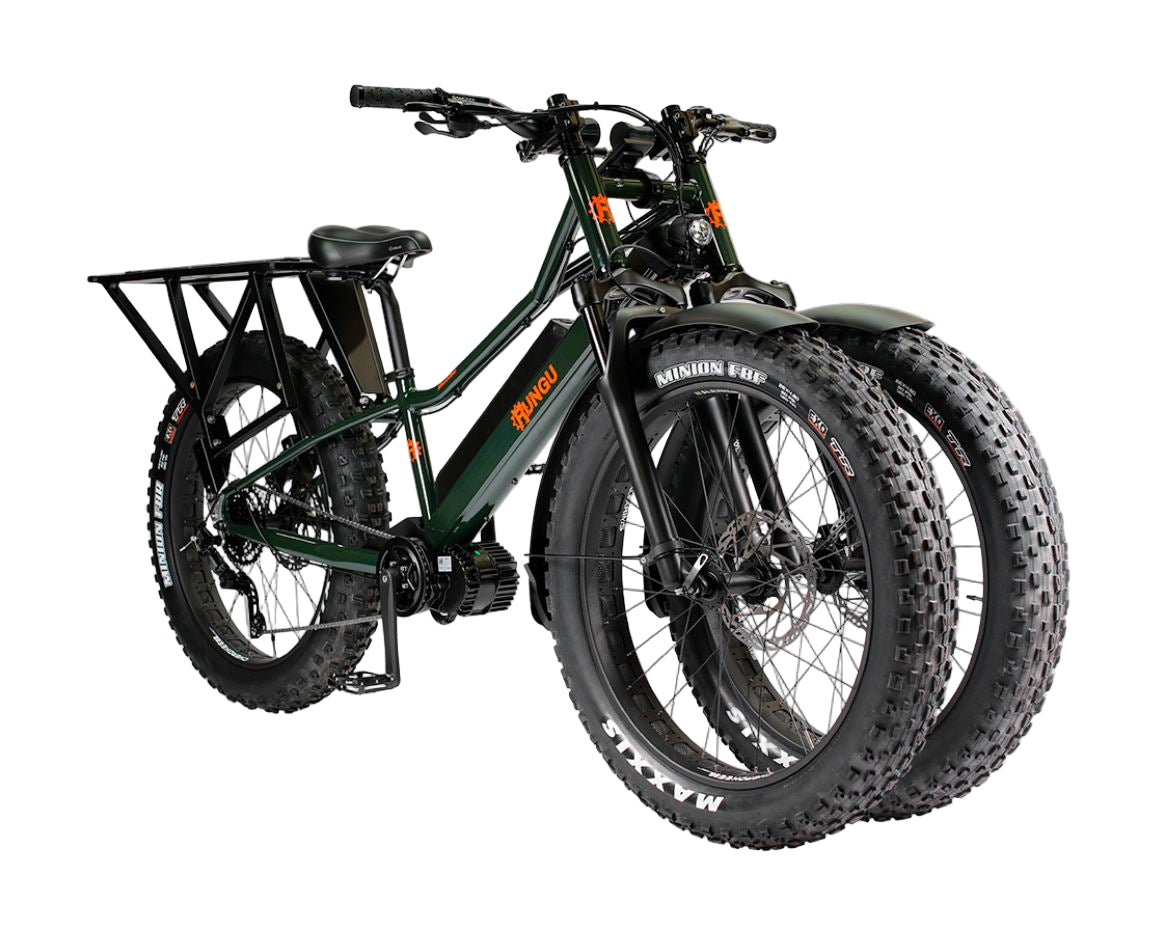
Rungu Dualie Steep
The Rungu Dualie Steep is a unique design that earns its spot on this list. Two front wheels instead of one give it a three-tire contact patch that provides unmatched stability in sand, snow, and mud. But stability is just the start. The extended wheelbase (85 inches) gives the Steep serious advantages on hills that traditional bikes cannot match. Going uphill, the longer frame keeps the front end planted instead of wanting to wheelie under power. Coming downhill, that extra length keeps you stable and composed instead of pitching forward, and the additional front braking surface means stronger, more controlled stops on steep descents. The dual front tires also eliminate front-end washout on loose terrain, which is a real problem with single-wheel fat bikes on gravel switchbacks and muddy sidehill cuts.
The Steep model comes with a 1,429W motor putting out 204 ft-lbs of torque at the rear wheel, enough to climb grades up to 47%. It includes a cargo rack and mud guards, weighs 91 lbs, and is priced at $4,849. It will not fit on a standard bike rack, so plan on a truck bed or trailer. Rungu also offers the Standard ($4,399) and the premium Rugged ($6,299) configurations. Available at ebikegeneration.com.
7. Himiway Zebra D5
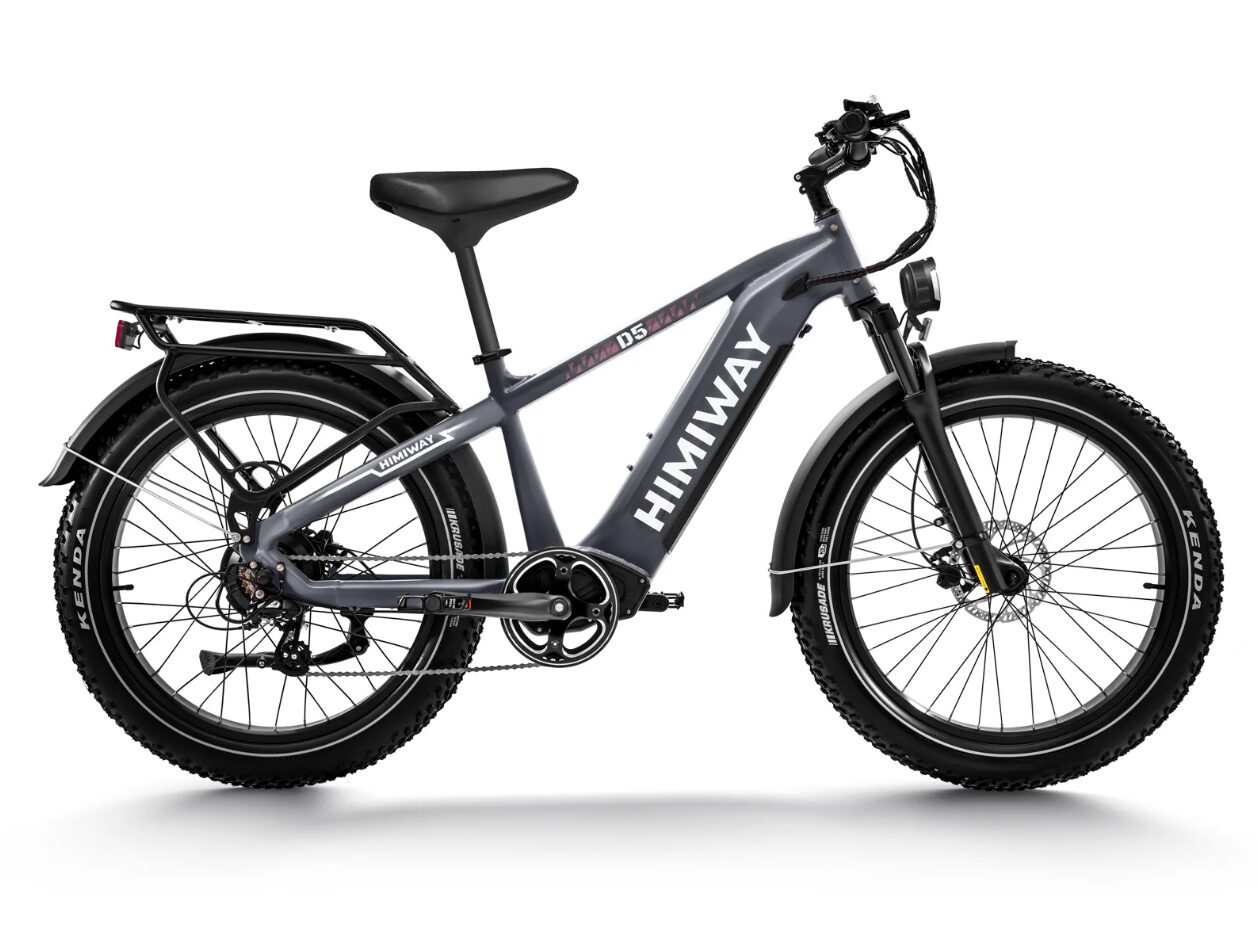
Himiway Zebra D5
The Himiway Zebra D5 is an excellent entry-level fat tire e-bike that works well for hunters on a tighter budget or those who do not need extreme off-road capability. It runs 26×4-inch fat tires, a 750W rear hub motor, and a large 48V 20Ah battery that delivers impressive range for the price. It lacks full suspension (front fork only), so it is best suited for fire roads, gentle trails, and relatively flat hunting land. At $1,499, it is one of the most affordable ways to get into fat tire e-biking for hunting. Available at ebikegeneration.com.
Tire Width Comparison: 4 Inch vs 4.5 Inch vs 5 Inch
Fat tire width is not a “bigger is always better” situation. Each width has trade-offs that matter depending on where you hunt.
4-inch tires are the lightest and fastest-rolling option. They still provide meaningful flotation and grip compared to standard tires, but they will bog down faster in deep snow or soft sand. Best for hardpack trails, light mud, and mixed-surface riding. If you mostly ride fire roads and logging trails to get to your spot, 4-inch tires are efficient and practical.
4.5-inch tires are the sweet spot for most hunters. They provide excellent flotation without the weight and rolling resistance penalty of 5-inch tires. The Apex Pro and several other hunting-specific models run 4.5-inch rubber, and for good reason. They handle mud, moderate snow, and rocky terrain with confidence.
5-inch tires are specialist rubber. They shine in deep snow (6+ inches), sugar sand, and soupy marsh edges where anything narrower would sink. The trade-off is weight, rolling resistance, and slower speeds on hardpack. If you are a late-season hunter in the northern Rockies or a coastal hunter riding beach sand to access remote spots, 5-inch tires are worth the extra effort.
Tire Pressure Tips for Different Terrain
Running the right pressure makes a huge difference in how your fat tire bike performs. Here are the ranges I have found work best across different hunting terrain.
Packed dirt and fire roads: 18 to 22 PSI. This gives you decent rolling speed while still absorbing bumps. Going higher than 22 on a fat tire just makes the ride harsh without much speed benefit.
Mud and wet trails: 10 to 14 PSI. Lower pressure lets the tire deform around obstacles and spread out for better grip in slick conditions. If you are running tubeless (and you should be on a hunting bike), you can push the lower end without worrying about pinch flats.
Snow: 5 to 10 PSI. This is where fat tires really earn their keep. At 5 to 8 PSI, a 4.8-inch tire creates a massive contact patch that floats on top of packed snow. In fresh powder, nothing rolls perfectly, but low-pressure fat tires come closest.
Sand: 6 to 10 PSI. Similar to snow, you want maximum flotation. Beach sand and desert sand behave slightly differently (beach sand is denser), so experiment within this range.
Rocky terrain: 14 to 18 PSI. You need enough air to protect your rims from sharp impacts, but low enough to let the tire conform to rock faces for grip. Tubeless setups with tire inserts give you the best rim protection at lower pressures.
One general rule: start at the higher end of these ranges and drop 2 PSI at a time until the bike feels right. Going too low causes squirmy handling and can damage rims. Carry a small hand pump on every ride so you can adjust on the trail.
Final Thoughts
A fat tire electric bike is one of the best investments a hunter can make for accessing remote areas quietly, hauling gear efficiently, and covering ground that would take hours on foot. The bikes on this list range from budget-friendly options like the Himiway Zebra D5 to top-tier machines like the Bakcou Scout. Match the tire width and bike specs to the terrain you actually hunt, set your pressures right, and you will wonder how you ever got by without one.