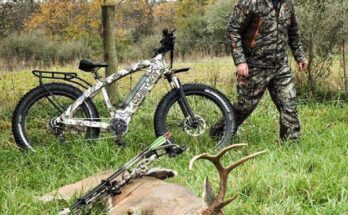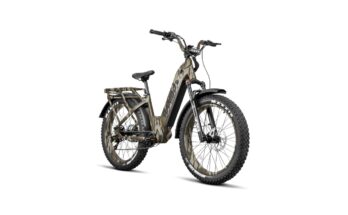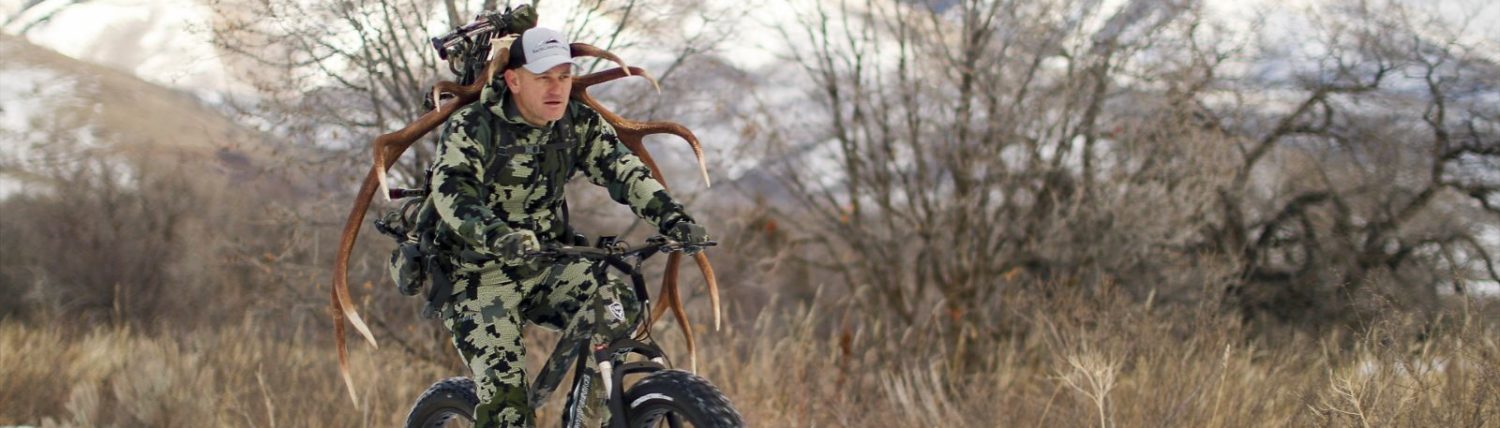
Plenty of electric bikes call themselves “off-road capable.” Most of them are not. A paved bike path and a rutted mountain trail are completely different animals, and the bike that handles one will often fail on the other. For hunters, truly off-road capability is not optional. You need a machine that can climb steep grades with gear on the back, ford shallow creek crossings without frying electronics, and survive miles of rocky, rooted, unmaintained trail. These are the e-bikes that actually deliver in 2026.
What Makes an E-Bike Truly Off-Road Capable
Before getting into specific models, it helps to understand the four things that separate a real off-road hunting e-bike from a glorified commuter bike with knobby tires.
Suspension quality and travel. Full suspension (front and rear) with at least 120mm of travel is the baseline for serious off-road use. Hardtail bikes (front suspension only) can work on moderate trails, but once you add 50+ pounds of gear to the rear and start descending rocky terrain, a rigid rear end beats you up and loses traction. Look for air-sprung forks that you can adjust for your weight plus gear, and rear shocks with lockout for efficient pedaling on flat sections.
Ground clearance. The distance between the lowest point of the frame (usually the motor or bottom bracket) and the ground determines what you can ride over without hitting rocks or logs. Off-road hunting bikes should have at least 10 inches of ground clearance. Bikes with low-slung hub motors or drooping battery packs will hang up on obstacles constantly.
Motor torque. Raw wattage matters less than torque for off-road hunting. A 750W mid-drive motor with 120+ Nm of torque will outclimb a 1000W hub motor on steep, loose terrain every time. Mid-drive motors use the bike’s gears, so they maintain torque at low speeds when you need it most. Hub motors spin the wheel directly, which means they lose effectiveness on steep grades and can overheat on long climbs.
Frame and component durability. Off-road hunting means exposure to water, mud, dust, and impacts. The frame needs to handle rack loads without flexing. Cables should be internally routed to avoid snagging on brush. Brake rotors should be 180mm or larger (203mm is better) for reliable stopping with a loaded bike on steep descents. And sealed bearings throughout the drivetrain keep grit from destroying things.
Best Off-Road Electric Bikes for Hunting in 2026
1. Bakcou Scout
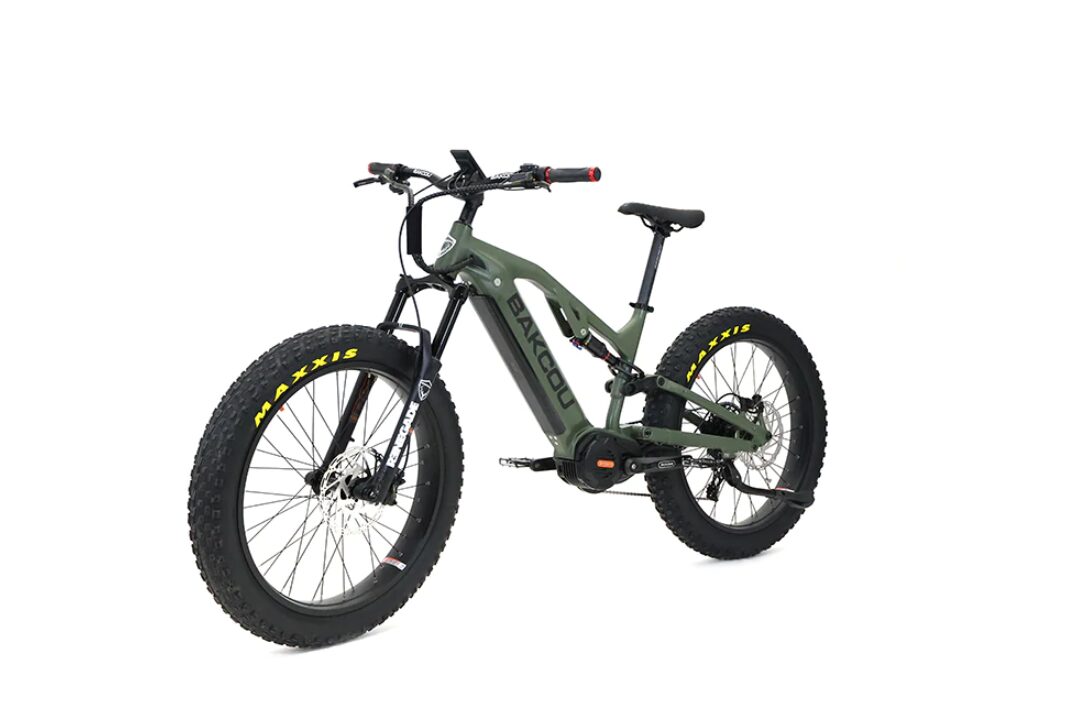
Bakcou Scout
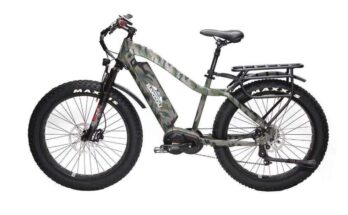
The Bakcou Scout sits at the top of this list because it does everything well. The 750W or 1000W Bafang Ultra mid-drive motor delivers serious torque, which is enough to crawl up grades that would stall lesser bikes. Full suspension soaks up rough terrain without wallowing on climbs thanks to a lockout feature on the rear shock. Ground clearance is excellent, and the frame is designed from the ground up for rack-mounted loads. Starting at $4,799 (17.5Ah) or $4,999 (21Ah), if you hunt in genuinely rough country (mountains, steep timber, rocky ridgelines), this is the bike to beat.
2. QuietKat Apex Pro
The Apex Pro is built around a 1000W mid-drive motor and full suspension platform that handles aggressive off-road terrain with confidence. What sets it apart is the attention to noise reduction. The optional belt drive eliminates chain slap entirely, which matters when you are riding within earshot of game. Suspension travel of 140mm front and rear handles roots, rocks, and drops without bottoming out under load. The frame accepts QuietKat’s ecosystem of hunting accessories, including a pannier system, bow rack, and gun boot. The Apex Pro is priced at $3,499. A strong second choice behind the Scout, and some hunters prefer it for the quieter drivetrain.
3. Himiway Cobra D7 PRO
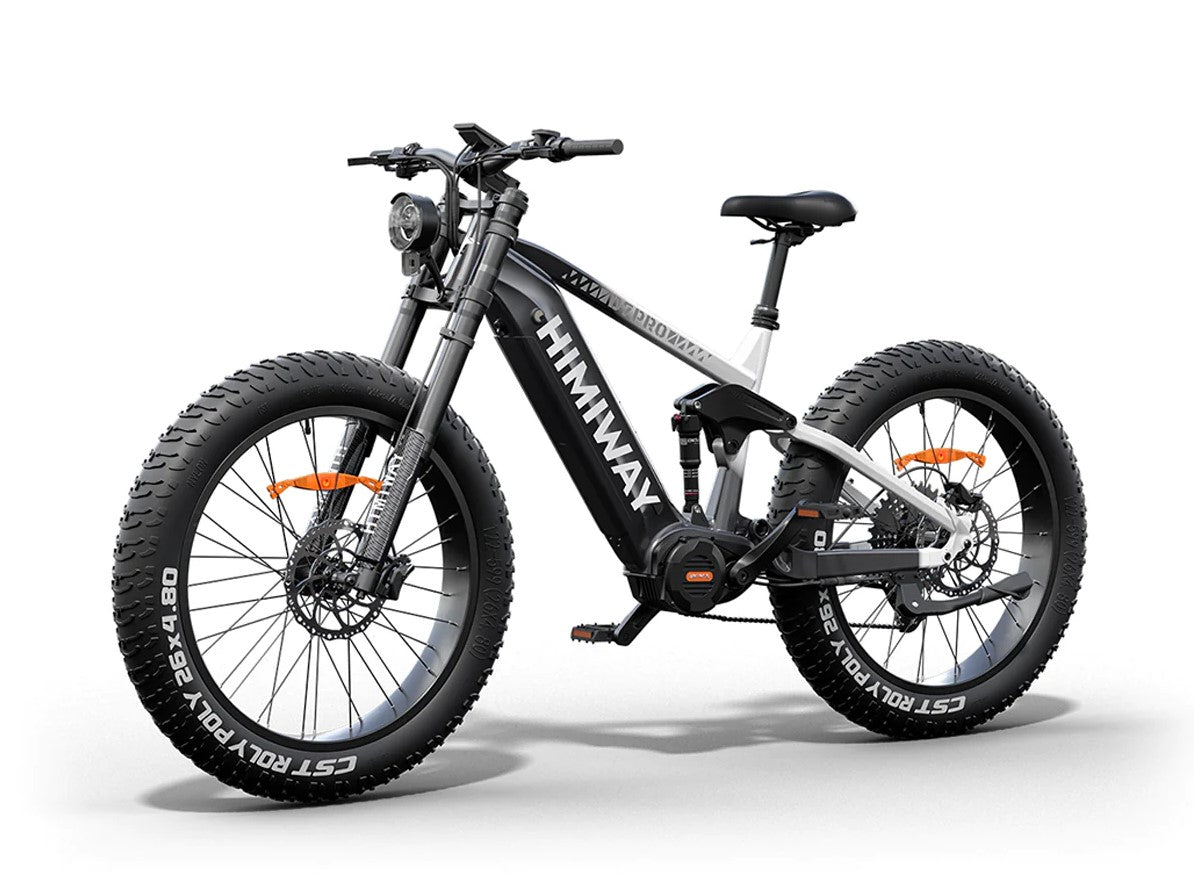
Himiway Cobra D7 PRO
The Cobra D7 PRO punches well above its $3,999 price point for off-road capability. Its 1000W mid-drive motor and full suspension (150mm travel) put it in the same performance bracket as bikes costing significantly more. The 48V 20Ah battery is one of the largest in this class, giving you the range to ride deep into backcountry and back without worrying about running flat. Ground clearance is adequate for most trails, though the battery placement sits slightly lower than the Bakcou or QuietKat designs. For the hunter who wants serious off-road performance without the premium price tag, the Cobra D7 PRO is hard to argue against.
4. Rambo Rebel 2.0
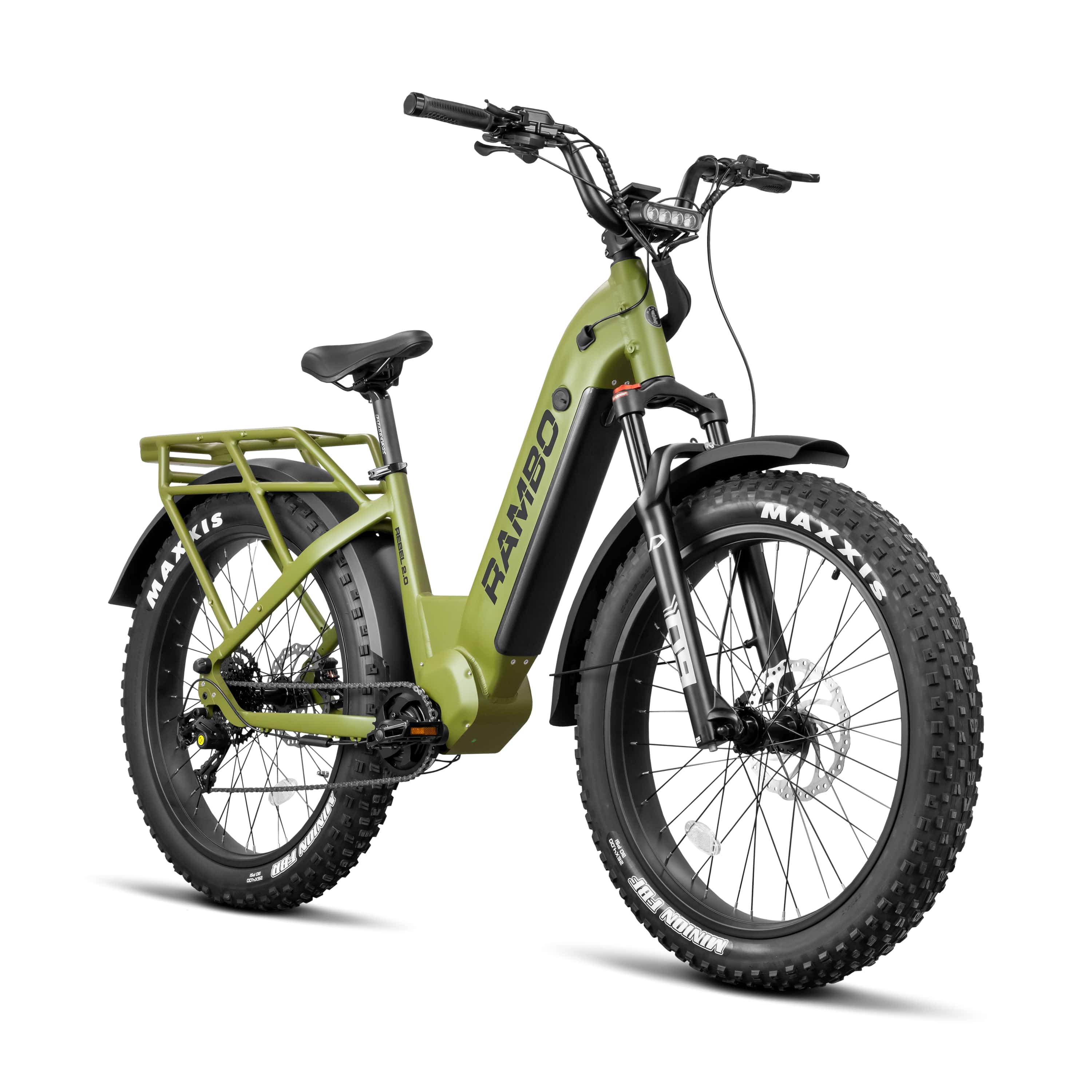
Rambo Rebel 2.0
Rambo built their reputation on hunting e-bikes, and the Rebel 2.0 ($3,299.99) is their most off-road-focused model. It features a 1000W mid-drive motor, full suspension, and 26×4.8-inch tires wrapped around reinforced rims. The Truetimber camo finish is more than cosmetic; Rambo uses a durable coating process that resists scratching from brush and branches better than standard paint. The Rebel’s geometry features a slacker head angle for stability on steep descents. Rambo’s purpose-built trailer system integrates cleanly for hauling heavy loads out of the field.
5. Bakcou Flatlander SD
The Bakcou Flatlander SD ($3,699) is built for hunters who ride flat to moderate terrain and want Bakcou quality without a full-suspension price tag. It uses a 750W rear hub motor, 26×4-inch fat tires, and a rigid fork that keeps weight down and maintenance simple. The step-through frame option makes it easy to mount and dismount while wearing bulky hunting gear. Battery range hits 40+ miles on flat terrain. For prairie, farmland, and marsh-edge hunting, the Flatlander SD is a practical, no-nonsense machine that handles off-road conditions with confidence.
6. Bakcou Mule SD
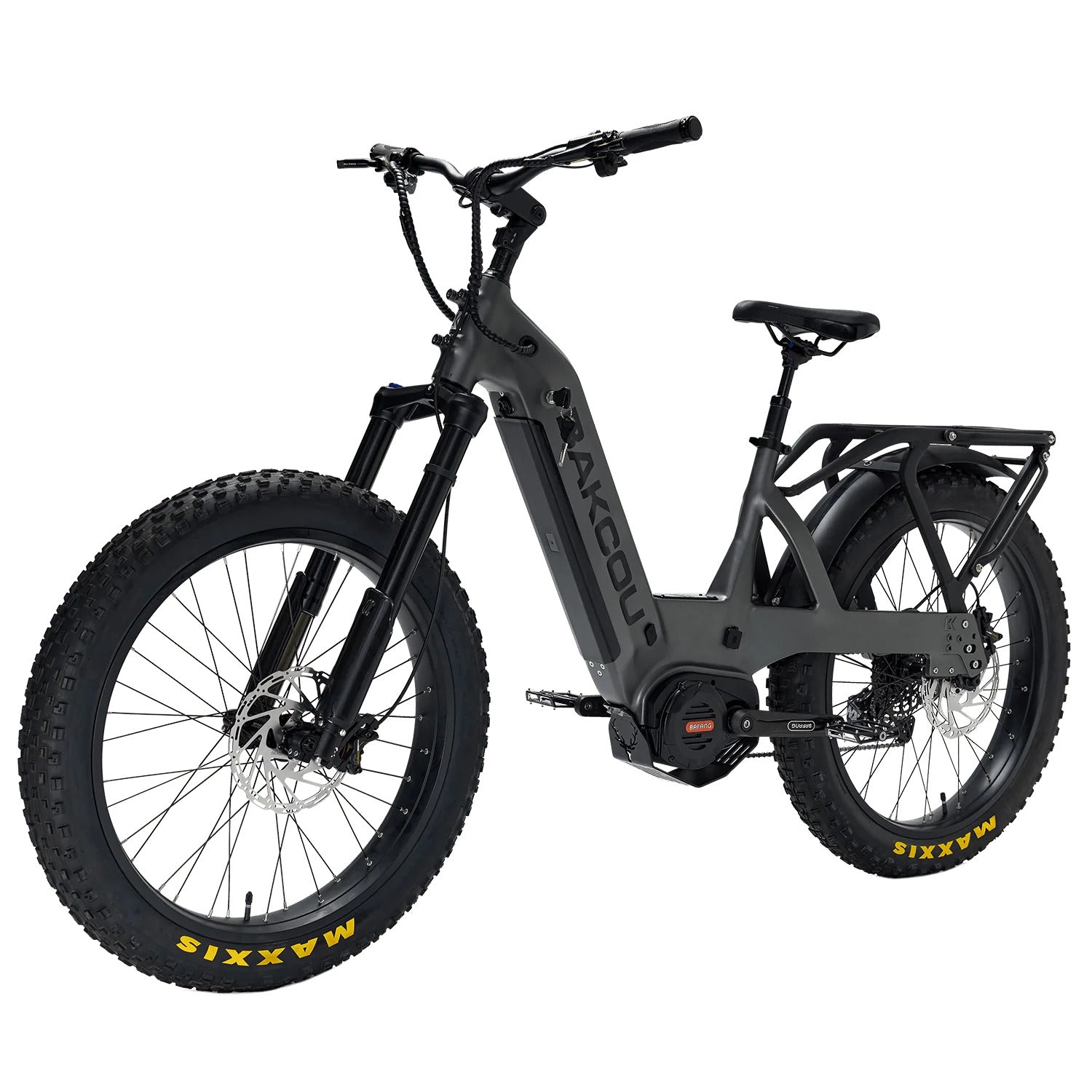
Bakcou Mule SD
The Mule SD (starting at $5,599) is Bakcou’s flagship hardtail, and it hits a practical sweet spot for hunters who need solid off-road capability with a proven platform. It features a 750W or 1000W Bafang Ultra mid-drive motor, front suspension, and a rigid rear end (hardtail). The hardtail design is not a limitation for most hunting terrain. It keeps the bike lighter, eliminates rear shock maintenance, and actually provides a stiffer platform for heavy rear loads. For moderate off-road trails, logging roads, and rolling terrain, the Mule SD is a reliable and efficient choice.
7. QuietKat Ranger
The QuietKat Ranger is a capable off-road e-bike that offers solid performance at a more accessible price than the Apex Pro. Available in both the Ranger XR ($1,999.99) and Ranger AWD ($2,999.99) configurations, it features a mid-drive motor, fat tires, and the kind of build quality QuietKat is known for. The frame is reinforced at stress points and accommodates standard rack systems. The Ranger AWD version adds front-wheel drive for improved traction on steep, loose terrain. A good choice for hunters who want QuietKat’s quiet operation and dealer support without stepping up to Apex pricing.
8. Himiway Cobra D7
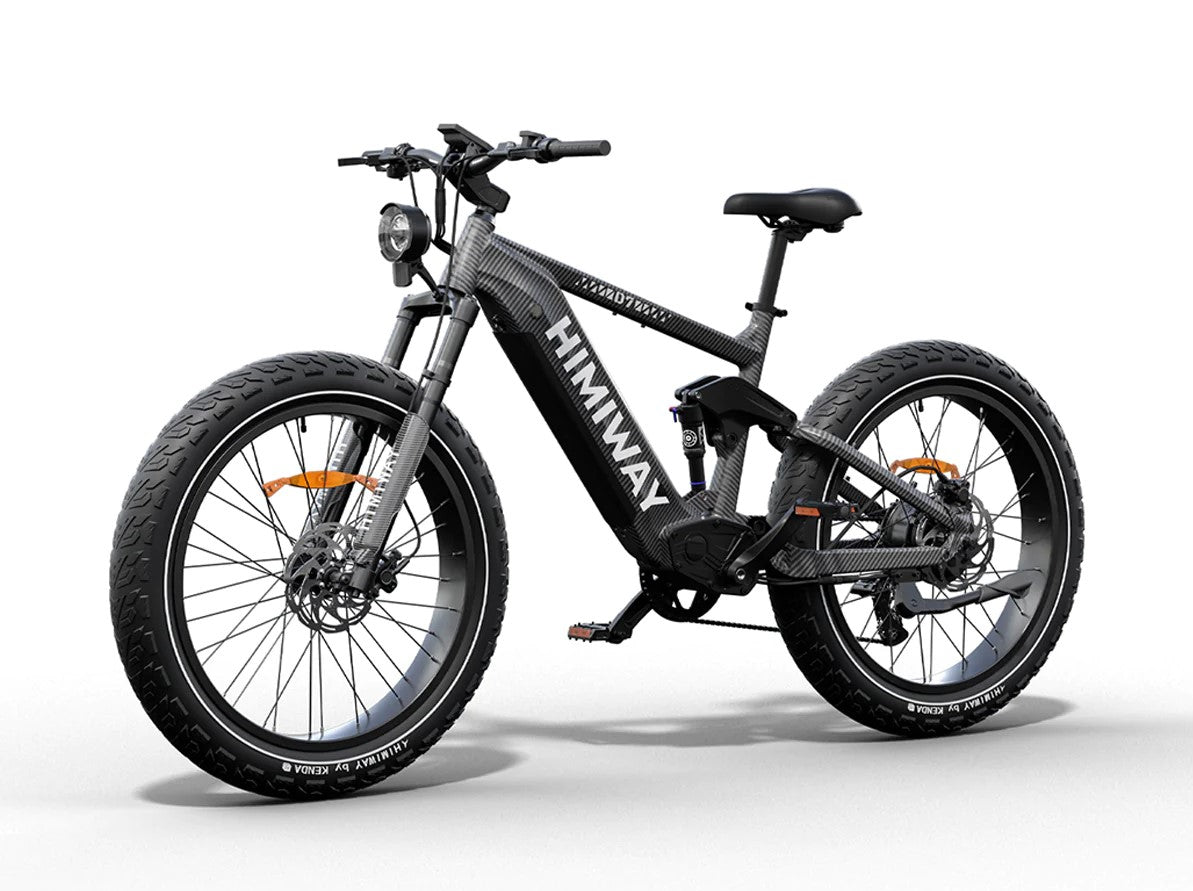
Himiway Cobra D7
The Himiway Cobra D7 is the budget entry on this list, and it earns its spot with genuinely capable off-road performance at a price that undercuts the competition. The 750W hub motor, full suspension, and 26×4.8-inch fat tires handle moderate off-road trails well. The 48V 20Ah battery gives you excellent range for all-day hunts, and the 400 lb weight capacity handles rider plus gear without complaint. It lacks the mid-drive torque of premium options, so steep technical climbs are not its strength. But for hunters working moderate trails, rocky double-track, and forest roads, the Cobra D7 provides legitimate off-road performance at $2,499. Available at ebikegeneration.com.
Terrain-Specific Recommendations
The “best” off-road hunting e-bike depends heavily on where you hunt. Here is how to match the bike to your terrain.
Mountain terrain (steep grades, rocks, elevation changes). You need maximum torque, full suspension with 140mm+ travel, and aggressive tires. The Bakcou Scout and Bakcou Mule SD are the top picks here. Both have the torque to grind up steep grades and the suspension to handle rocky descents loaded with gear. A mid-drive motor is essential; hub motors overheat on sustained mountain climbs.
Swamp and bottomland (mud, standing water, soft ground). Flotation and sealed components are the priorities. Fat tires (4.5 inches or wider) at low pressure keep you on top of soft ground. The Rambo Rebel 2.0 and Bakcou Scout both handle wet conditions well, with sealed bottom brackets and water-resistant battery housings. Avoid bikes with exposed electrical connections or low-mounted controllers that will sit in standing water. After every swamp ride, hose the bike down and re-lube the chain.
Prairie and grassland (flat, open, occasional fence crossings). You do not need full suspension or extreme torque for flat ground. A hardtail like the Bakcou Mule SD or even a rigid-fork fat tire bike will cover ground efficiently with less mechanical complexity. Range becomes the key factor since flat, open country means longer rides. Look for the biggest battery you can get, and consider carrying a spare. The Himiway Cobra D7 PRO’s 20Ah battery excels here.
Desert terrain (sand, heat, remote access). Sand demands fat tires at low pressure, period. Heat is the hidden challenge; motors and batteries lose efficiency in high temperatures, and some batteries have thermal cutoffs that will shut you down above 110 degrees. Ride early, keep the battery shaded when parked, and choose a bike with good thermal management. The Bakcou Scout and QuietKat Apex Pro both handle desert heat reasonably well. Carry more water than you think you need, both for yourself and for pouring over the motor housing if it gets too hot on a long climb.
Final Thoughts
A truly off-road capable e-bike will change how you hunt. You can access areas that would take hours on foot, arrive fresher and quieter than you would on an ATV, and haul your gear without destroying the trail. The bikes on this list range from budget-friendly options to premium builds, but every one of them has been proven on real trails in real conditions. Match the bike to your specific terrain, maintain it properly, and it will pay for itself in saved time and expanded access within a couple of seasons.