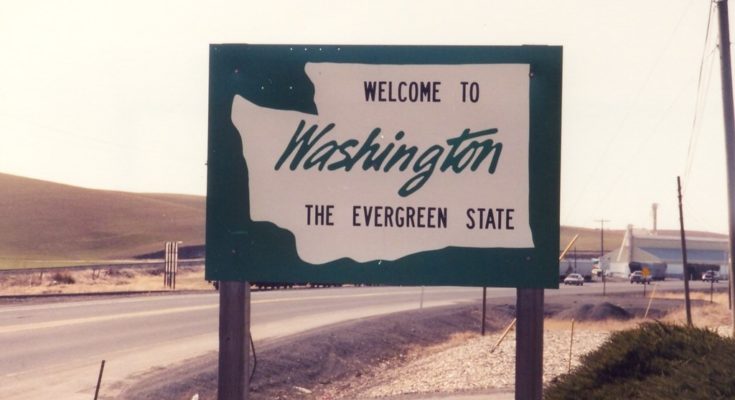
Washington is the state that reminded me how much I take dry weather for granted. I hunted Roosevelt elk on the Olympic Peninsula and it rained every single day for eight days straight. Not drizzle, real rain, the kind that makes you question your life choices while you sit under a tarp eating cold food. But the elk bugling through the fog in old-growth timber was worth every soggy minute. Eastern Washington is completely different, dry, open, and more like Idaho than Seattle. Two states in one, just like Oregon, and both worth hunting.
Washington Hunting Regulations Overview
The Washington Department of Fish and Wildlife (WDFW) manages hunting in the state. Washington uses a combination of general season permits and special permit draws (equivalent to controlled hunts in other states). General season deer and elk tags are available over the counter for both residents and nonresidents. Special permits for premium units and certain seasons require applying through the draw.
Washington uses a point system for special permit draws, and some units accumulate significant point creep. The state is divided into Game Management Units (GMUs) with unit-specific regulations for season dates, bag limits, and weapon restrictions. Archery season generally opens in September, muzzleloader in late September or October, and modern firearm seasons in October and November.
Washington requires hunter education for all first-time hunters. The state also has specific regulations about blaze orange requirements during firearm seasons. Check WDFW for current season dates, draw deadlines, and GMU-specific rules.
E-Bike Regulations for Hunters in Washington
Updated March 2026, E-bike regulations are constantly evolving. Always check the rules for your local jurisdiction before heading out.
Washington classifies ebikes under the three-class system, and the state has worked to develop clear policies for different land types. On state highways and roads, ebikes are treated as bicycles.
On WDFW-managed wildlife areas, ebikes are generally treated as motorized vehicles and restricted to roads open to motor vehicle traffic. Some wildlife areas have seasonal closures for motorized access during specific hunting periods. The Department of Natural Resources (DNR) manages state trust lands where hunting is permitted. DNR land generally allows motorized access on designated roads, and ebike policy may vary by region. Check with the specific DNR region.
National forest land is where ebike hunting really opens up in Washington. The state has major national forests (Olympic, Mt. Baker-Snoqualmie, Okanogan-Wenatchee, Gifford Pinchot, and Colville) with extensive road networks. USFS policy allows Class 1 ebikes on motorized-designated routes per the MVUM. The logging road network in these forests is dense, particularly in the Cascades and northeast Washington. BLM land in Washington is limited but follows standard designated-route policy. Wilderness areas (Alpine Lakes, Glacier Peak, Goat Rocks, and others) are closed to ebikes.
Top Game Species
- Roosevelt Elk, Western Washington’s old-growth and second-growth forests hold Roosevelt elk herds. The Olympic Peninsula and Willapa Hills are prime areas. General season tags available. These are big-bodied animals in thick cover.
- Rocky Mountain Elk, Eastern Washington’s Blue Mountains and Selkirk Range hold Rocky Mountain elk. Some excellent special permit units exist. General season opportunities are also available.
- Mule Deer, Eastern Washington’s shrub-steppe and mountain country. The Okanogan, Blue Mountains, and northeast corner produce good bucks.
- Blacktail Deer, Western Washington’s signature species. Dense timber hunting in the Cascades and Coast Range. General season tags and long archery seasons.
- Black Bear, Found in forested areas across the state. Spring and fall seasons. The Cascades hold strong populations.
- Mountain Goat, Limited special permits in the Cascades and Olympics. Rugged mountain hunting at its most demanding.
Best Regions for E-Bike Hunting
Okanogan-Wenatchee National Forest (North-Central Washington), The Okanogan country offers excellent mule deer and elk hunting with a network of forest roads through pine forests and mountain meadows. The terrain is drier and more open than the west side, and the forest road system is extensive. An ebike is ideal for covering the long ridge roads that access the high basins where animals summer and early-season hunt.
Colville National Forest (Northeast Washington), Washington’s forgotten corner is some of the best hunting in the state. Whitetail, mule deer, elk, moose (limited tags), and bear in timbered mountain country. The logging road network is dense and well-suited for ebike access. Less hunting pressure than anywhere else in the state.
Gifford Pinchot National Forest (Southwest Washington). South of Mount St. Helens, the Gifford Pinchot offers Roosevelt elk hunting in a landscape shaped by volcanic activity and logging. The road network is extensive, and the mix of clearcuts and old-growth provides excellent elk habitat. An ebike handles the long forest road approaches to the productive clearcut edges.
Practical Tips for E-Bike Hunting in Washington
-
Waterproofing isn’t optional on the west side. If you’re hunting western Washington, your ebike will get wet. Not “might get wet”, will get wet, repeatedly, for days. Invest in a waterproof battery cover, seal your electrical connections, and keep your chain lubed with wet-condition lubricant. Rust is the enemy.
-
Logging roads are numbered, not named. Washington’s forest road system uses a numerical system (e.g., FR 2500, FR 2506). Get the MVUM and learn the numbering system before you go. It’s easy to take a wrong turn when every intersection looks the same and the road numbers are faded on the posts.
-
DNR land is the hidden gem. Washington DNR manages millions of acres of state trust land that’s open to public recreation, including hunting. Many hunters don’t realize this land is available. DNR land often has road access and less pressure than national forest. Check the DNR recreation maps for your hunting area.
-
The Cascade crest is the weather divide. If it’s raining on the west side, drive over the pass. Eastern Washington often has clear skies when Seattle is underwater. This applies to your ebike setup too, you might need rain gear and fenders for a west-side hunt and dust protection for the east side.
-
Roosevelt elk in thick timber require patience, not distance. On the west side, an ebike gets you to the hunting area, but the actual hunting is close-range work in dense cover. Don’t ride past the elk trying to find open country, there isn’t any. Ride to a good drainage, park the bike, and still-hunt through the timber.
The Bottom Line
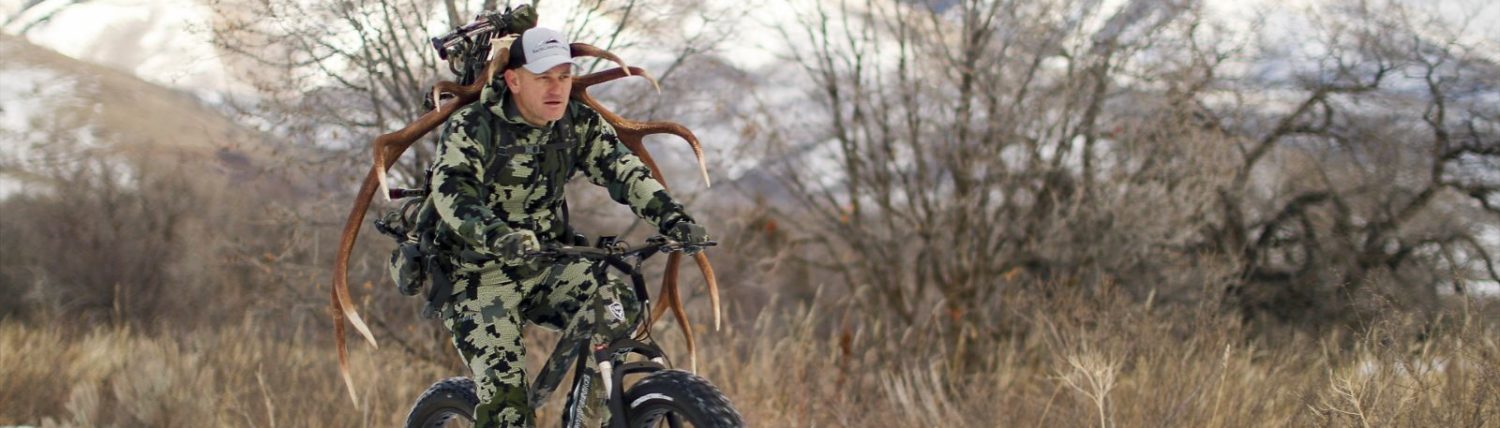
Washington offers diverse hunting from the rainforests of the Olympic Peninsula to the dry mountains of the Okanogan, and the forest road network is tailor-made for ebike access. The key is matching your setup to the side of the state you’re hunting, waterproof everything for the west, and plan for distance on the east. If you’re putting together a Washington-ready rig, you can find solid hunting ebike options at ebikegeneration.com/?aff=76, and seriously, invest in fenders and waterproofing if you’re heading west of the Cascades.
Resources & Contacts
Washington Department of Fish and Wildlife (WDFW)
– Website: wdfw.wa.gov
– Hunting Regulations: wdfw.wa.gov/hunting/regulations
– Phone: (360) 902-2200
Wildlife Areas
– WDFW Wildlife Areas
– Phone: (360) 902-2200
National Forests in Washington
– Colville National Forest | check for MVUM under Maps & Publications
– Gifford Pinchot National Forest | check for MVUM under Maps & Publications
– Mt. Baker-Snoqualmie National Forest | check for MVUM under Maps & Publications
– Okanogan-Wenatchee National Forest | check for MVUM under Maps & Publications
– Olympic National Forest | check for MVUM under Maps & Publications
BLM Oregon/Washington
– Website: www.blm.gov/oregon-washington
– Phone: (503) 808-6001
State Public Lands
– Washington DNR Recreation
– WDFW Public Lands Map