Look, I’m not going to sugarcoat it. Connecticut is not the first state that comes to mind when someone says “hunting trip.” It’s small, it’s crowded, and half the woods have a subdivision backing up to them. But you know what? The deer herd is legitimately thick, the state has been quietly opening up more public land access, and if you’re a northeast hunter who doesn’t want to burn a whole tank of gas getting to your spot, there’s something to be said for a state where the farthest drive to a WMA is maybe an hour. I’ve hunted the northwest corner a few times, and I’ll admit, the hardwoods up there surprised me.
Connecticut Hunting Regulations Overview
Connecticut requires all hunters to hold a valid state hunting license issued by the Department of Energy and Environmental Protection (DEEP). If you’re coming from out of state, non-resident licenses are available but cost more, no surprise there. You’ll also need to complete a hunter education course if you haven’t already, and Connecticut honors certifications from other states. A separate deer permit is required depending on whether you’re hunting with firearms or archery equipment.
Deer seasons generally run from mid-September through December, starting with archery, moving into firearms (November), and wrapping up with a muzzleloader season in December. Connecticut uses a deer management zone system, so bag limits and antlerless deer permits vary by zone. For small game, squirrel season typically opens in mid-September and runs into February, which is a solid window. Turkey hunting has both spring and fall seasons, though the fall season is limited to certain zones. For complete season dates and regulations, visit the DEEP hunting regulations page.
One thing worth noting: Connecticut has mandatory harvest reporting for deer and turkey. You need to report your harvest within 24 hours. They take it seriously, and honestly, it’s not a bad system, helps them manage the herd.
E-Bike Regulations for Hunters in Connecticut
Updated March 2026, E-bike regulations are constantly evolving. Always check the rules for your local jurisdiction before heading out.
Here’s where it gets a little murky, and I’ll be straight with you. Connecticut classifies e-bikes into three classes consistent with most other states. Class 1 (pedal-assist up to 20 mph), Class 2 (throttle-assist up to 20 mph), and Class 3 (pedal-assist up to 28 mph). On public roads and multi-use trails, e-bikes are generally treated like bicycles.
However, on state forests and wildlife management areas (WMAs), motorized vehicles are typically prohibited unless specifically authorized. DEEP manages these lands and their trail policies can vary by property. Some state forests allow bicycles on designated trails, but whether an e-bike counts as a bicycle or a motorized vehicle on state land is something you’ll want to clarify directly with DEEP before heading out. The safest approach is to contact the specific state forest or WMA you plan to hunt and ask about e-bike access.
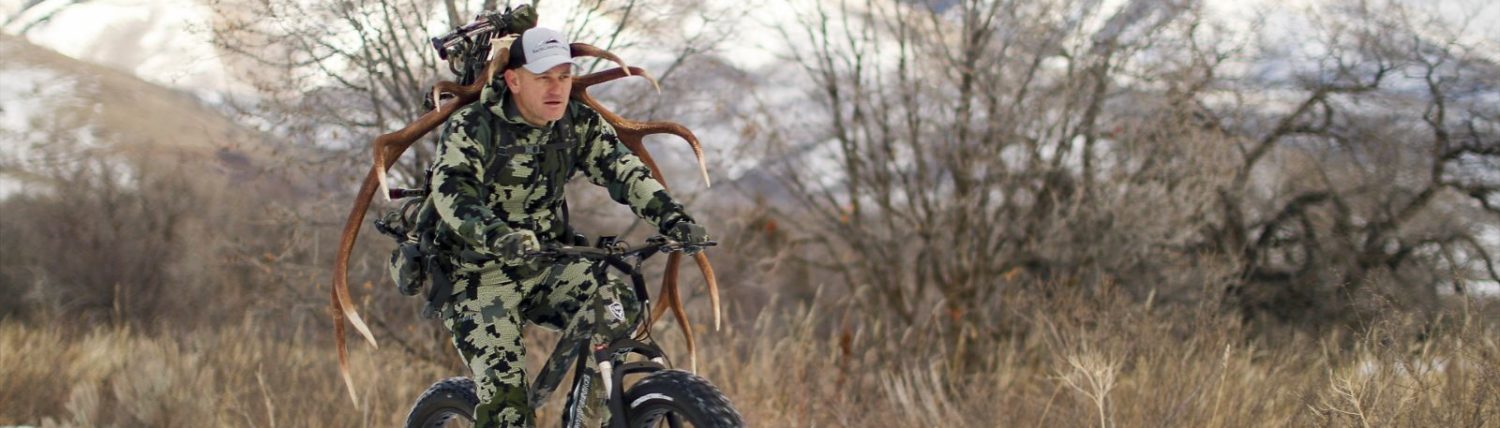
For private land, you’re generally good to go with the landowner’s permission. Many Connecticut hunters rely on private land access anyway, given the state’s size, and an e-bike can be a real asset for getting deeper into properties without tearing up the ground or making a racket with an ATV.
Top Game Species
- White-tailed Deer, Connecticut’s deer population is healthy, particularly in the western and central parts of the state. The long archery season gives bowhunters a solid window from September into December.
- Eastern Wild Turkey, Spring gobbler season is popular and the population has rebounded well. Fall turkey hunting is available in select zones.
- Gray Squirrel, Plenty of hardwood forests mean plenty of squirrels. The long season makes this a great way to get out when nothing else is open.
- Ring-necked Pheasant, DEEP stocks pheasants on designated state lands, making this one of the more accessible upland hunting opportunities in southern New England.
- Eastern Cottontail, Decent populations in brushy areas and field edges, with a season running through fall and winter.
Best Regions for E-Bike Hunting
Northwestern Hills (Litchfield County), This is Connecticut’s best-kept hunting secret. The Litchfield Hills have some of the state’s largest tracts of state forest, including Housatonic State Forest and Mohawk State Forest. The terrain is hilly and wooded, which is where an e-bike earns its keep hauling you and your gear up those ridges. Deer density here is solid and hunting pressure is lighter than the suburbs.
Northeastern Quiet Corner (Windham County), Less developed, more rural, and often overlooked. The Natchaug State Forest complex offers thousands of acres of huntable land. Terrain here is more manageable than the northwest, making it friendlier for e-bike travel, and you won’t be fighting the crowds you’d find closer to the coast.
Central Connecticut River Valley, Don’t sleep on the state forests in the central part of the state. Meshomasic State Forest is one of the oldest in New England and offers solid deer and small game hunting. The trail networks here could work well for e-bike access, though confirm current trail policies with DEEP.
Practical Tips for E-Bike Hunting in Connecticut
-
Know your property boundaries. In a state this small and densely populated, residential areas butt right up against huntable land. A GPS with property lines loaded is essential, you don’t want to track a deer into someone’s backyard.
-
Hunt midweek if you can. Connecticut’s public land sees heavy recreational use on weekends, hikers, mountain bikers, dog walkers. Midweek hunts are quieter and more productive, and you’ll have trails more to yourself for your e-bike.
-
Use your e-bike for pheasant stocking days. When DEEP stocks pheasant on state land, getting to the less-accessible areas quickly puts you on birds the walk-in crowd hasn’t pressured yet. An e-bike is perfect for this.
-
Watch for mud season. Late fall rains and spring thaw can turn Connecticut’s forest roads into a mess. Fat tires help, but know when to walk it. Tearing up a muddy trail is a good way to get e-bikes banned from places they’re currently tolerated.
-
Battery life isn’t an issue here. Connecticut is small enough that you’re not covering massive distances. Even on a cold November morning, a single charge gets you through the day. But I still bring mine inside overnight out of habit, check out our [Best Electric Hunting Bikes] guide for models that handle cold weather well.
The Bottom Line
Connecticut might be tiny, but the hunters who know it well fill their tags just fine. An e-bike can genuinely change the game on those larger state forests where walking in from the gate eats up half your morning. If you’re looking to get set up with a hunting e-bike, you can find solid hunting ebike options at ebikegeneration.com/?aff=76, grab something with fat tires and you’ll be ready for anything the Nutmeg State throws at you.
Resources & Contacts
Connecticut Department of Energy and Environmental Protection (DEEP)
– Website: portal.ct.gov/deep
– Hunting Regulations: portal.ct.gov/deep/hunting/hunting-regulations
– Phone: (860) 424-3000
Wildlife Management Areas
– DEEP State Land and WMA Listings
– Phone: (860) 424-3011
State Forests & Public Hunting Land
– DEEP State Forests
– CT DEEP Public Land Map