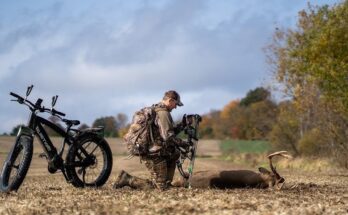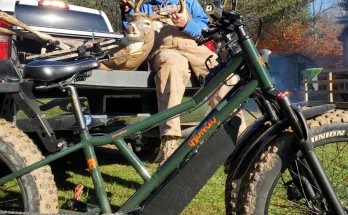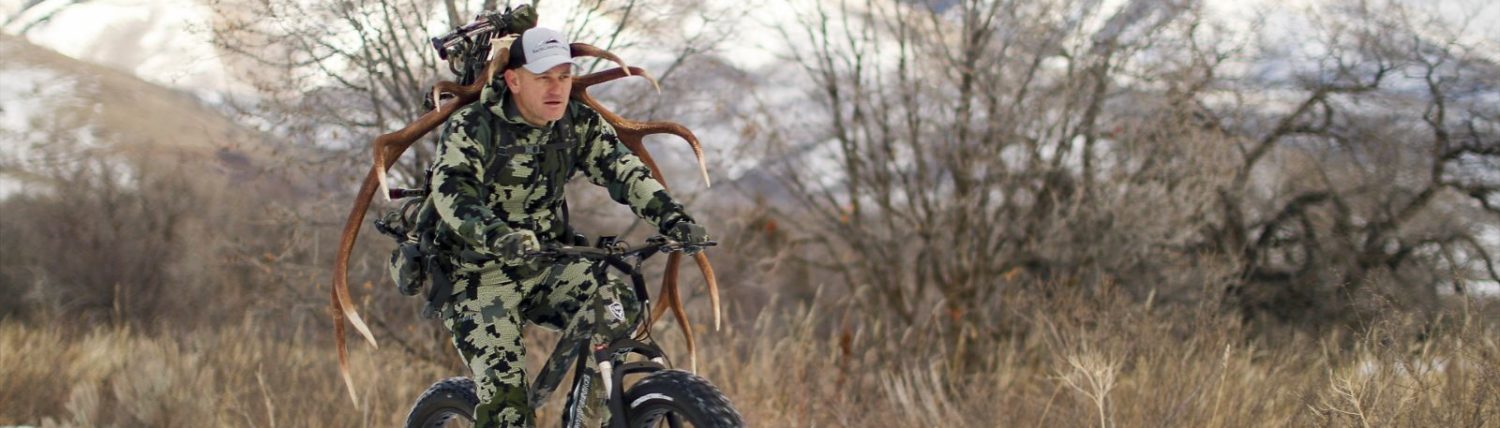
Let me tell you about the time I strapped a 180-pound buck to the back of my eBike with nothing but two ratchet straps and a prayer. It was opening weekend in Georgia, maybe four years ago. I’d shot a solid eight-point about a mile and a half from my truck, and my buddy who was supposed to help me drag it out had already headed home with a “stomach thing” that I’m pretty sure was college football on TV. So there I was, just me and this deer and my Bakcou, thinking I was about to be the smartest hunter in the woods.
I was not the smartest hunter in the woods.
I got that buck draped over my rear rack, cinched it down tight (or so I thought), and started rolling. Made it about 200 yards before the weight shifted, the bike went sideways, and I ended up in a drainage ditch with a dead deer on top of me. Covered in mud, covered in blood, laying there staring at the sky wondering if this was how they’d find me. I started laughing so hard I couldn’t get up for a solid two minutes.
But here’s the thing. I learned a lot that day. And in the years since, I’ve hauled more deer, hogs, and wild game on eBikes than most people would believe. Some of those trips went smooth as butter. Others were disasters that make great campfire stories. This article is everything I’ve figured out so you can skip the ditch and go straight to the “smooth as butter” part.
The Weight Math You Need to Do First
Before you buy a trailer or start lashing anything to your bike, you need to know what you’re actually hauling. Most hunters dramatically underestimate this, and that’s where problems start.
A whitetail doe, field dressed, runs about 80 to 130 pounds depending on where you hunt. Southern does tend toward the lighter end. A whitetail buck, field dressed, is typically 120 to 200 pounds. Big Northern bucks push that upper range hard, and I’ve seen a few that had to be closer to 220. Mule deer bucks are bigger animals overall; expect 150 to 250 pounds field dressed. And then there are hogs, which are the wild card of wild cards. I’ve shot 80-pound shoats and 300-plus-pound boars that looked like small bears. You never really know what you’re getting with hogs.
Now add up everything else. You weigh something. I’m 210, which is generous phrasing for what happens when you love barbecue as much as I do. My rifle, pack, and gear add another 15 to 20 pounds. So before I even load a deer, my bike is already handling 225 to 230 pounds of Grady and Grady’s stuff.
Here’s where the math matters. Most eBikes have a payload capacity between 250 and 350 pounds. Some of the heavy-duty hunting models, like the Bakcou Mule SD, are rated for 350 pounds on the bike itself. But if I’m already using 230 of that, I’ve only got 120 pounds of headroom. That’s a small doe, barely. That is exactly why trailers exist.
Trailer Options for Hauling Game
A good trailer changes everything. Instead of fighting your bike’s payload limit, you’re working with a separate platform designed to carry heavy loads. Let me walk through what’s out there.
Purpose-Built Game Trailers
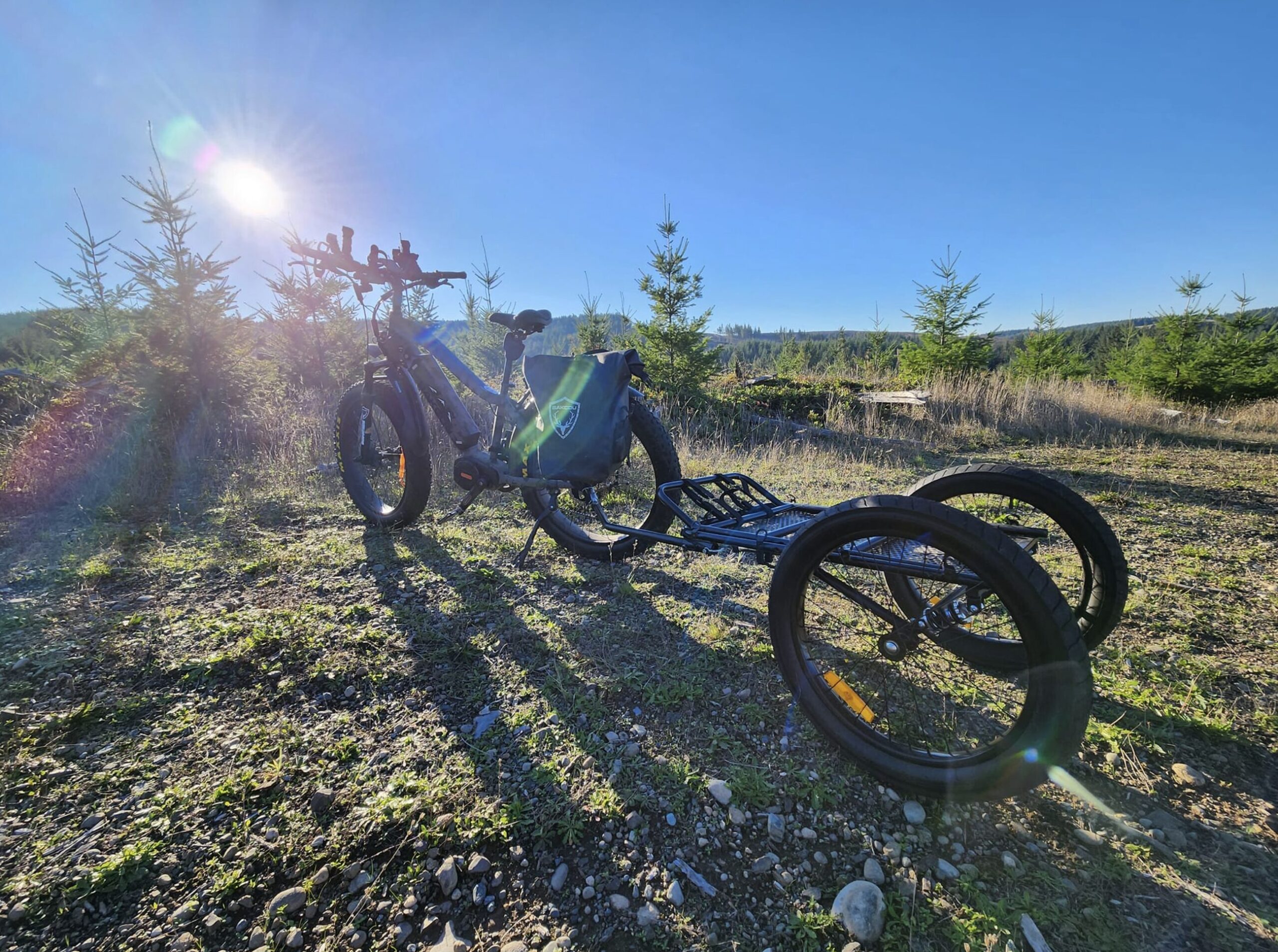
Bakcou and Rambo both make trailers specifically designed for hauling game behind eBikes. These are the gold standard. They’re built with fat tire compatibility in mind, they have proper hitch systems that work with their bikes, and they’re rated for real weight. You can find these over at eBike Generation’s accessories page, which carries both brands.
What I like about purpose-built trailers is that the engineers actually thought about what happens when you put 200 pounds of dead weight on rough terrain. The axle placement is designed so the tongue weight doesn’t overload your rear wheel. The bed is usually aluminum or steel with tie-down points welded in the right spots. And the tires are fat enough to handle the same trails your bike can.
Converted Cargo Trailers
This is the budget-conscious approach, and I’ve done it. You can buy a standard bicycle cargo trailer (the kind people use to haul groceries or kids) and reinforce it for game hauling. The Burley Flatbed and similar models run $200 to $400 and can handle 100 to 150 pounds. For a doe or quartered meat, that can work fine. The issue is that most of these trailers have skinny wheels that sink into soft ground, and the hitch systems aren’t always compatible with fat tire eBikes without an adapter.
I used a converted cargo trailer for about a season before upgrading. It worked, but I was always nervous on uneven ground. The narrow tires would catch ruts and pull the whole bike sideways. One time on a clay trail after rain, the trailer slid off the trail and tipped over on me. Had to unload everything just to get it upright again. Fun times.
DIY Trailers
I know guys who’ve built game trailers out of plywood decks mounted on old bike trailer frames. Some of them are actually pretty solid. The basic recipe is a steel or aluminum frame from a cheap cargo trailer, a sheet of three-quarter-inch marine plywood cut to fit, and some eyebolts for tie-down points. Total cost can be under $150 if you’re handy.
The catch with DIY is that you need to get the balance right. Too much weight behind the axle and the trailer wants to fishtail. Too much weight in front of the axle and it pushes down on your rear wheel, messing with your steering and braking. Aim for about 60 percent of the load weight over or slightly in front of the axle. I learned this the hard way hauling a hog that was loaded too far back. The trailer was wagging like a dog’s tail the entire ride out, and I was going maybe 5 mph on a straight flat road.
What to Look For in Any Trailer
Whatever route you go, pay attention to four things. First, the weight rating. Don’t guess. The trailer should have a stated capacity, and you should respect it. Second, tire type. Fat tires or at least wide pneumatic tires make a massive difference on dirt, mud, and gravel. Solid rubber tires look durable but they bounce like crazy on rough ground. Third, hitch compatibility. Make sure the coupler fits your bike’s rear axle or frame. Some trailers use a universal hitch that clamps to the seat post or rear axle, while others are brand-specific. Fourth, does it fold? Storage and transport matter. A trailer that folds flat fits in your truck bed alongside your bike. One that doesn’t fold is a pain to deal with every single trip.
Direct-to-Bike Methods (No Trailer)
Not everyone wants to deal with a trailer, and sometimes you just don’t have one with you. There are ways to haul game directly on your bike, but they come with limitations.
Rear Rack with Straps
This is what I tried my first time, and you already know how that went. But it CAN work for smaller game. A doe under 100 pounds, properly secured with ratchet straps to a sturdy rear rack, is doable if you’re careful. The key word is ratchet straps. I’ll say more about this later, but do not use bungee cords. Just don’t.
You want the weight as low and centered as possible. Some guys lay the deer across the rack belly-down with the legs hanging on either side, then strap across the back. This works on flat ground and smooth trails. On anything technical, you’re going to have a bad time because that much weight up high makes the bike incredibly top-heavy.
Quartering in the Field
This is honestly the most practical approach for bigger animals when you don’t have a trailer. Quarter the deer in the field, bag each quarter in a game bag, and pack it out in trips. Yes, it takes multiple trips. Yes, that’s annoying. But each quarter of a field-dressed whitetail buck is only 30 to 50 pounds. That’s easy work for any eBike, and you can strap a couple of quarters to your rear rack without stability issues.
I’ve done this more times than I can count with hogs especially. A big boar might be impossible to haul whole, but broken down into quarters and the backstraps, each load is totally manageable. Two trips, maybe three, and you’re done.
The Milk Crate Method
This one sounds redneck because it is redneck, and I love it. Zip-tie a heavy-duty milk crate to your rear rack. Put your quartered meat in game bags, stack the bags in the crate. The crate keeps everything contained, prevents shifting, and gives you solid anchor points for straps. I’ve hauled out the better part of a 200-pound hog this way in three trips. Nothing fell off, nothing shifted, and the crate is still on my bike today.
For smaller game like does or yearlings, you can sometimes get the whole field-dressed animal into two large game bags that fit in the crate. It’s not pretty, but it works.
eBike Requirements for Hauling Heavy Loads
Not every eBike is built for this. Hauling 150 to 250 pounds of game (plus you and your gear) puts serious demands on a bike’s motor, battery, brakes, and frame. Here’s what matters.
Mid-Drive vs. Hub Motor
This is the single biggest factor, and I’m not being subtle about it. Mid-drive motors are dramatically better for towing and hauling than hub motors. A mid-drive motor works through the bike’s gears, which means it can maintain torque at low speeds when you’re grinding uphill with a loaded trailer. A hub motor delivers power at a fixed ratio, and when you’re under heavy load on an incline, it bogs down or overheats.
I’ve used both extensively. My first hauling disaster was on a hub motor bike. When I switched to a mid-drive setup, the difference was night and day. The Bakcou Mule SD and the Rambo Rebel 2.0 are both mid-drive bikes that handle towing like they were built for it. Because they were. If you plan to haul game regularly, do yourself a favor and go mid-drive.
Battery Drain When Towing
Expect to lose 40 to 50 percent of your normal range when you’re pulling a loaded trailer. That’s not a guess. I’ve tracked this over dozens of trips. A bike that gives you 40 miles unloaded might give you 20 to 24 miles when you’re towing 200 pounds on mixed terrain. Plan accordingly.
This means you need to think about your route before the hunt. Know how far your stand or hunting spot is from your truck. Know the terrain. And consider carrying a second battery if you’re going deep. Running out of juice three miles from your truck with a loaded trailer behind you is an experience I’ve had exactly once, and I will never repeat it. Pedaling a 70-pound eBike with a 200-pound trailer on dead battery power nearly killed me. It was 87 degrees. In November. Because Florida.
Tire Pressure Adjustments
When you’re loaded heavy, drop your tire pressure a few PSI from your normal riding setup. Lower pressure gives you a bigger contact patch, which means better traction and more stability. I typically run 12 to 14 PSI unloaded and drop to 8 to 10 PSI when hauling. If you’re on soft ground or mud, go even lower. Just don’t go so low that you risk pinch flats or the tire rolling off the rim.
Brakes
This is the one that scares me most, and I wish more people talked about it. Adding 150 to 250 pounds to your total rig weight massively increases your stopping distance. Hydraulic disc brakes are basically mandatory for hauling. Mechanical disc brakes will work in a pinch but they fade faster under sustained load. And rim brakes? Don’t even think about it.
On downhills, feather your brakes evenly between front and rear. Do not grab a fistful of brake lever while going downhill with a loaded trailer. That’s how you lock up the rear wheel and lose control. Take it slow and steady, especially on loose or wet surfaces.
Practical Tips from the Field
These are the things I’ve learned from actually doing this, not from reading about it online. Some of them I learned the hard way.
Game Bags Are Not Optional
Use them. Always. Game bags keep dirt, debris, and insects off your meat. They also keep blood contained, which means less cleanup on your bike and trailer. A set of quality game bags costs $20 to $40 and lasts for years. There is no good reason to skip them.
Ratchet Straps, Never Bungees
Bungee cords stretch. That’s literally what they’re designed to do. When you hit a bump and your 150-pound load shifts two inches, bungees let it shift. Then on the next bump, it shifts a little more. Before long, your deer is hanging off one side of the trailer dragging on the ground. I watched this happen to a buddy in real time. We were riding side by side and I saw his load slowly migrating to the right. By the time I yelled at him, one leg was already dragging.
Ratchet straps lock things down. They don’t stretch, they don’t give, and they have a release mechanism that actually works when your hands are cold and bloody. Bring at least three. Two to secure the load, one as a backup because something always comes loose.
Plan Your Route Out Before the Hunt
This is critical and I cannot stress it enough. Scout your exit route before hunting season. Know where the steep descents are, because going down a 20-percent grade with 200 pounds behind you is genuinely dangerous. Know where the mud holes are. Know where the trail narrows to the point that a trailer might not fit.
I plan my haul-out routes like a separate activity from scouting for game. Sometimes the best hunting spot has a terrible exit route, and that changes my decision about where to set up. A mature buck doesn’t do you much good if you can’t safely get him out of the woods.
Blood and Cleanup
Even with game bags, you’re going to get blood on your bike and trailer. Deal with it quickly. A garden hose and some dish soap at the truck works fine for the frame and rack. For the trailer bed, I keep a small spray bottle of hydrogen peroxide that breaks down blood fast. The longer you wait, the harder it gets, and dried blood in the summer heat starts to smell bad in a hurry.
Pay special attention to your chain and drivetrain. Blood and dirt mixed together make an incredibly effective grinding paste that will eat your chain and sprockets alive. If any gets on your drivetrain, clean and re-lube it before your next ride.
My Recommended Setups
After all the trial and error, here’s what I actually use and recommend depending on the situation.
For deer and large hogs, you want a mid-drive eBike like the Bakcou Mule SD ($5,599) paired with a purpose-built trailer. The Mule SD has the torque, the frame strength, and the battery capacity to handle loaded towing over real terrain. The Rambo Rebel 2.0 ($3,299.99) is another excellent mid-drive option that costs less and still tows with authority.
For smaller game or quartered meat on a budget, even something like the Bakcou Flatlander SD ($3,699) with a rear rack and the milk crate setup works fine. You’ll be making multiple trips for bigger animals, but the bike itself is more than capable of hauling 50 to 80 pound loads per trip.
Check out the full range of trailers and hauling accessories at eBike Generation if you’re shopping for a setup.
The Bottom Line
Hauling deer on an eBike isn’t just possible. It’s practical. Thousands of hunters are doing it every season across the country, and the equipment has gotten good enough that it’s no longer a compromise. You get quiet access to your hunting spots, you skip the ATV trail fees and noise restrictions, and you can get game out of places that would otherwise require a brutal hand drag.
But you have to do it right. Know your weights. Get a proper trailer if you’re hauling whole animals. Use a mid-drive bike if you’re towing. And for the love of everything, use ratchet straps.
I’m still hauling game on eBikes every season, and I’m still occasionally ending up in situations that make my wife shake her head. Last fall I was pulling a 260-pound boar out of a palmetto flat in Florida and the trail crossed a creek that was deeper than I remembered. Rode through it. Water up to my hubs. Trailer fully submerged for about 10 feet. The hog stayed put, the bike kept rolling, and I came out the other side looking like a swamp creature and grinning like an idiot.
That’s the beauty of this whole thing. It works, it’s an adventure, and every trip gives you a new story. Get out there and try it. Just maybe start with a doe, not a 180-pound buck draped over your rear rack. Trust me on that one.