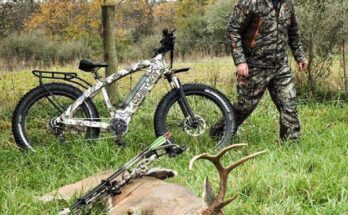
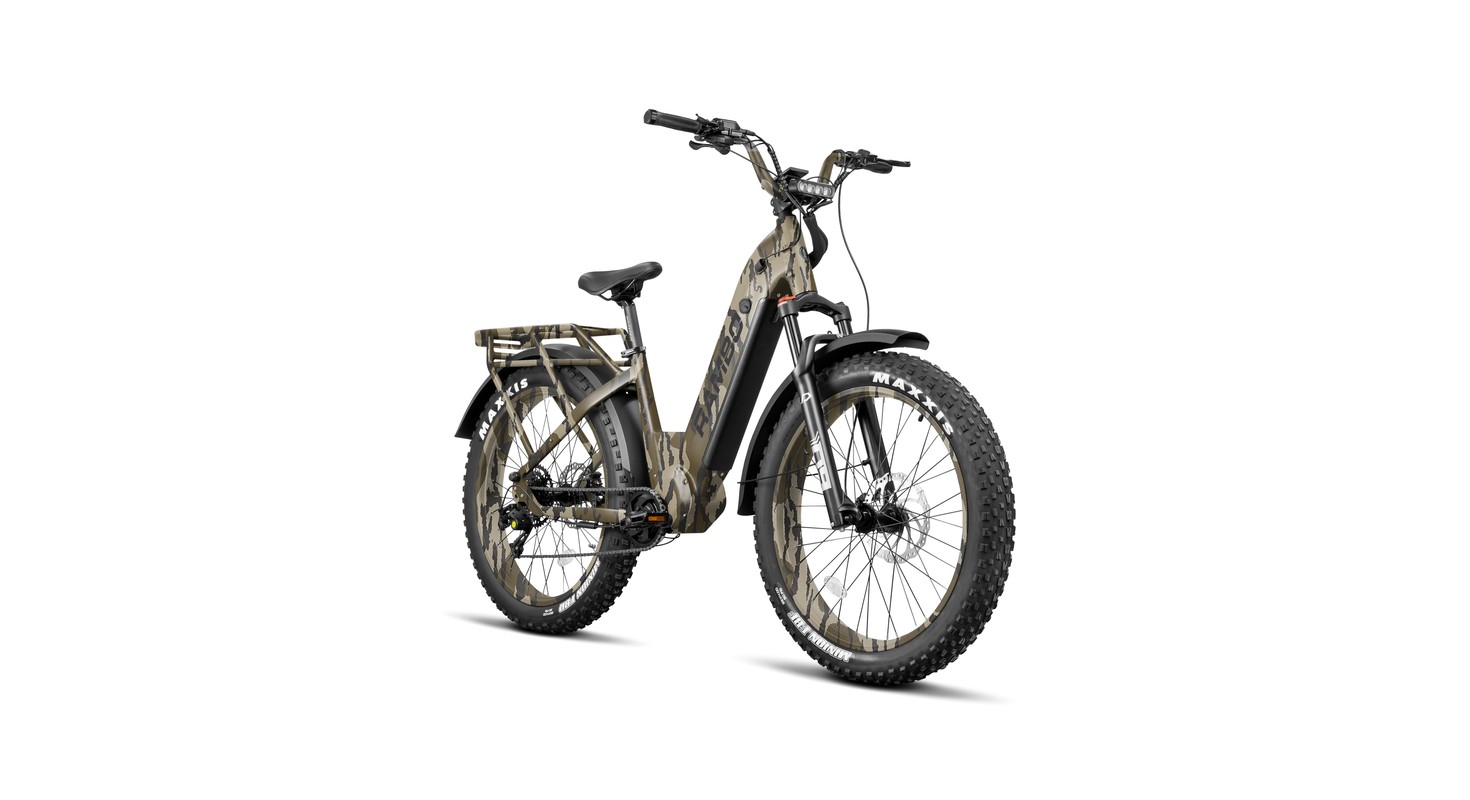
Alright, let’s talk about something that drives me absolutely crazy: spending thousands of dollars on a hunting eBike and then rolling into the woods on a bike that’s shinier than a bass boat at a boat show. You wouldn’t wear a neon orange tracksuit to your deer stand (well, maybe somebody would, but that somebody has problems), so why would you ride a chrome and gloss-black bike into the timber?
Camo matters on your hunting eBike. Maybe not as much as camo on your body, but it’s part of the whole package. Let’s break down your options, from factory paint jobs to DIY wraps you can knock out in your garage on a Saturday afternoon.
Factory Camo: The Premium Route
Several hunting eBike manufacturers now offer factory camo finishes, and they’ve gotten seriously good at it. These aren’t just green spray paint jobs. They’re professionally applied patterns that match popular hunting camo brands.
Bakcou
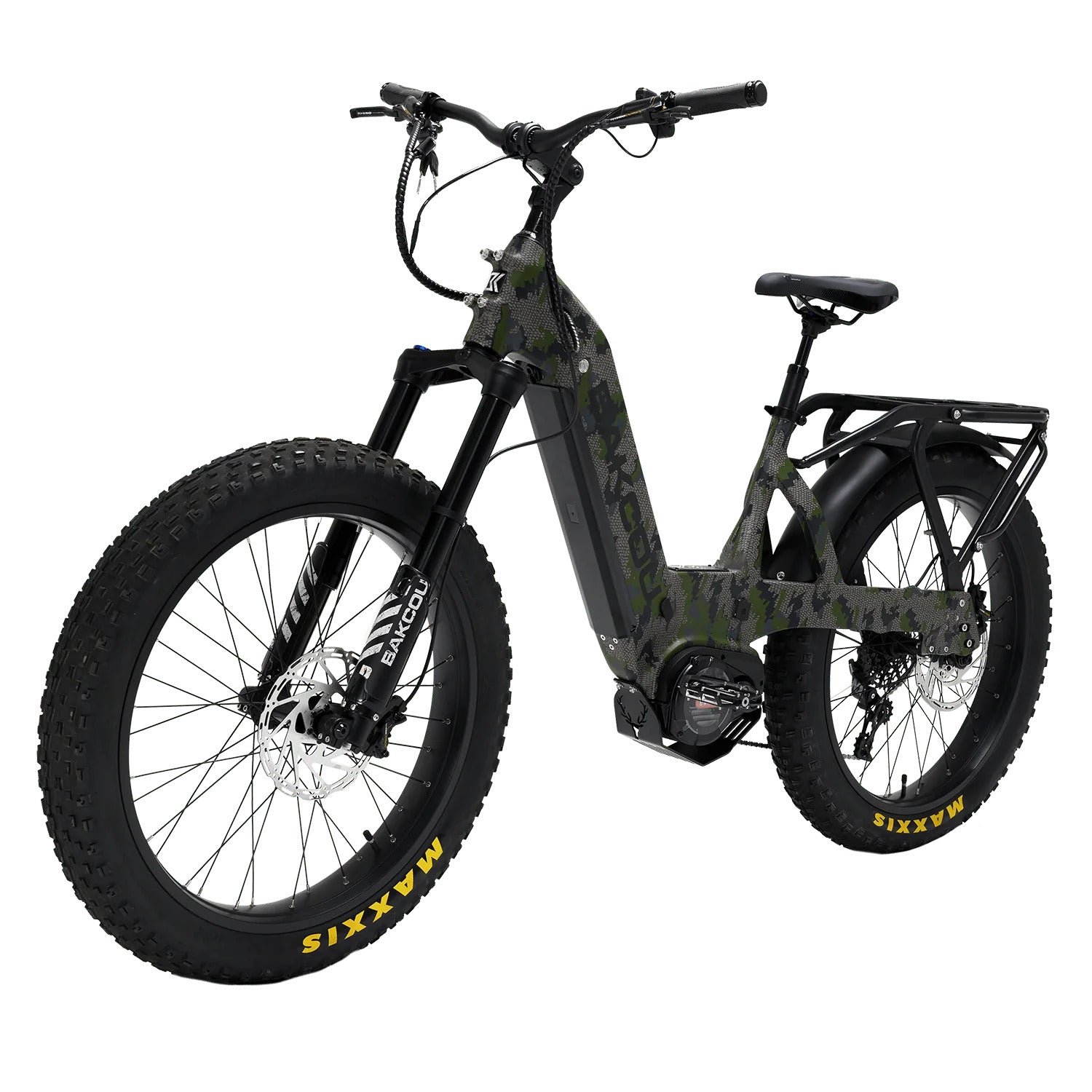
Bakcou Mule SD in Bakcou Camo
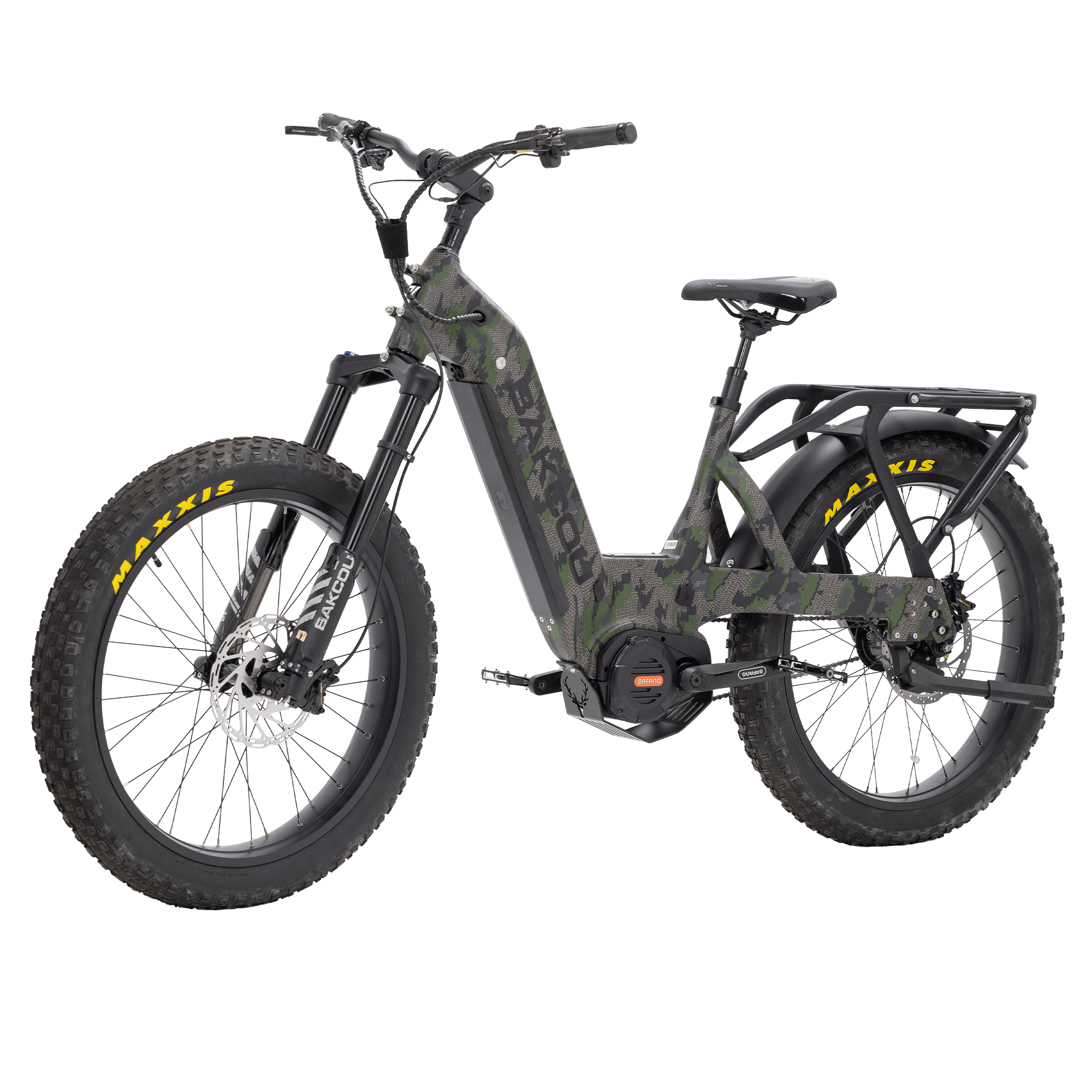
Bakcou Mule Jager SD in Kuiu Verde Camo
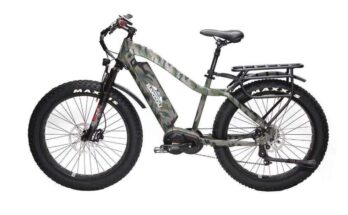
Bakcou has been at the forefront of the hunting eBike game, and their camo options reflect that. The Mule SD is available in Bakcou’s own proprietary camo pattern, while the Mule Jager SD comes in Kuiu Verde Camo, a pattern popular with western big game hunters. The finish quality is excellent on both, and because it’s applied at the factory, it’s durable and covered under warranty. If you want a bike that looks like it belongs in the woods right out of the box, Bakcou is hard to beat.
QuietKat
QuietKat offers several models with camo finish options, and they’ve partnered with recognizable camo pattern companies to deliver finishes that actually work in the field. Their bikes tend to lean toward earth tones and Realtree-style patterns that work well in a variety of terrain types. If you’re hunting everything from Eastern hardwoods to Western sage, QuietKat’s camo options provide solid versatility.
Rambo
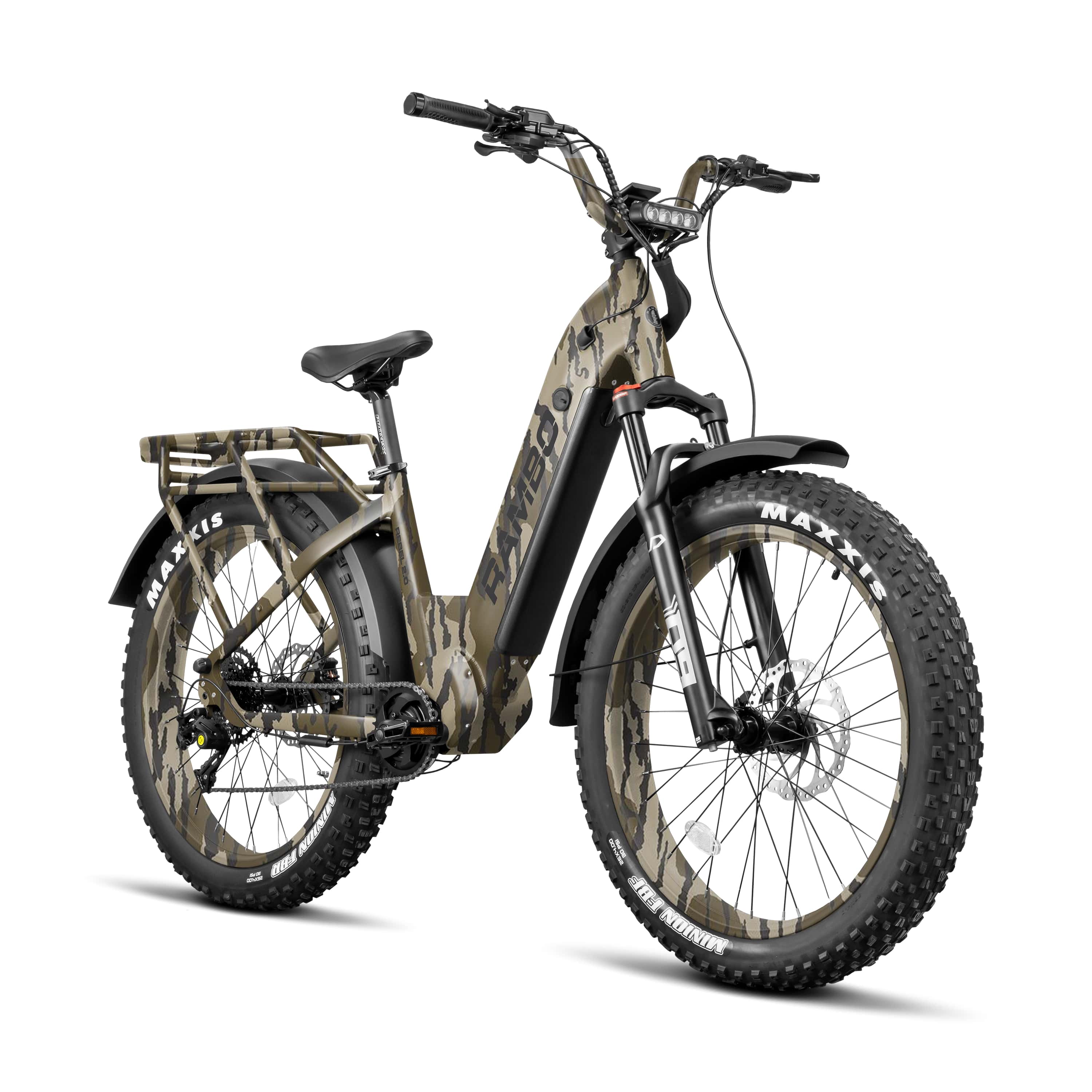
Rambo Rebel 2.0 in Mossy Oak Bottomland
Rambo Bikes was literally built for hunters, and their camo game reflects that heritage. Multiple models come in Mossy Oak Bottomland, a pattern that works exceptionally well in the timber and bottomland hardwoods where most whitetail and turkey hunting happens. The brand’s whole identity is wrapped up in hunting culture. If you want a bike that screams “I am here to hunt” from every angle, Rambo delivers. Their camo finishes hold up well to trail abuse and are easy to touch up if you get a scratch from a branch or a rock strike.
The Downside of Factory Camo
The catch? Factory camo usually costs more. You might pay $100-300 extra for the camo finish compared to a solid color option, and your color choices are limited to whatever patterns the manufacturer decided to offer that year. If you want Mossy Oak Bottomland but the manufacturer only offers Realtree Edge, you’re out of luck. Also, if the camo pattern is applied as a hydro dip or wrap at the factory (rather than actual paint), it can peel or chip over time with heavy trail use.
Aftermarket Wraps: The Custom Route
Vinyl wraps have gotten incredibly good, and they’re no longer just for cars and trucks. Several companies now offer pre-cut eBike wrap kits in hunting camo patterns, and custom shops can wrap any bike in any pattern you can imagine.
A professional wrap job on an eBike frame typically runs $200-500 depending on your area and the complexity of the frame. That gets you a high-quality 3M or Avery vinyl wrap in the exact camo pattern you want, professionally fitted and heat-formed around the tubes and curves of your frame. A good wrap should last 3-5 years, even with regular trail use.
The advantage of aftermarket wraps is total customization. Want Mossy Oak Overwatch on the main triangle and flat black on the fork? Done. Want to match the exact camo pattern of your favorite hunting jacket? Probably possible. Want to switch patterns between deer season and turkey season? Pull the old wrap off and apply a new one. Try that with factory paint.
The downside is that wraps are not as durable as factory paint. Rocks, branches, and constant vibration can cause edges to lift, especially around bolt holes and cable routing points. You’ll need to inspect and maintain the wrap periodically, and tight spots around the motor and battery mount can be tricky to wrap cleanly.
DIY Wraps and Paint: The Budget Route
Now we’re getting into my territory. If you’re the kind of person who looks at a project and says “I can probably do that myself,” here are your options.
DIY Vinyl Wrap
You can buy camo vinyl wrap material online for $30-80 depending on quality and quantity. Plenty of it. You’ll also need a heat gun (or a hair dryer in a pinch), a squeegee, and a sharp knife. Is it going to look as clean as a professional job? Probably not. But will it get the job done for a fraction of the cost? Absolutely.
Tips from someone who has done this more times than is probably healthy: work in a warm, dust-free environment. Clean the frame thoroughly with isopropyl alcohol before applying. Use small pieces rather than trying to wrap huge sections in one shot. Heat the vinyl around curves and contours. And accept that your first attempt will look a little rough. It builds character.
Spray Paint (The Nuclear Option)
Can you spray paint your eBike frame in camo? Yes. Should you? That depends on how committed you are to the cause and how little you care about resale value. If you’re going this route, use quality spray paint designed for metal (Krylon Camouflage paint works surprisingly well), tape off everything you don’t want painted (motor, battery contacts, brake rotors, bearings), and apply multiple light coats rather than one heavy coat.
For a camo pattern, spray your base coat (typically tan or olive), let it dry, then use real leaves, branches, or stencils to create a pattern while you spray contrasting colors over them. The results can be surprisingly effective. Just know that spray paint chips, fades, and wears faster than factory finishes. You’ll be touching it up regularly. But hey, that’s kind of the fun of it.
Camo Tape and Fabric Wraps
The easiest and most reversible option is camo tape. Products like McNett Camo Form (a self-clinging camo wrap) can be applied to frame tubes in minutes with zero adhesive residue. It won’t look as sleek as paint or vinyl, but it’s cheap, easy to replace, and doesn’t affect your bike’s finish at all. Great for hunters who want camo in the field but a clean-looking bike the rest of the year.
What Actually Works in the Field
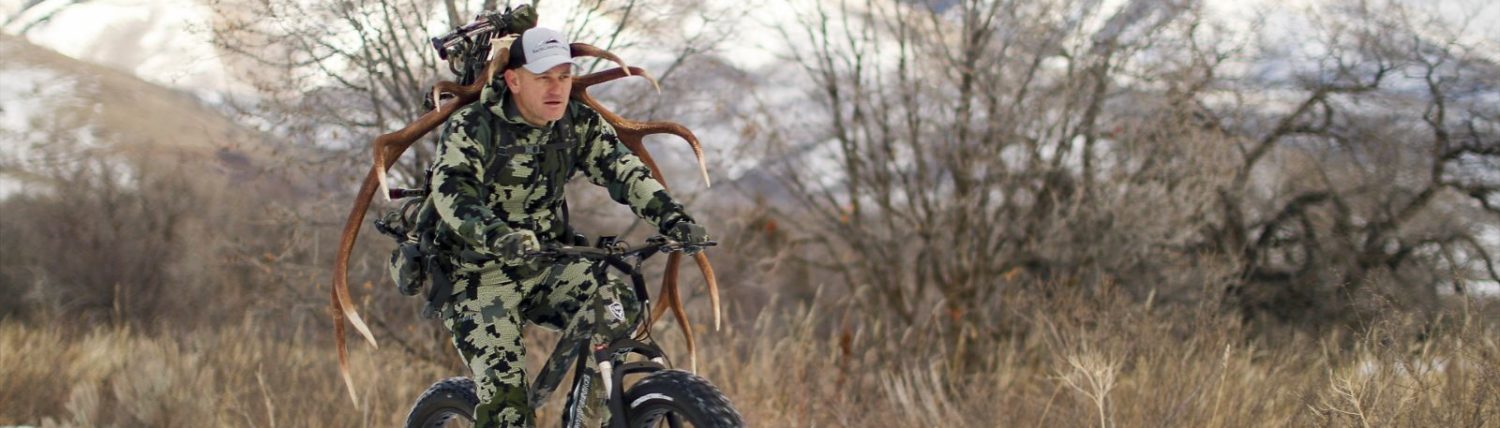
Here’s the thing nobody tells you about camo on your eBike: the most important camo is on YOU, not your bike. A deer or turkey is going to notice your movement long before it notices the color of your bike frame. That said, a camo or earth-toned bike parked near your setup blends into the environment better than a glossy black or white frame, and it reduces the chance of another hunter spotting your location from a distance.
The pattern matters less than the overall tone. Match your general environment. Dark greens and browns for Eastern hardwoods. Tan and sage for Western open country. Snow camo wraps for late-season hunts. You don’t need a perfect match. You just need to not be shiny.
The Bottom Line
If money’s no object and you want it done right, buy a bike with factory camo from Bakcou, Rambo, or QuietKat. If you want custom patterns or you bought a non-camo bike, get a professional vinyl wrap. And if you’re like me and you’d rather spend the money on ammo and trail mix, grab some camo vinyl or camo tape and go to town. Any camo is better than no camo, and a bike that looks like it belongs in the woods just feels right when you’re heading to your spot before dawn.