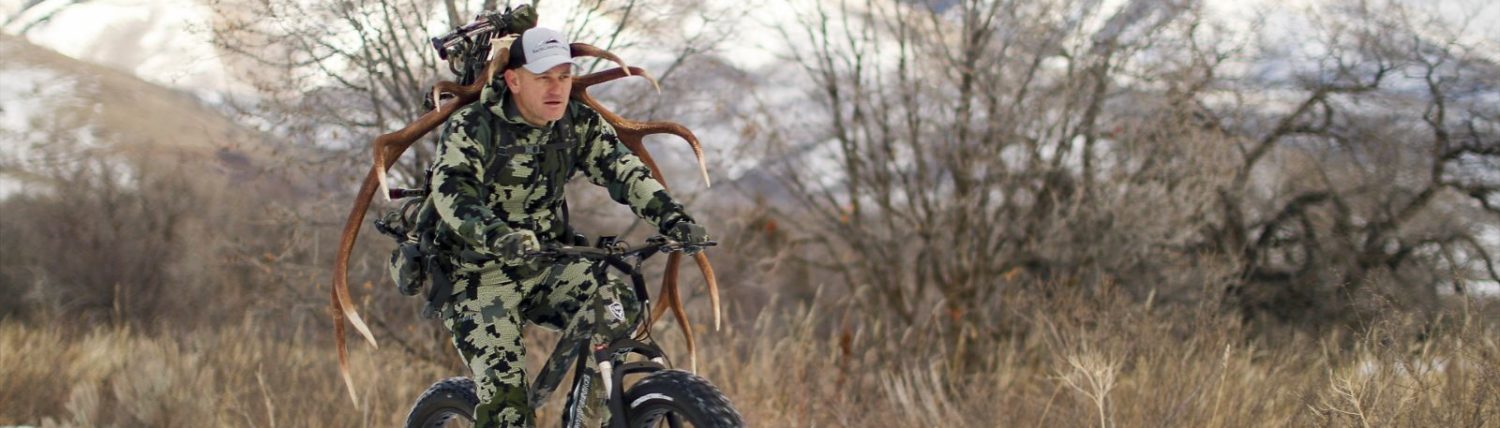
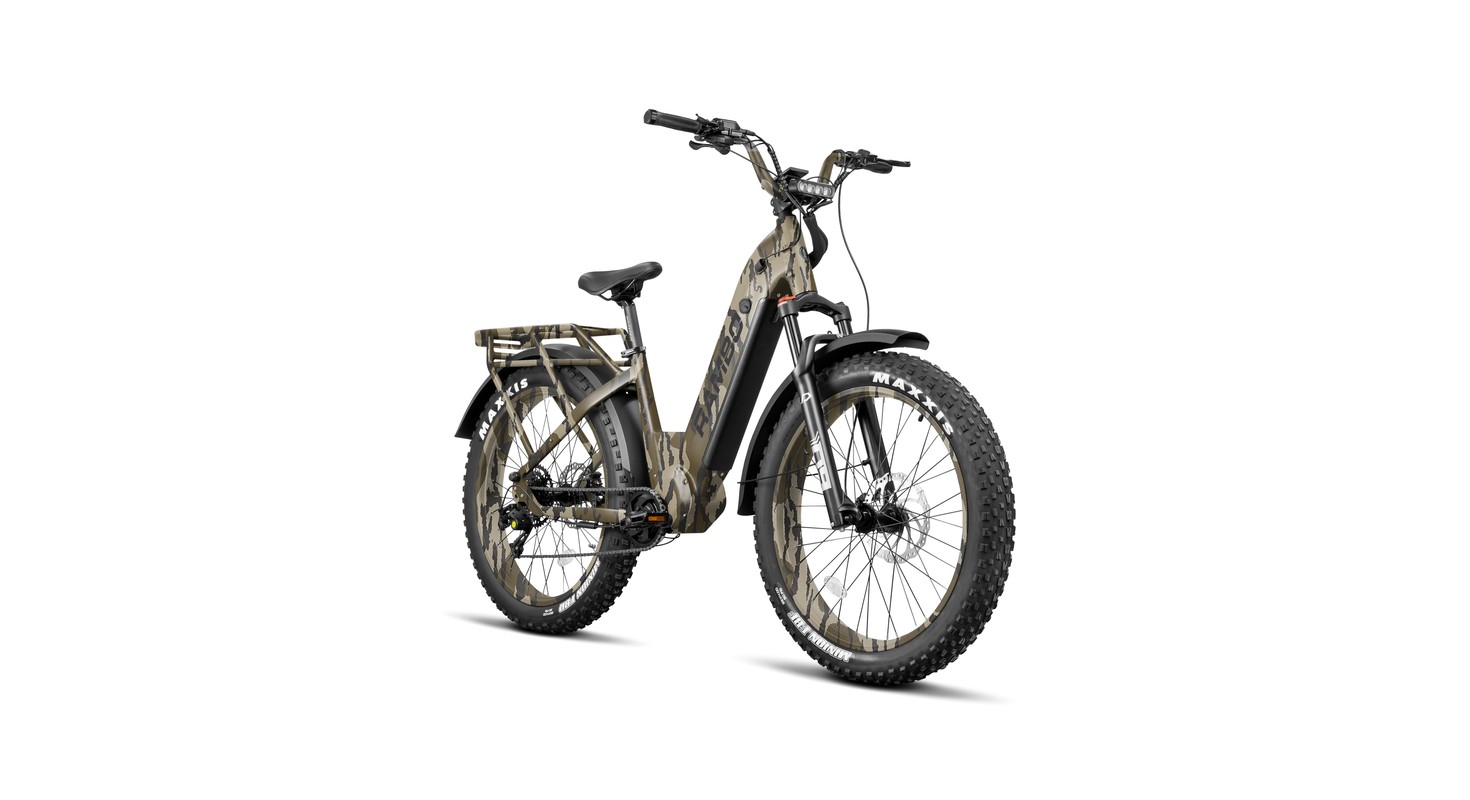
The alarm went off at 3:45 a.m. on Iowa’s opening day. By 4:20 the bike was loaded, vest, two decoys, a low-profile pop-up blind, twelve gauge in the rack, and I was rolling down a gated forest road I’d scouted two weeks earlier. The truck stayed at the gate. The first gobble hit at 5:47 from a ridge a mile and a half in. Five years ago that bird would have been a Hail Mary. By 6:10 I had him in shotgun range because the bike got me close, fast, and quiet.
That’s the pitch for run-and-gun turkey hunting on an ebike. Not a gimmick, not a luxury. A real tool that changes what you can pull off in a morning.
Why Turkey Hunting Wants a Bike
Whitetail hunters camp out and wait. Turkey hunters chase. You hear a bird, you cut the distance, you set up, you call. If he hangs up or leaves with hens, you pack up and find another one. On a typical opening morning I’ll cover four or five miles before a bird is workable.
That’s where the bike pays for itself. Walking three miles in waders carrying a vest, decoys, a pop-up blind, and a shotgun is a workout. Doing it three times in a single morning beats you down to where you’re not even calling well by 9 a.m. The bike turns those same loops into fast, low-effort moves. You arrive sharp.
It also fixes the public-land problem. When ten trucks are at the trailhead at 5 a.m., the tom you want is the one a mile and a half deeper than the guy who walked. You’re set up and listening while the foot hunters are still fumbling with headlamps.
Quieter Than You’d Guess
The thing that took some convincing for the old-timers in my hunting camp: a quality mid-drive ebike is genuinely quiet. We’re not talking ATV quiet. We’re talking quieter than a coasting bicycle on gravel. Motor hum at low assist is barely audible past 30 yards. I’ve ridden under roosted birds at first light without setting off a single yelp from the trees.
Compare that to walking with gear. Boots crunching, blind banging the pack, gun clipping branches. If you’ve ever bumped a roosted tom because you couldn’t move quietly enough through pre-dawn leaves, you understand why a bike that lets you cover a mile in seven minutes silently is a turkey rig.
My Run-and-Gun Setup
Spring morning hunt, here’s what’s on the bike:
- Vest with calls (a couple slates, two mouth calls, a box), gloves, mask, license
- One full-strut jake decoy and one feeding hen, both broken down in a pannier
- Pop-up ground blind strapped to the rack
- Shotgun in a side gun mount, vertical, scabbard padded
- Range bag with extra shells, water, a small rangefinder
- Phone in the bar mount with HuntStand showing property lines
The whole load comes in under thirty pounds and sits balanced front to back. The bike doesn’t feel loaded. That matters when you’re picking a line through ruts at half-light.
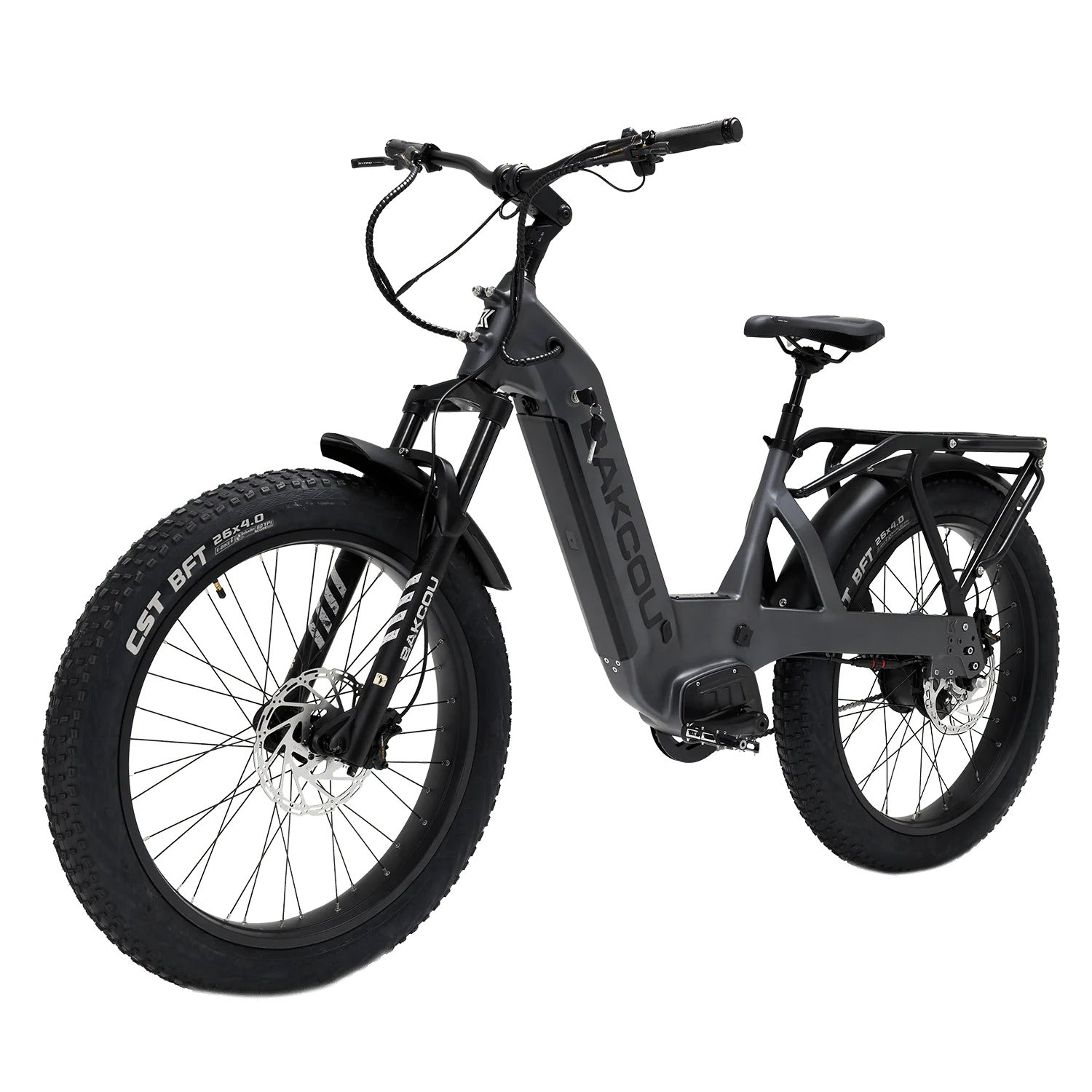
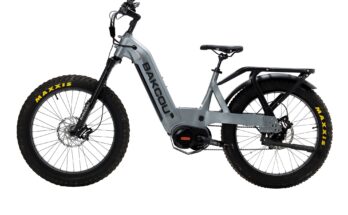
Bakcou Flatlander SD
Bikes That Make Sense for Turkey
A turkey rig is different from a deer rig. You’re not packing 150 pounds of meat out of a holler. You’re carrying yourself plus a 25 to 30 pound load on flat to rolling terrain, mostly forest service roads, two-tracks, and gated farm roads. That changes what matters.
What you actually need:
- Quiet drivetrain (mid-drive is preferred for the silence at low assist)
- Range to do a three to four hour morning without watching the battery meter
- A camo finish, or a frame that takes a wrap cleanly
- Solid rack and pannier mounts
- Comfortable enough to ride in the dark without thinking about it
What you don’t need:
- Maximum payload spec. You’re not hauling a quartered elk.
- Aggressive trail suspension. Most spring turkey country rides fine on a good hardtail.
A few bikes I’ve put real time on:
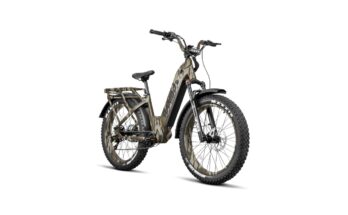
Bakcou Flatlander SD. Drop frame, mid-drive, dialed for guys who hunt fields and forest roads more than mountains. The lower step-over makes mounting and dismounting around gear way easier than swinging a leg over a high top tube with a vest on. My most-recommended turkey bike for the average midwest or southeast hunter.
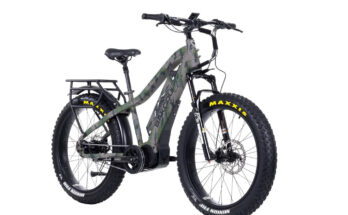
Bakcou Mule SD. The all-around hunting bike. If you only own one and it has to do double duty for whitetail in the fall and turkey in the spring, this is it. Mid-drive, real Bafang torque, plenty of range for a long morning. The camo wraps are not just decoration. They actually break up the silhouette in the kind of edge habitat where toms strut.
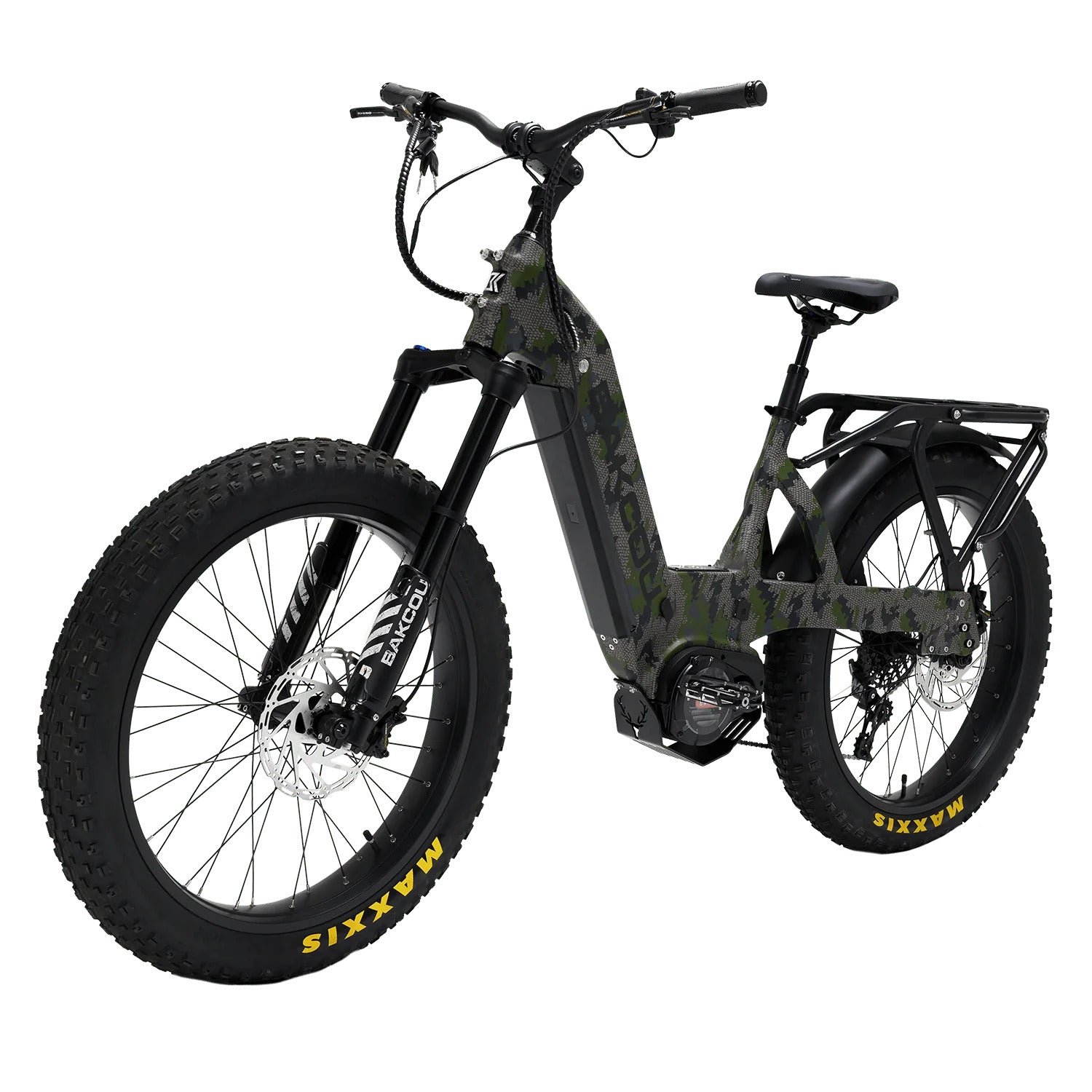
The Bakcou Mule SD in camo, the bike I reach for when I’m covering unfamiliar ground.
Himiway Cobra D7. For hunters who don’t want to spend Bakcou money. Hub motor, so it’s a touch louder than a true mid-drive at low assist, but at $2,499 you get real range and a payload that handles a turkey vest and decoys without complaint. I’ve recommended this one to a lot of guys who wanted to try the ebike-turkey thing without committing four thousand dollars to find out if they’d like it. If you’re shopping that price tier, the budget-friendly hunting ebike roundup covers a few more options worth considering.
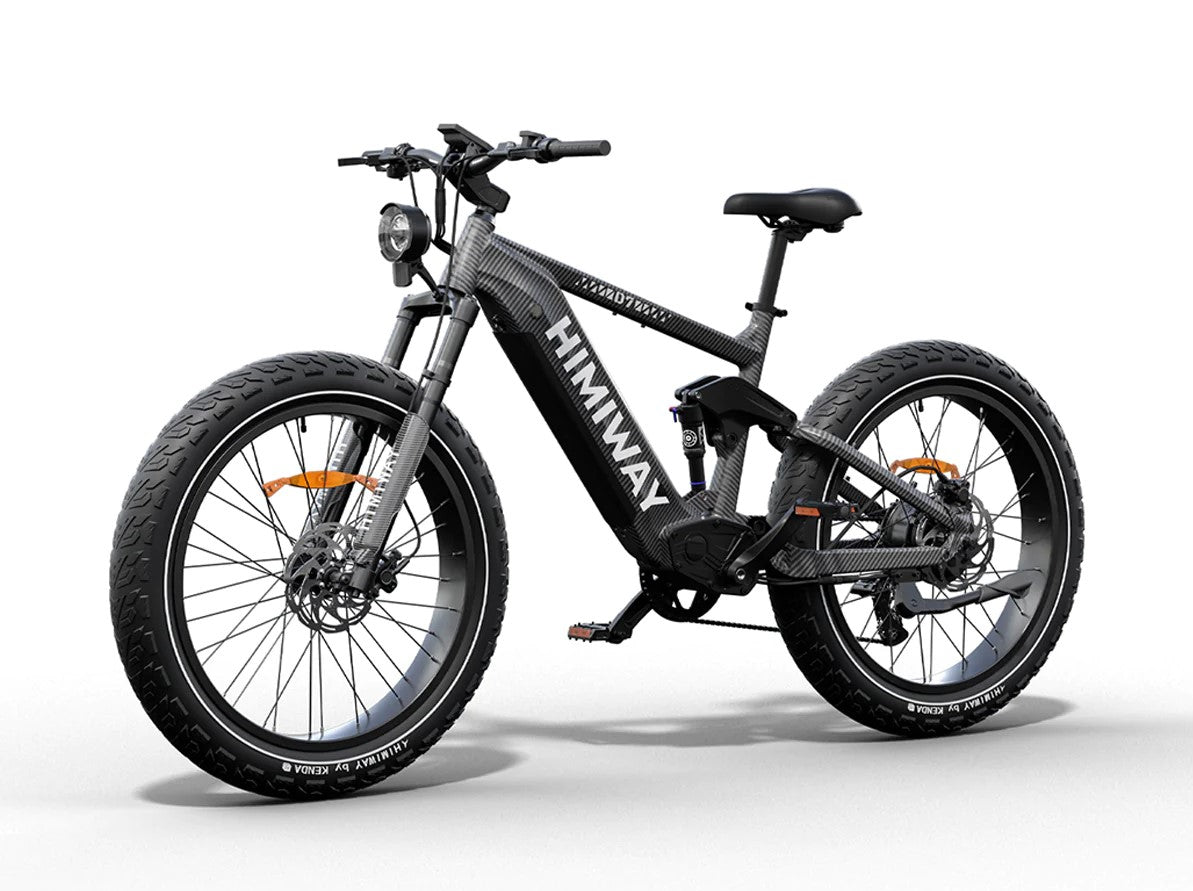
Himiway Cobra D7
QuietKat Apex XD. Worth a look if you’ve got a QuietKat dealer near you for service. Mid-drive, quiet, and the XD’s tuning suits the variable assist a turkey hunter actually uses. High to cover ground between setups, low to creep in on a bird.
I leave full-suspension trail bikes off the list for turkey on purpose. They’re great machines for rocky western terrain, but for spring turkey woods you’re paying for capability you don’t really use.
Where to Stash the Bike
This is the question I get most: where do you put the bike when you set up on a bird?
My rule is straightforward. Far enough that your setup looks completely natural to an approaching tom, close enough that you can grab it fast if the bird walks and you need to relocate. For a tom that’s gobbling and coming, I’ll lay the bike on its side off the trail in low brush, fifty to seventy-five yards behind my setup. The camo finish helps. So does laying it flat instead of leaning it against a tree, where it shows a vertical bike-shaped silhouette that toms can absolutely pick up at distance.
For a bird that’s hung up or moved off, I’ll go grab the bike and move. Not a stalk. A relocation. Quiet, deliberate, watching the wind and the thermals if the morning’s still cool.
How a Morning Actually Plays Out
Here’s the typical opening-day sequence on the bike:
I park at a gate or trailhead at 4:00 a.m., gear pre-loaded. From there I have a three-mile loop pre-mapped on HuntStand with two probable roost ridges marked from the previous evening’s listening trip. (You did a listening trip the night before, right?) I ride to the first roost ridge with the headlight on low or off, depending on how well I know the road. I dismount about three hundred yards downwind of the roost, walk the bike off the road into brush, and set up about a hundred and fifty yards from the trees I think hold birds.
If they fly down the wrong way and pitch into a different drainage, I’m not stuck. Pack up, walk the bike back to the road, ride to the next ridge, repeat. I’ve worked three different gobblers in a single morning doing this. On foot, I’d have worked one and walked back to the truck.
Mid-morning, when the birds quiet down and the foot hunters head back, the bike turns into a scouting tool. Riding strut zones at 8 mph with the wind in your face is a great way to get eyes on a bird that nobody else is hearing. I’ve cut more silent toms by sight from the bike than I have by call.
Public Land Reality
Most turkey hunters I know are on public ground. Public ground turkey hunting is a competition for two things: birds and access. The bike helps you win on both.
Quick reality check on regulations: federal forest service roads and gated multiple-use roads are generally fine for ebike access where motorized vehicles are allowed. State wildlife management areas vary widely. Some states classify ebikes as bicycles on multi-use trails, others lump them with motor vehicles. Check your state’s regs before you ride. The state guides on this site cover most of them, including Iowa.
What you cannot ride: any designated Wilderness area. Wheels are prohibited in Wilderness, period, by federal law. There’s plenty of national forest that isn’t Wilderness, and that’s where you’ll be hunting anyway.
Spring Conditions and the Bike
Spring turkey woods are wet. Mud holes, washouts, the occasional flooded culvert. Fat tires (4 inches and up) handle this fine. What you do have to watch is your brakes. Wet rotors after a creek crossing take a lot longer to grab if you didn’t pump them dry on the way out of the water. I do a quick brake squeeze every couple hundred yards after water crossings. (For more on this kind of thing, the hunting ebike maintenance guide covers the rest of the spring tune-up routine.)
Battery life in cool spring weather is better than fall mornings. A full charge that gets you twenty-five miles in thirty-degree October weather will get you thirty-plus in fifty-degree May weather. Plan accordingly. I usually hunt all morning on a single battery in spring without thinking about it.
After the Shot
Tom on the ground. Twenty pounds of bird is fine to drag a half-mile and miserable to drag two. The bike turns the pack-out into a five-minute ride.
I strap the bird across the rack with the head forward and the spurs back. Tag goes on the leg before I touch the bike. If the spurs are long enough that they’ll catch on something, I tape them. The tail fan rides best laid flat against the rack, not crammed into a pannier where the feathers will bend.
What I’d Tell a New Ebike Turkey Hunter
The first season is going to feel weird. You’ll be used to walking everywhere, and now you’ve got a tool that changes how far you can scout, how many setups you can run in a morning, and how ambitious you can be on public ground. Take the first weekend to relearn your patterns with the bike in mind. Ride your spots in daylight before you ride them in the dark. Find good places to stash the bike. Figure out what gear actually fits in panniers versus what has to ride on your back.
Once it clicks, you won’t want to go back. I haven’t had a season with the bike where I didn’t kill at least one bird I wouldn’t have gotten to on foot.