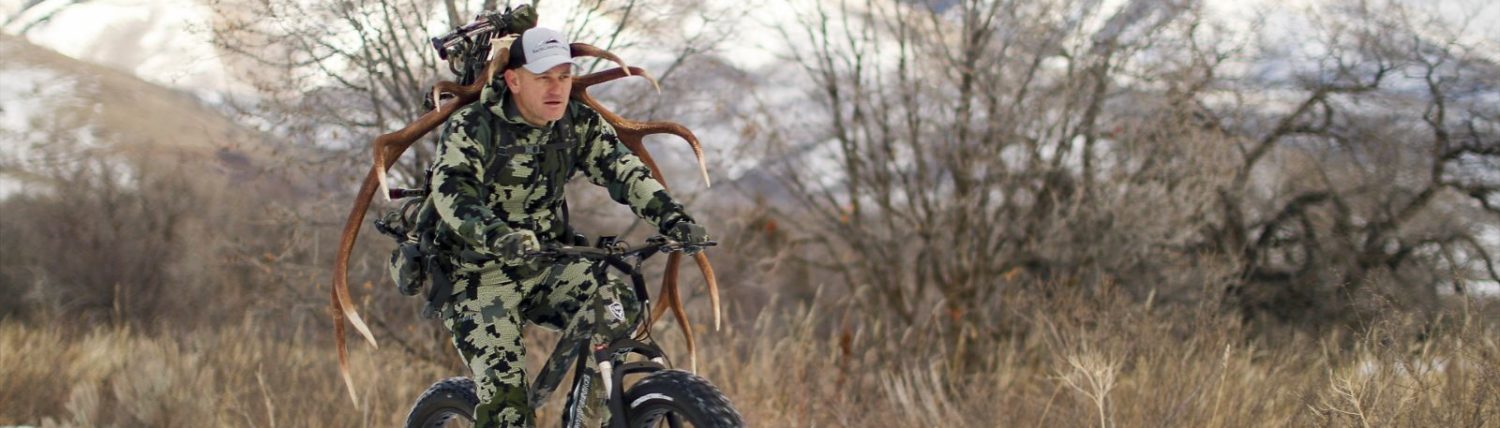
I’ve been chasing elk across the Mountain West for over twenty years. If there’s one thing I’ve learned, it’s that the hardest part of elk hunting isn’t finding them. It’s getting to where they are, and then getting the meat out after you’ve put one down. An ebike won’t make you a better shot or caller, but it will solve the two biggest logistical problems in elk hunting: access and pack-out.
Let me walk you through how I’ve been using electric bikes for elk hunting, what works, what doesn’t, and what you need to know before you invest.
The Access Problem Every Elk Hunter Knows
Good elk country is rarely close to the truck. On public land especially, the hunters who kill consistently are the ones willing to go deeper. Two-track roads closed to motor vehicles, old logging grades, basin trails that run five or six miles before you hit the good stuff. That’s where mature bulls live during hunting season, because most people won’t walk that far.
An ebike changes that math completely. A trail that takes two hours on foot takes thirty minutes on an ebike. During archery season, when thermals shift and you need to cover ground quickly to set up on a bugling bull, that speed matters. During rifle season, it means you can hunt pockets of public land that most hunters never reach because the walk-in is just too far for a day hunt.
I’ve used my ebike to access trailheads on gated forest service roads, cover long stretches of flat valley floor to reach steep drainages, and scout multiple basins in a single evening. The time savings alone justifies the cost if you’re serious about elk.
Pack-Out: Where eBikes Really Earn Their Keep
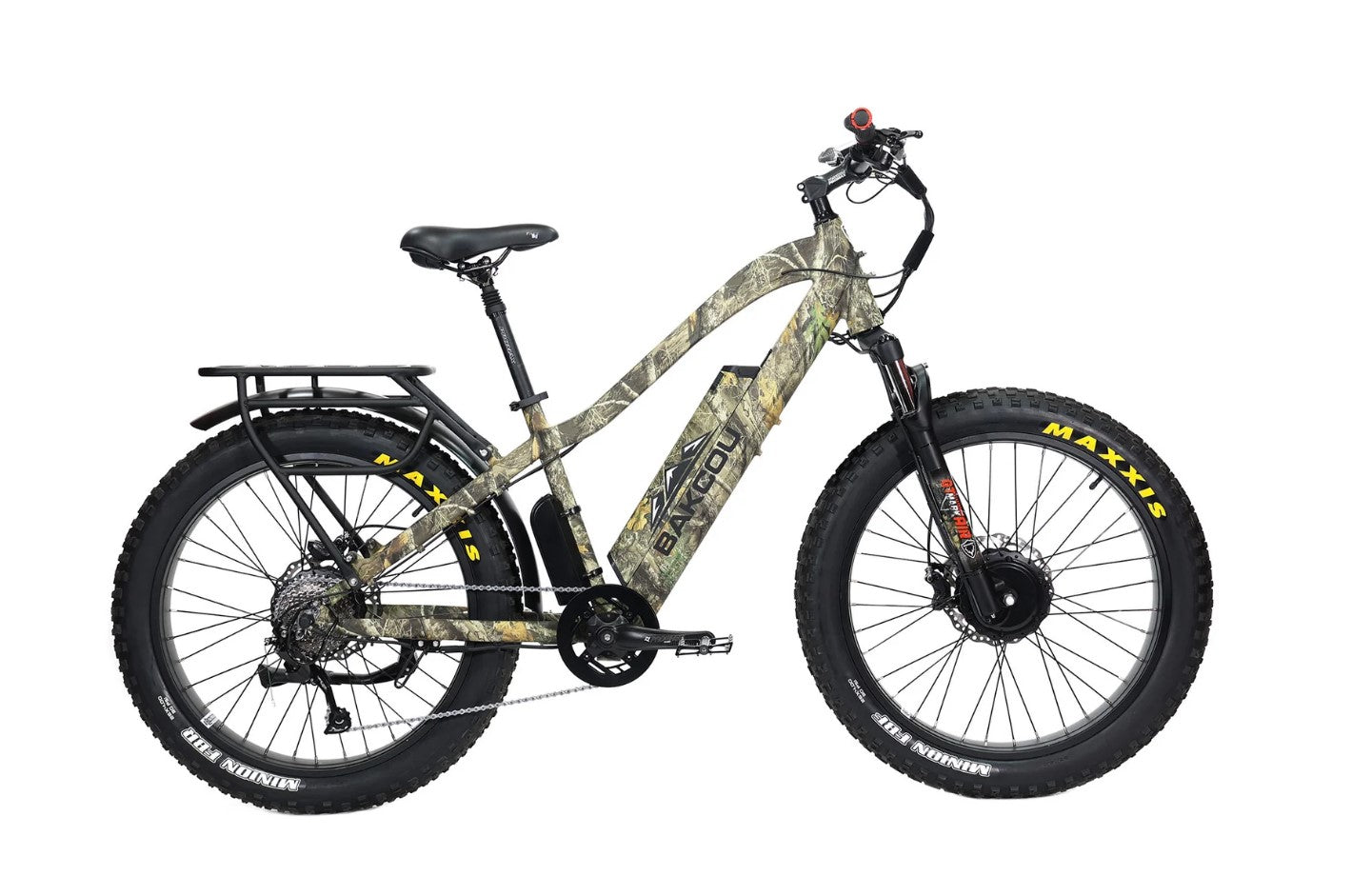
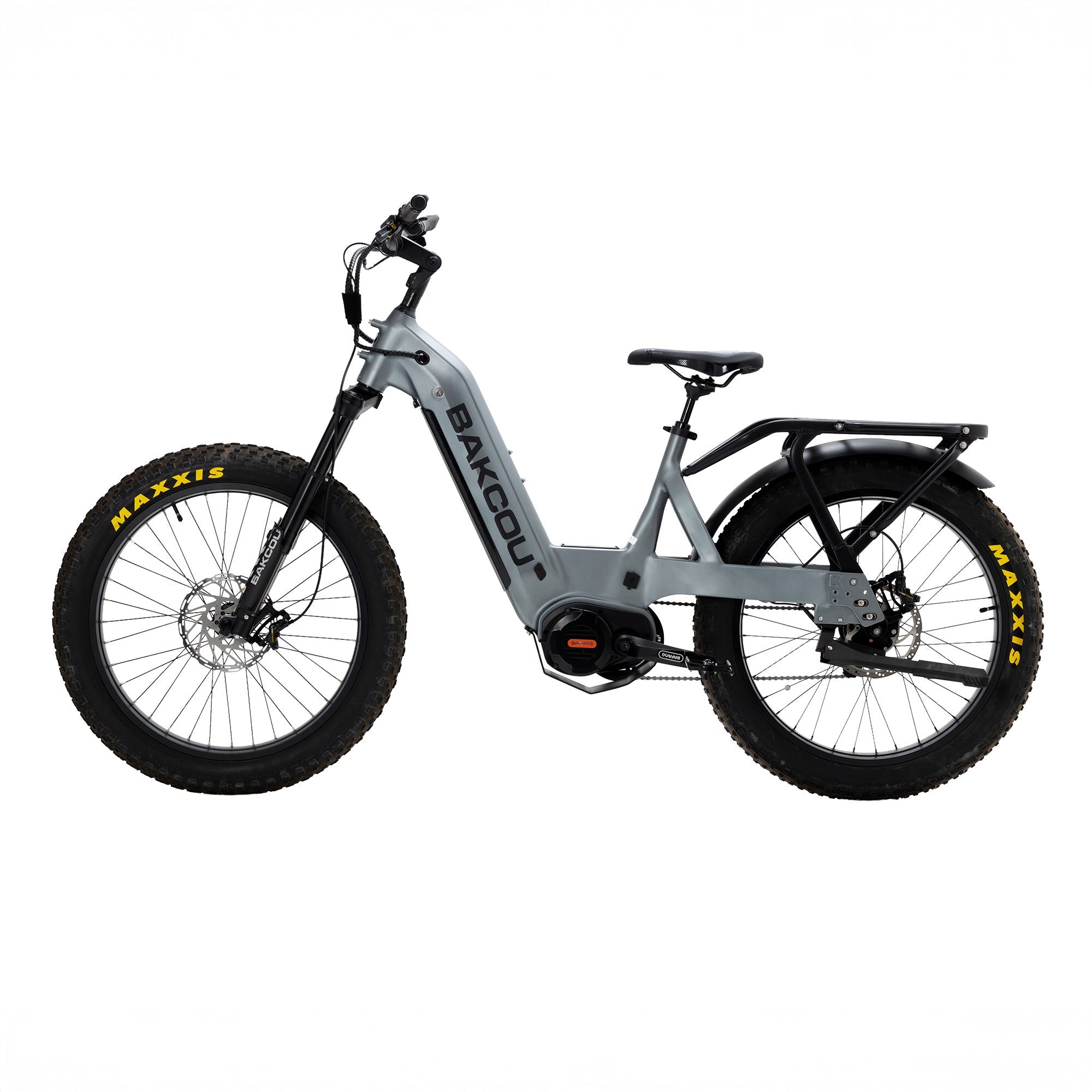
Bakcou Kodiak AWD
Here’s the reality of elk pack-outs that non-hunters don’t appreciate. A mature bull elk yields four quarters weighing 60 to 100 pounds each, plus backstraps, tenderloins, neck meat, and ribs. You’re looking at 250 to 400 pounds of meat, bone-in. On foot with a good pack frame, you’re making four or five trips minimum. If you’re three miles from the truck, that’s a full day of brutal work, sometimes bleeding into a second day while you’re praying the meat stays cool.
With an ebike and a proper trailer, you can haul two quarters per trip. Some guys run heavy-duty panniers and a loaded rear rack to move even more. What used to be an all-day sufferfest becomes two or three trips over a few hours. Your meat gets to the cooler faster, your body takes less punishment, and you’re not dragging yourself back to camp at midnight wondering why you do this.
I ran an elk out of a basin in Idaho last fall. Three miles of old two-track, mostly downhill on the way out. Two trips with the bike and trailer, done before lunch. My buddy who was parked at the same trailhead made five trips on foot for his cow. He didn’t finish until well after dark. He bought an ebike that winter.
Western State Regulations
Before you load an ebike in the truck, check the rules for where you’re hunting. Regulations vary significantly by state, and sometimes by specific unit or land management area. A few key points for the big western elk states:
- Colorado has been expanding ebike access on certain trails, but restrictions apply during hunting seasons in some areas. Read the full Colorado guide here.
- Montana generally treats ebikes like motorized vehicles on most public land. Montana’s rules are worth studying carefully.
- Wyoming has its own approach to ebike classification. Check the Wyoming state page.
- Idaho offers some good opportunities on forest roads. Idaho’s regulations are covered here.
- Oregon and Washington have different rules for different land types. See the Oregon guide and Washington guide.
- New Mexico, Arizona, and Utah each handle ebikes differently on state and federal land. Check the New Mexico, Arizona, and Utah pages.
The bottom line: know the rules for the specific land you’re hunting. Forest service roads open to motorized use are almost always fair game. Designated wilderness is always off limits. The gray area is everything in between, and it varies.
What to Look for in an Elk Hunting eBike
Not every ebike can handle elk country. You need a bike built for steep terrain, heavy loads, and rough conditions. Here’s what actually matters.
Mid-Drive Motor
For mountain hunting, a mid-drive motor is essential. Mid-drives use the bike’s gears, which means they can climb steep grades without overheating. Hub motors work fine on flat ground, but they struggle and overheat on the long, sustained climbs you’ll face in elk country. Look for a 750W or 1000W mid-drive from Bafang or a comparable manufacturer.
Battery Range (and the Altitude Factor)
Battery performance drops at elevation and in cold weather. A battery rated for 60 miles at sea level might give you 30 to 40 miles at 9,000 feet in October temps. Plan accordingly. Dual-battery setups are worth the investment for serious backcountry hunts. Keep your spare battery in your pack or pannier where your body heat keeps it warmer than strapping it to the frame in the wind.
Weight Capacity
This is where a lot of bikes fail for elk hunting. You need a bike rated to carry you, your gear, and at least one elk quarter on the way out. Look for bikes with a combined payload capacity of 300 pounds or more. Check the rack and trailer hitch ratings separately. The frame might handle 300 pounds, but a cheap rear rack will fold under a hindquarter.
Tires and Suspension
Fat tires (4 inches or wider) give you traction on loose rock, mud, and the inevitable early-season snow. Full suspension helps on rough two-track, but it adds weight and complexity. A quality hardtail with a good front fork handles 90% of elk country just fine. Just make sure you’re running real off-road tread, not the semi-slick patterns that come stock on some bikes.
Trailer Compatibility
If you’re planning to haul meat (and you should be), make sure your bike has a solid rear axle or hitch point for a trailer. Some frames aren’t designed for towing, and a loaded trailer on a steep downhill with the wrong setup is a problem you don’t want. Purpose-built hunting ebikes almost always include a hitch receiver or compatible mounting point.
Recommended Bikes for Elk Country
I’ve ridden a lot of hunting ebikes in mountain terrain. These are the ones I’d actually trust in serious elk country.
Bakcou
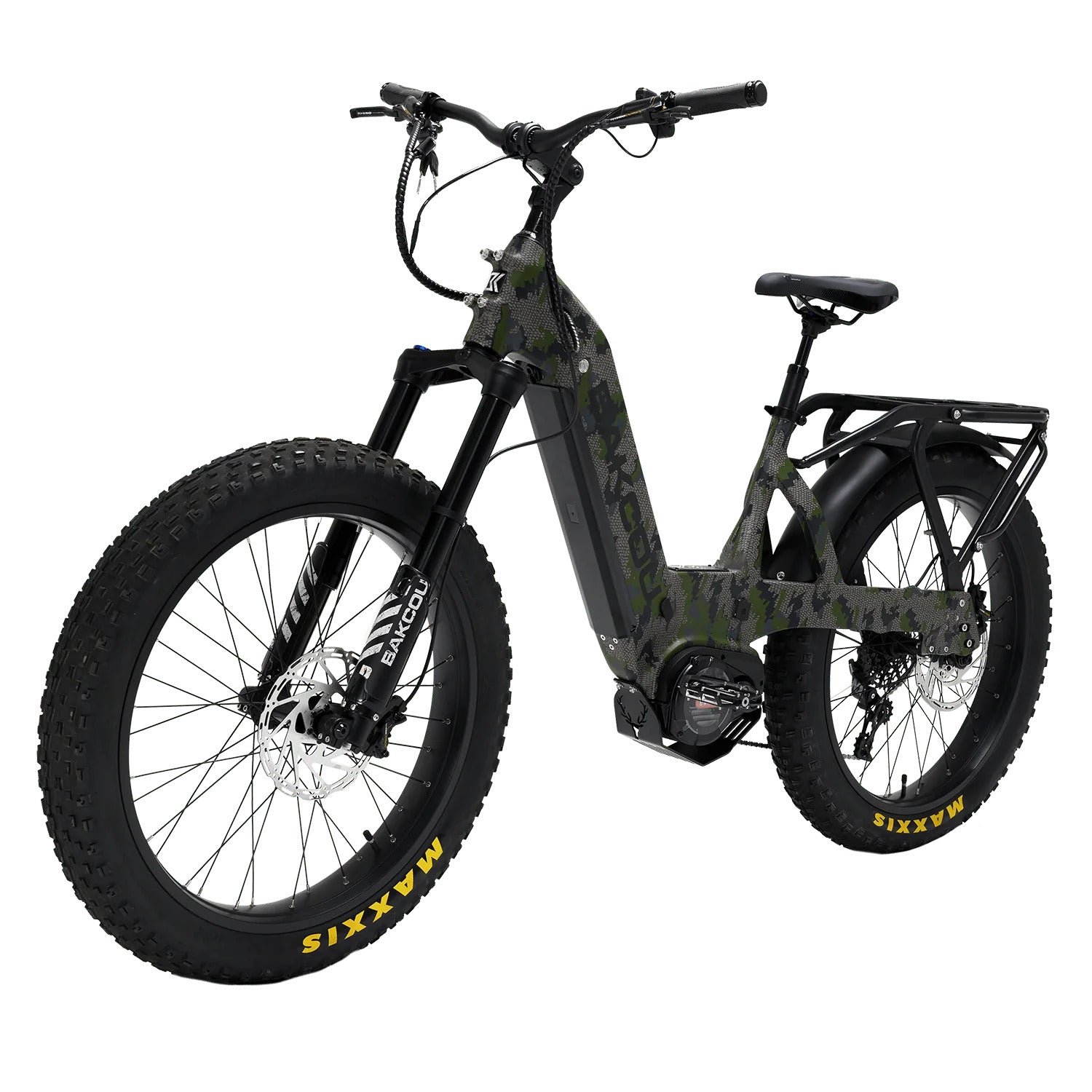
Bakcou Mule SD
Bakcou builds bikes specifically for hunters, and it shows. For elk hunting in steep terrain, these are my top picks:
- Bakcou Mule Jager SD is purpose-built for mountain hunting. The Jager drivetrain paired with a mid-drive motor handles steep climbs without complaint. If I could only own one elk hunting ebike, this would be it.
- Bakcou Mule SD is the workhorse of their lineup. Proven reliability, solid payload capacity, and enough power to get you and your gear into remote basins.
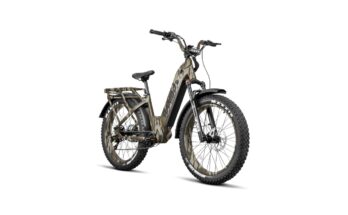
- Bakcou Kodiak AWD SD gives you all-wheel drive for the nastiest terrain. Loose shale, wet creek crossings, steep muddy switchbacks. This is the bike for hunters who push into truly rugged country.
- Bakcou Scout Jager is the lighter option if you’re dealing with trailhead weight restrictions or want something easier to load in the truck bed. Still capable in the mountains, just a bit less brute force than the Mule.
Rambo
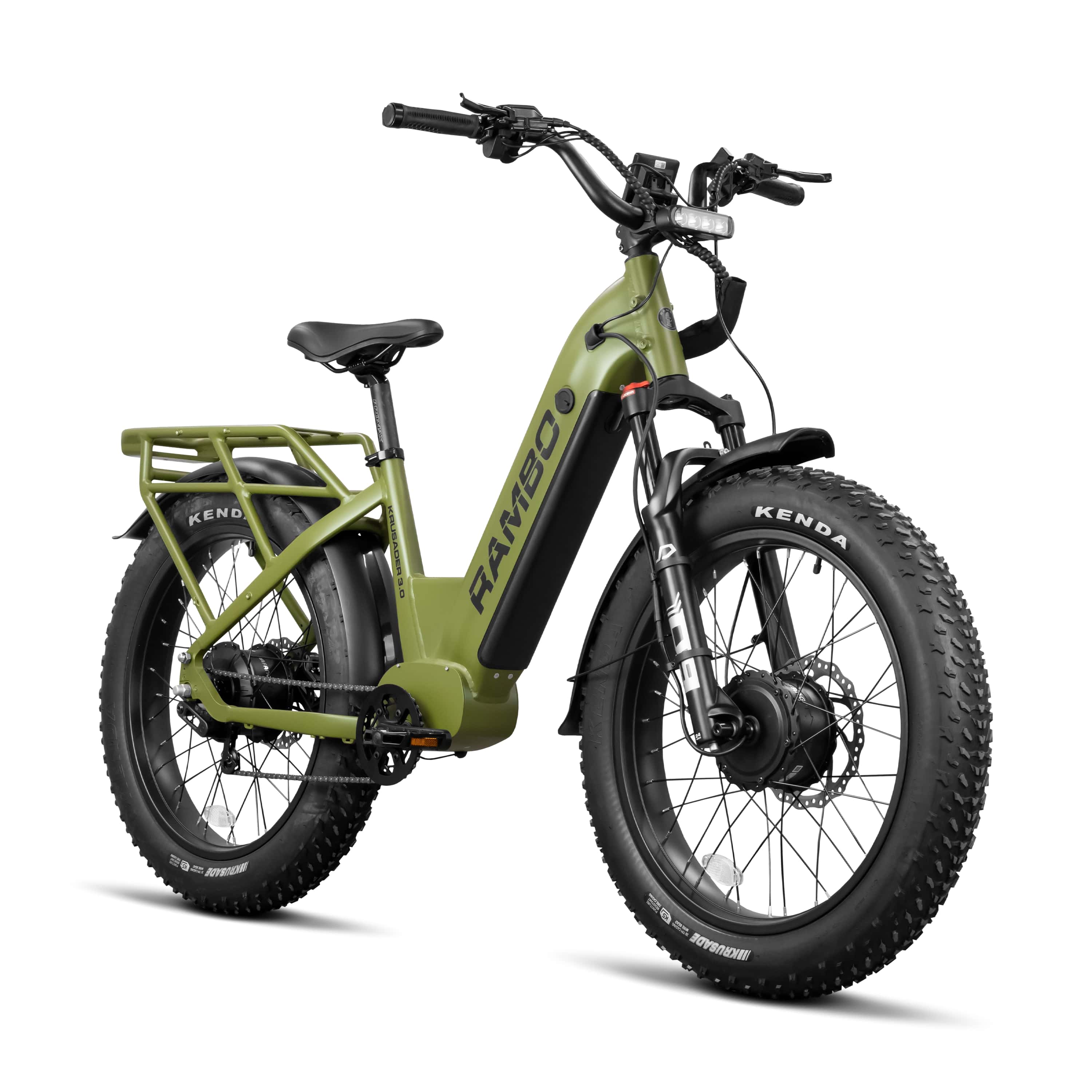
Rambo Krusader 3.0 AWD
Rambo has several models that can handle mountain terrain for elk hunters:
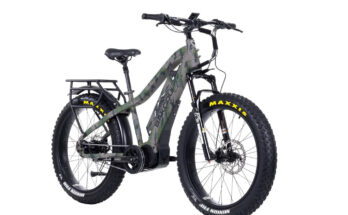
- Rambo Krusader 3.0 AWD offers all-wheel drive and solid power for steep backcountry roads. A strong choice for hunters who want reliability and traction.
- Rambo Hellcat FS AWD combines full suspension with all-wheel drive. On rough, rocky two-track that would rattle your teeth on a hardtail, this bike smooths things out while still delivering power to both wheels.
- Rambo Megatron 4.0 AWD is the heavy hauler. If your pack-out plan involves moving serious weight over rough terrain, the Megatron’s payload capacity and power make it a strong candidate.
QuietKat
QuietKat makes solid mountain-capable hunting bikes, and they deserve a serious look from elk hunters:
- QuietKat Apex XD is their top-tier mountain bike. Powerful mid-drive, excellent suspension, and a frame built for loaded riding in steep terrain.
- QuietKat Apex HD is a step down in price but still very capable for mountain elk hunting.
- QuietKat Ranger AWD gives you all-wheel drive at a more accessible price point. Worth considering if your budget is tighter but you still need mountain performance.
Pack-Out Strategies for Quartered Elk
Getting an elk out of the field on an ebike requires some planning. Here’s what I’ve found works best.
Trailers
A single-wheel or two-wheel game trailer is the most efficient way to haul elk quarters. The Bakcou Folding Cargo Trailer and the Rambo Aluminium Bike/Hand Cart are both built for this kind of work. You can load two quarters per trip (120 to 200 pounds) and the trailer keeps the weight low and stable. Make sure the trailer has solid sidewalls or a game bag system to keep meat clean. On downhill sections, go slow and steady. The loaded trailer wants to push you, so use your brakes deliberately and pick smooth lines.
Panniers and Rack Bags
Heavy-duty panniers on a reinforced rear rack can handle one quarter per side for lighter loads. The Bakcou Pannier Bags and Bakcou Pannier Racks are a solid combination for hauling on rough terrain. This works well for boned-out meat, backstraps, and tenderloins. Don’t overload a standard pannier rack with bone-in quarters. The leverage on turns will stress the mounting points.
Weight Distribution
However you’re hauling, keep weight low and centered. A top-heavy load on a mountain two-track is a recipe for a tip-over. If you’re using a rear rack, pack heavy items low in frame bags or panniers rather than stacking on top. Secure everything with quality straps. Elk quarters shift on bumpy terrain, and a quarter sliding off the rack at the wrong moment can put you in a ditch.
The Two-Trip System
My standard approach: First trip takes the two heaviest quarters (usually the hindquarters) and any loose meat in a game bag. Second trip takes the front shoulders and remaining meat. If you’ve got the backstraps and tenderloins already bagged, throw them in a pannier on the first run. Get the best cuts to the cooler first.
Field Tips from Actual Experience
Battery Management at Altitude
Cold kills batteries. At 8,000 to 10,000 feet in September and October, morning temps can be in the 20s. If your bike is sitting at a trailhead all day, that battery is losing capacity in the cold. I bring an insulated battery cover for early-season hunts and keep the spare battery in my pack, close to my back, until I need it. Start your ride in a lower pedal assist level and save the full power for the steep climbs out.
Throttle vs. Pedal Assist on Climbs
Pedal assist is more efficient on sustained mountain climbs. The motor works with your effort, and you’ll get significantly more range per charge. Save the throttle for short, steep pitches where you need a burst, or for the loaded pack-out when you’re too gassed to pedal hard. On a long climb, a lower assist level with steady pedaling will get you further than hammering the throttle and watching your battery gauge drop.
Noise Discipline
During archery season, this matters more than most people think. Ebikes are quiet compared to ATVs, but they’re not silent. Motor whine, chain noise, and tire crunch on gravel all carry in a quiet mountain basin. Shut the bike down well before you reach your hunting area. I usually park at least half a mile from where I plan to hunt, sometimes more in open country where sound carries. Walk the last stretch. The whole point of an ebike is getting close faster, not riding right into the elk.
Where to Stash the Bike
Don’t leave your $5,000 bike sitting on the trail in plain sight. I pull mine off the trail into timber or brush, lay it down on the non-derailleur side, and toss a few branches over it. Not because I’m worried about theft (though that’s a thing near popular trailheads), but because other hunters seeing a bike tells them someone is hunting nearby. I also bring a lightweight cable lock for trailhead parking where other vehicles and people are around.
Early Season vs. Late Season Considerations
Archery elk season in most western states runs August through September, when trails are dry and batteries perform well. By the time rifle seasons open in October and November, you’re dealing with cold, possibly snow, and shorter days. Plan for 25 to 40 percent less range in late-season conditions. If there’s significant snow, fat tires help but deep snow will still stop you. Know when to park the bike and switch to snowshoes or skis.
Is an eBike Worth It for Elk Hunting?
If you hunt elk on public land in the West, an ebike is one of the best investments you can make. Not because it replaces fitness or woodsmanship. Those still matter more than any gear. But because it solves the two hardest logistical problems in elk hunting: getting deep enough to find unpressured animals, and getting heavy loads of meat back to the truck without destroying your body.
I still do some hunts on foot, packing everything on my back. There are places where bikes can’t go and situations where they don’t make sense. But for the majority of my elk hunting, the bike has made me more effective, more efficient, and a lot less sore at the end of a trip. My truck’s suspension appreciates the lighter loads too.
Do your homework on regulations, invest in a bike built for mountain terrain, and plan your pack-out system before opening day. You’ll wonder how you ever did it without one.
Check out the full selection of hunting ebikes at eBike Generation.