
If you’ve ever mentioned hunting in polite company, you’ve probably gotten The Look. The raised eyebrow, the slight recoil, the carefully worded question about whether you’ve “considered the environmental impact.” It’s a fair question. And the answer might surprise the people asking it: hunters are among the most effective conservationists on the planet, and the data backs that up.
Let’s walk through the real, measurable ways that hunting supports environmental health, from federal funding mechanisms to boots-on-the-ground habitat work.
The Pittman-Robertson Act: Hunters Funding Conservation Since 1937
The single most important piece of conservation funding legislation in American history was championed by hunters. The Pittman-Robertson Federal Aid in Wildlife Restoration Act, passed in 1937, places an 11% excise tax on firearms, ammunition, and archery equipment. That money goes directly into a federal trust fund distributed to state wildlife agencies for conservation projects.
The numbers are staggering. Since its inception, the Pittman-Robertson Act has generated over $15 billion for wildlife conservation. In recent years, the fund has contributed roughly $1 billion annually. This money funds habitat restoration, wildlife research, hunter education, and the management of wildlife management areas open to public use.
Here’s what’s remarkable about this: hunters asked for this tax. They lobbied for it. They wanted to pay more for their equipment so the money could go back into the land and the wildlife they depend on. Name another recreational group that has voluntarily taxed itself to fund conservation at this scale. You’ll be looking for a while.
On top of Pittman-Robertson, hunters purchase licenses, tags, and permits that generate billions more in state-level revenue. The U.S. Fish and Wildlife Service estimates that hunting-related activities contribute over $27 billion annually to the American economy, with significant portions flowing into state wildlife management budgets.
Wildlife Management: The Science of Healthy Populations
Wildlife populations are not static. They grow, shrink, migrate, and shift based on habitat availability, predator-prey dynamics, disease, and dozens of other factors. Professional wildlife biologists set hunting seasons, bag limits, and permit quotas based on rigorous population surveys and habitat assessments. Hunting is one of their primary management tools.
White-tailed deer are the classic example. In the early 1900s, unregulated market hunting and habitat loss had reduced the whitetail population in North America to roughly 500,000 animals. Through science-based management funded largely by hunters, that population now exceeds 30 million. It’s one of the greatest wildlife recovery stories in history.
But recovery creates its own challenges. Without natural predators in much of their range, deer populations can explode beyond what the habitat can support. Overbrowsing destroys forest understory, eliminates food sources for other species, increases deer-vehicle collisions (roughly 1.5 million per year in the U.S.), and leads to disease outbreaks like Chronic Wasting Disease. Regulated hunting keeps populations in balance with their habitat, which benefits the entire ecosystem.
The same principle applies to elk, wild turkey, waterfowl, and dozens of other game species. In every case, regulated hunting funded and supported by hunters has been the primary mechanism for population recovery and ongoing management.
Habitat Conservation: Protecting Land for Everyone
Hunters need habitat. You can’t hunt in a parking lot. This fundamental reality has made hunting organizations some of the most effective land conservation groups in the country.
Ducks Unlimited has conserved over 15 million acres of wetland habitat across North America. The Rocky Mountain Elk Foundation has protected or enhanced over 8 million acres. The National Wild Turkey Federation has conserved over 600,000 acres. Pheasants Forever, the Quality Deer Management Association, the Ruffed Grouse Society; the list goes on. These organizations, funded primarily by hunters, have collectively conserved tens of millions of acres of habitat that benefits all wildlife, not just game species.
Wetlands restored by Ducks Unlimited filter water, reduce flooding, and sequester carbon. Forests protected by the Elk Foundation provide habitat for hundreds of non-game species. Grasslands maintained by Pheasants Forever support pollinators, songbirds, and soil health. The conservation work funded by hunters creates cascading benefits throughout ecosystems.
Population Control: The Ecological Balance
In a perfect world, natural predator-prey relationships would keep wildlife populations in check. But we don’t live in a perfect world. Wolves have been extirpated from most of their historic range. Mountain lion habitat has shrunk. Coyotes are adaptable but can’t fill the ecological role of apex predators for large ungulates.
Without adequate predation, prey species overpopulate. The consequences cascade through the ecosystem. Overbrowsing by deer eliminates forest regeneration, reducing habitat for ground-nesting birds. Overpopulated geese destroy agricultural crops and degrade wetland habitats. Feral hog populations (now exceeding 6 million in the U.S.) cause an estimated $2.5 billion in agricultural and environmental damage annually.
Hunting provides population control where natural mechanisms are insufficient. State wildlife agencies use harvest data and population surveys to set quotas that maintain populations at levels the habitat can sustainably support. This isn’t random killing; it’s precision management based on decades of ecological research.
The North American Model of Wildlife Conservation
The United States and Canada operate under the North American Model of Wildlife Conservation, a framework that is considered the most successful wildlife management system ever developed. Its core principles include that wildlife is held in public trust, that science should guide management decisions, and that hunting access should be democratic rather than limited to the wealthy.
This model, built and funded largely by hunters, has produced results that no other system has matched. Species that were on the brink of extinction a century ago now thrive. Habitat that would have been converted to development has been permanently protected. And all of this has been accomplished primarily through the voluntary financial contributions of hunters.
Modern Hunting and Minimal Impact: The eBike Connection
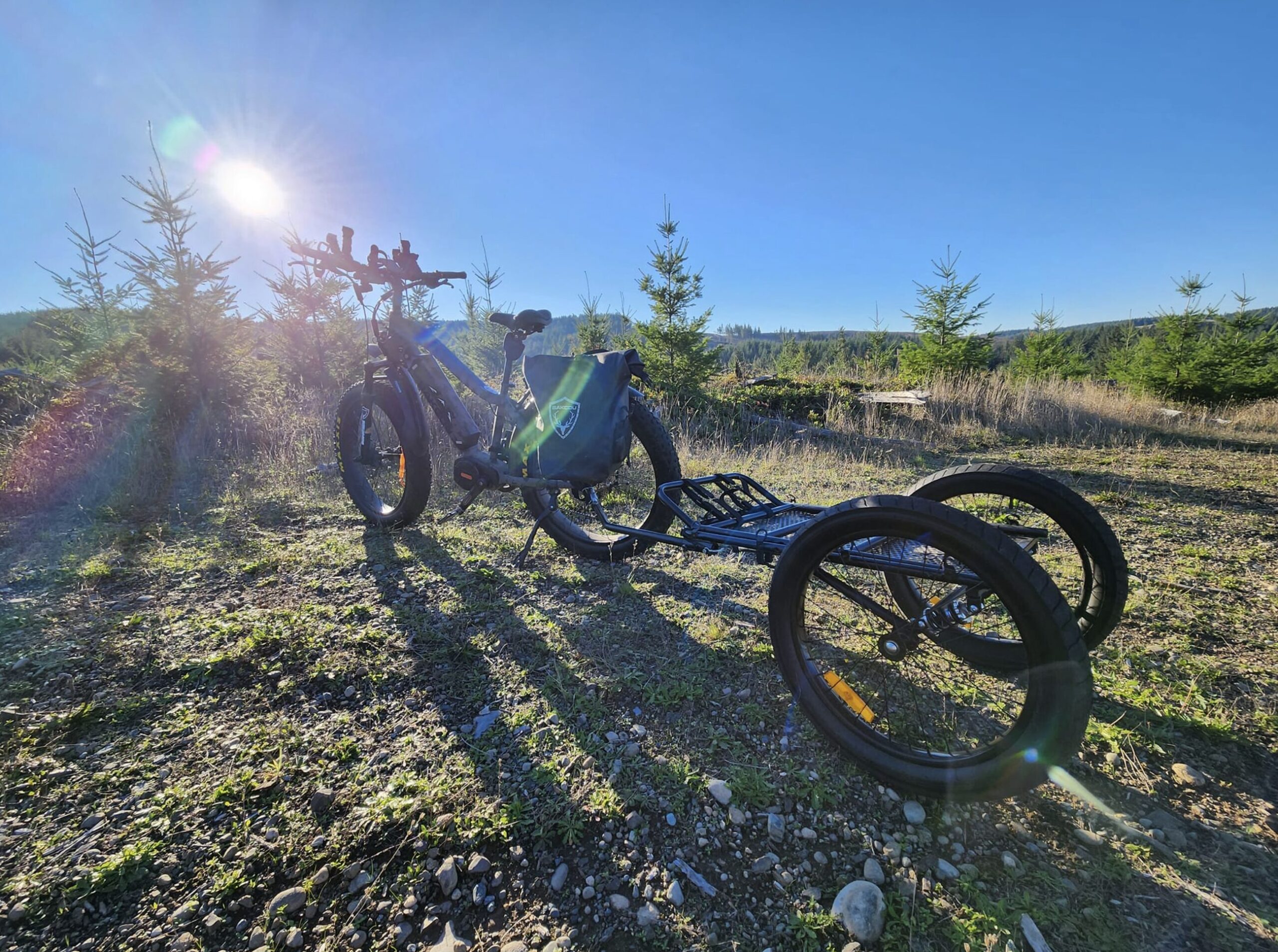
Today’s hunters are increasingly adopting tools and practices that further reduce their environmental footprint. Electric hunting bikes are a perfect example. Compared to ATVs and UTVs, eBikes produce zero emissions, create minimal trail damage due to their lighter weight and narrower tires, operate quietly (reducing disturbance to non-target wildlife), and require no gasoline or petroleum-based fuels.
Hunters who switch from motorized vehicles to eBikes for accessing their hunting areas are making a meaningful reduction in their environmental impact while still being able to reach remote spots and haul gear. Brands like Bakcou, Rambo, and Himiway have built their businesses around this concept, offering purpose-built hunting eBikes that get riders deep into the backcountry without the environmental cost of traditional off-road vehicles.
Addressing the Critics
None of this means hunting is above criticism. Poaching, trespassing, and irresponsible behavior by a small minority of hunters are real problems that legitimate hunters actively work to combat. Hunter education programs (also funded by Pittman-Robertson dollars) emphasize ethics, safety, and respect for the resource.
But the broad claim that hunting is bad for the environment simply doesn’t hold up against the evidence. The funding, the habitat work, the population management, the species recovery stories; they all point in the same direction. Regulated hunting, practiced ethically and managed scientifically, is one of the most powerful conservation tools we have.
The next time someone gives you The Look, you’ll have the facts to back up your position. Hunters have been paying for conservation for nearly a century, and the results speak for themselves.